Forest Trail — History & Facts
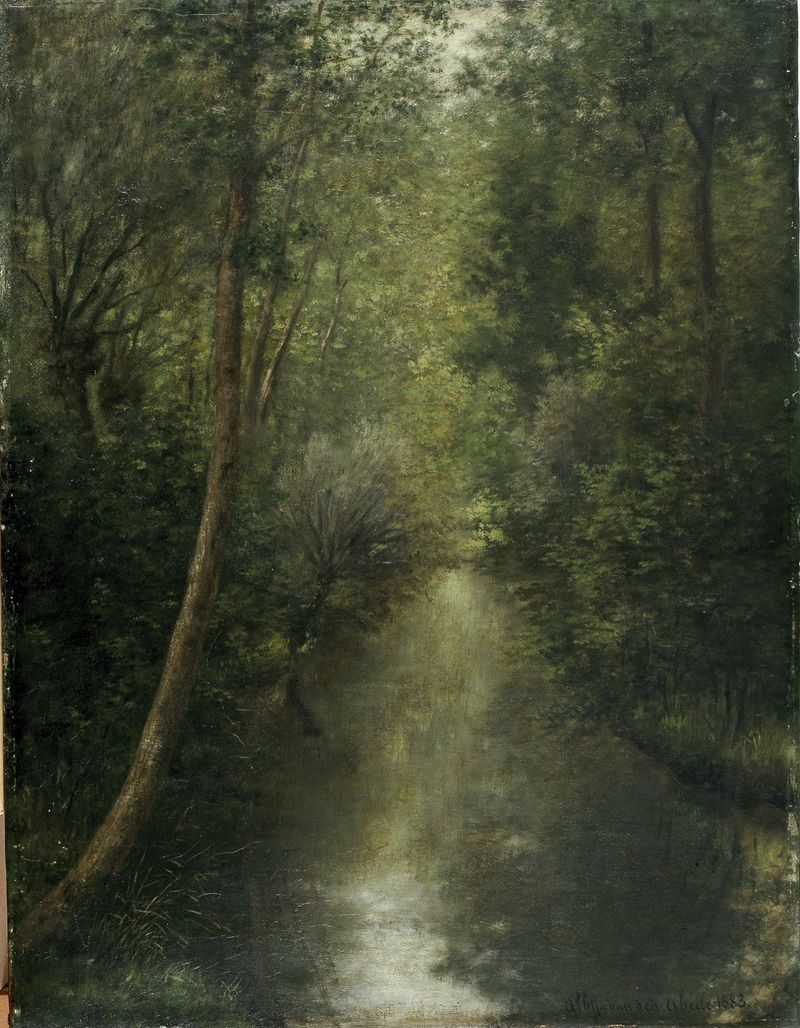
In the stillness of a forest, where time seems to suspend itself, reflections reveal the depths of just being. Each leaf and shadow becomes a whisper of the past, urging us to pause and reflect. Look to the foreground of the composition where a winding trail beckons, surrounded by towering trees alive with lush greens. Notice how the dappled light filters through the canopy, illuminating patches of the path with a soft, golden hue.
The brushwork is loose yet deliberate, creating a sense of movement as if the wind is gently coaxing the leaves into a dance. These strokes lead your eyes into the depth of the forest, inviting exploration and hinting at secrets hidden within. The interplay of light and shadow evokes a palpable emotional tension, suggesting a balance between serenity and uncertainty. The vibrant greens are contrasted with deeper tones, signifying the dual nature of life—growth and decay entwined.
The path may symbolize a journey, urging viewers to consider their own footsteps in the world, while the encroaching shadows evoke the unknown that lies just beyond our sight. Van den Abeele painted this piece in 1900, during a time when symbolism and impressionism were influencing the art scene. Living in Belgium, he was part of a movement that sought to capture the ephemeral beauty of nature. This work emerged amidst personal reflections on life and the natural world, echoing the era’s fascination with the emotional resonance of landscapes, elevating the ordinary into realms of the extraordinary.