Four Oxen Pulling a Plough — History & Facts
In Four Oxen Pulling a Plough, Constant Troyon immerses the viewer in a moment of labor and devotion, where nature and humanity intertwine in a tapestry of earth and toil. Look to the center of the canvas, where the sturdy oxen strain against the weight of the plough, their powerful forms rendered with a meticulous attention to musculature and sheen. The earth beneath them is rich and dark, contrasting with the lighter tones of the sky, which gradually shifts into a soft pastel gradient. Notice how the light catches the oxen’s flanks, creating a sense of depth that draws the eye to their determined expressions.
The composition masterfully balances the animals with the rolling hills in the background, evoking a tranquil yet industrious landscape. The juxtaposition of the oxen's strength against the serene backdrop speaks to the delicate balance between labor and nature. This engagement with agriculture illustrates a deeper connection: the oxen symbolize the unwavering commitment to the land, while their positioning hints at the human effort that drives productivity. Each detail, from the dust rising beneath their hooves to the way the plough breaks the soil, emphasizes the relentless cycle of life, urging viewers to ponder our place within it. In 1853, Troyon painted this work during a period when realism was gaining prominence in the art world, reflecting the everyday experiences of rural life.
Living in France, he was influenced by the Barbizon School’s focus on natural scenes, aiming to capture authentic moments rather than romanticized visions. This piece stands as a testament to his obsession with the harmony of man and nature, revealing a profound respect for the labor that sustains existence.
More Artworks by Constant Troyon
Browse all →
Landscape with Painter at Easel
Constant Troyon

The Marsh
Constant Troyon
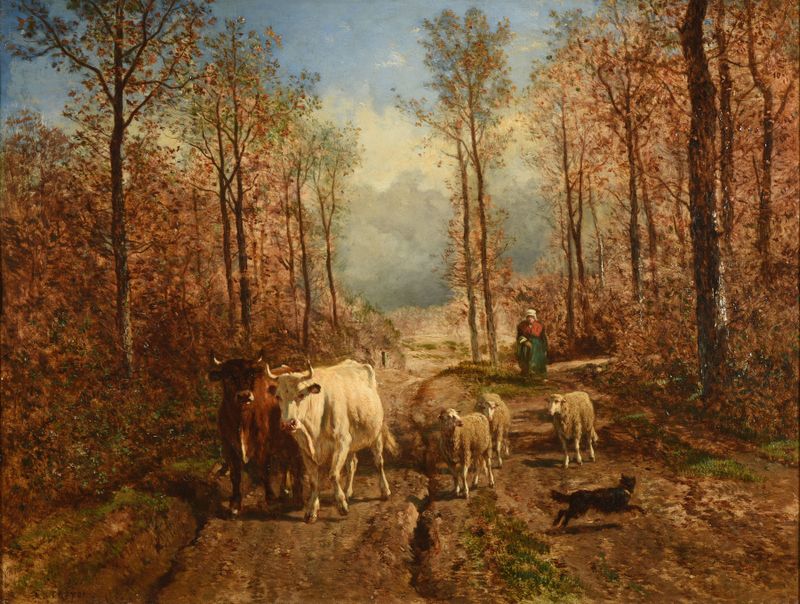
Rentrée de troupeau
Constant Troyon

Vaches sous bois
Constant Troyon

La gardeuse d’oies
Constant Troyon

Mill Stream with Fishermen
Constant Troyon
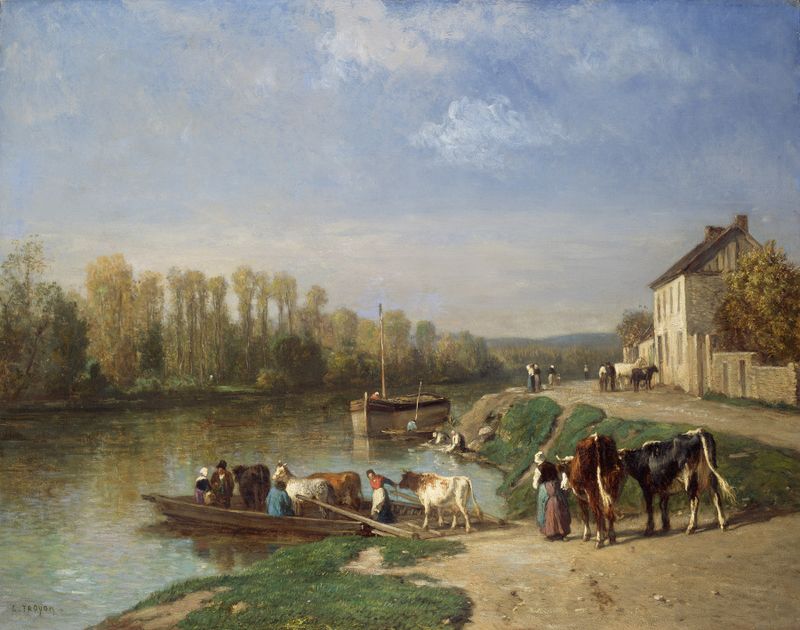
The Ferry Crossing
Constant Troyon

Landscape
Constant Troyon

Pasture in Normandy
Constant Troyon

Paysage
Constant Troyon