
Fra Ottenhöfen — History & Facts
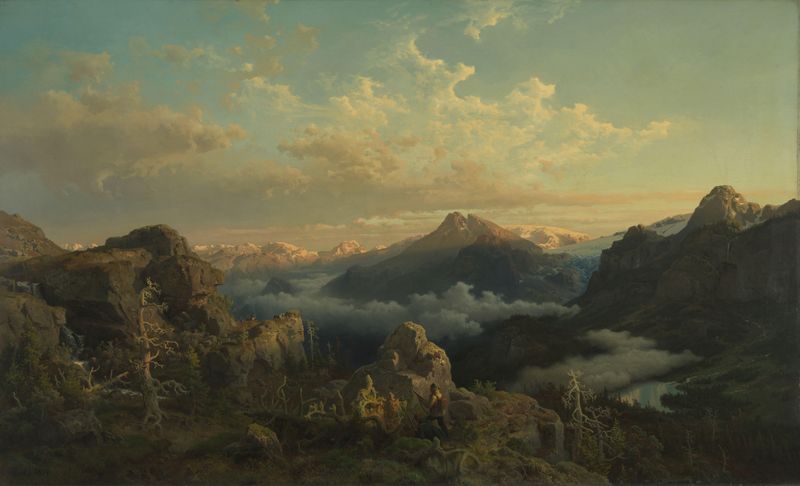
Could beauty survive in a century of chaos? In Fra Ottenhöfen, the viewer is met with an ethereal landscape, inviting contemplation of nature's enduring legacy amidst human turmoil. Focus first on the serene interplay of colors; the lush greens and tranquil blues dominate the canvas, creating a harmonious backdrop. Notice how the light dances across the surface of the water, reflecting the delicate hues of the sky. The gentle brushwork captures the essence of a quiet moment, while the mountains stand as steadfast sentinels, framing the scene and drawing the eye deeper into the idyllic realm. As you explore the details, consider the juxtaposition of tranquility and the undercurrents of anxiety.
The figures in the foreground are enveloped by nature's beauty, yet their distant gazes suggest a yearning for connection or purpose. This tension highlights the fragility of human experience against the timelessness of the landscape, prompting reflections on how beauty can persist despite the chaos of existence. In 1864, Hans Gude painted this piece during a period marked by significant change in Europe, where Romanticism was evolving in response to industrialization. Living in Norway at the time, Gude was influenced by the natural world around him, as well as the growing interest in landscape painting.
His work straddled the line between the Romantic ideals and emerging Realism, capturing an essence that resonates with both his time and ours.
More Artworks by Hans Gude
Browse all →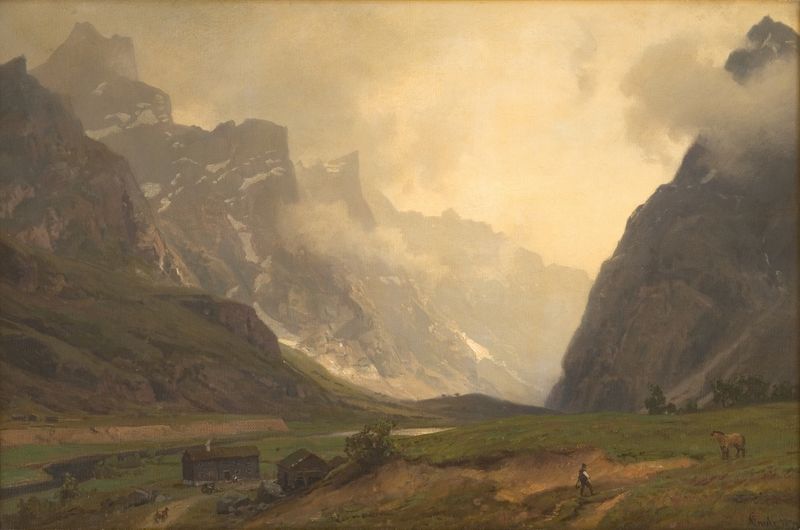
The Troll Peaks in Romsdalen, The Foot of Romsdalshorn to the Right
Hans Gude
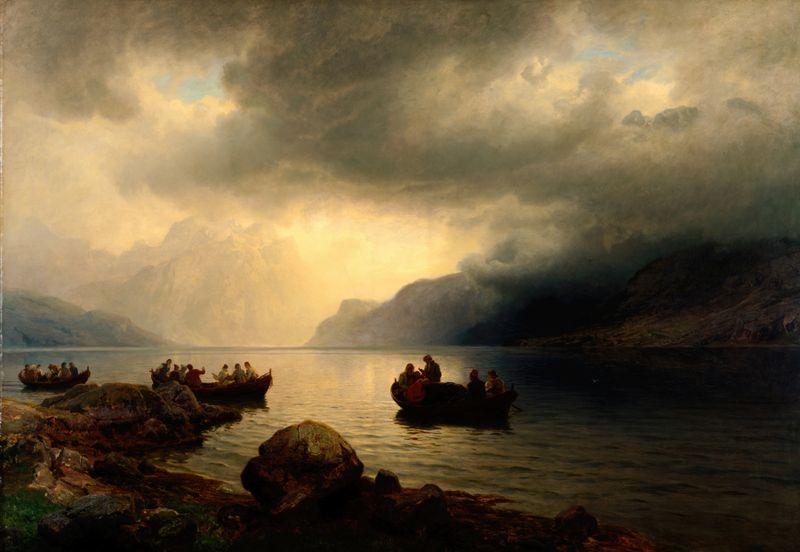
Funeral Procession on the Sogne Fjord
Hans Gude
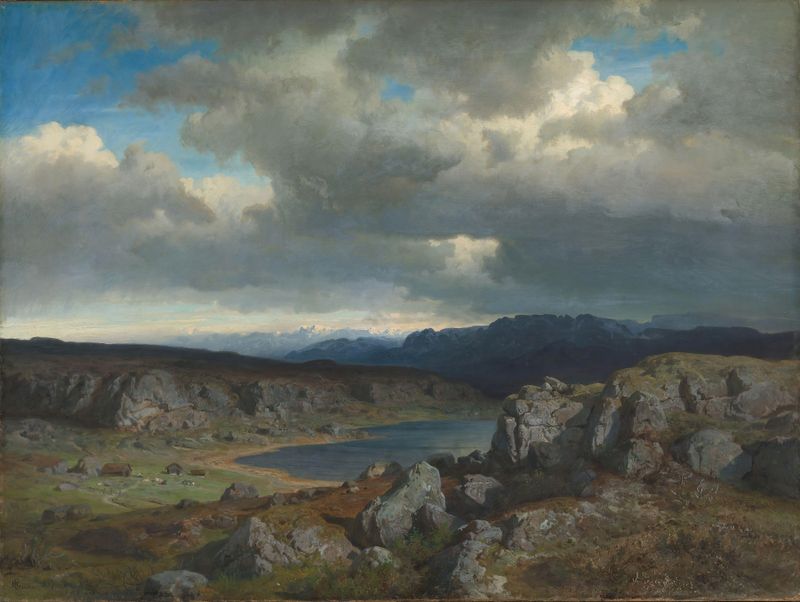
Norwegian Highlands
Hans Gude
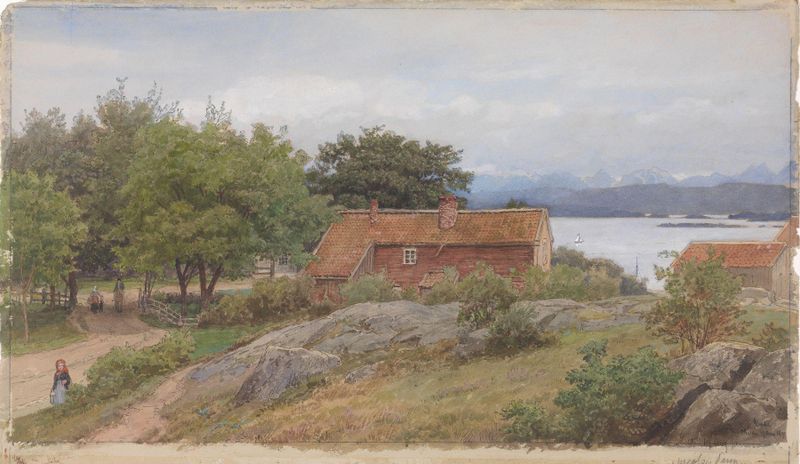
Landskap med bondegård ved Molde
Hans Gude
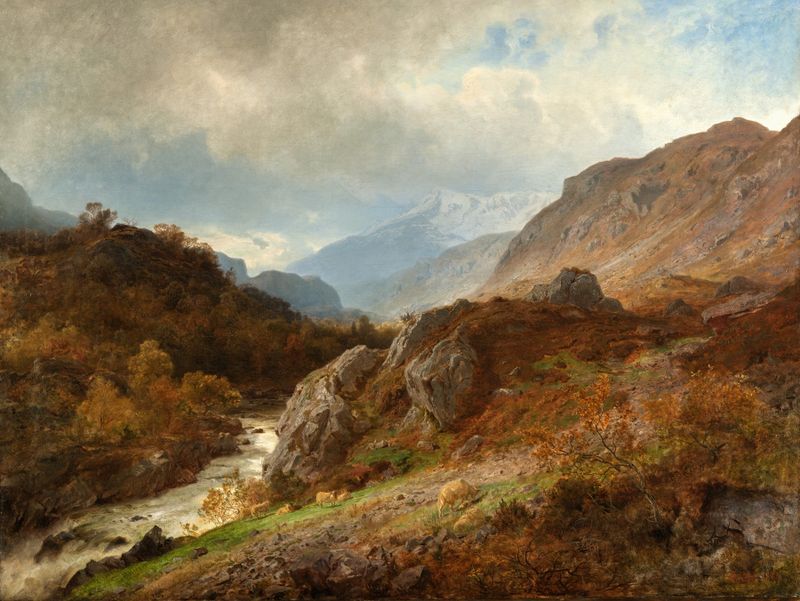
Mountain Landscape
Hans Gude
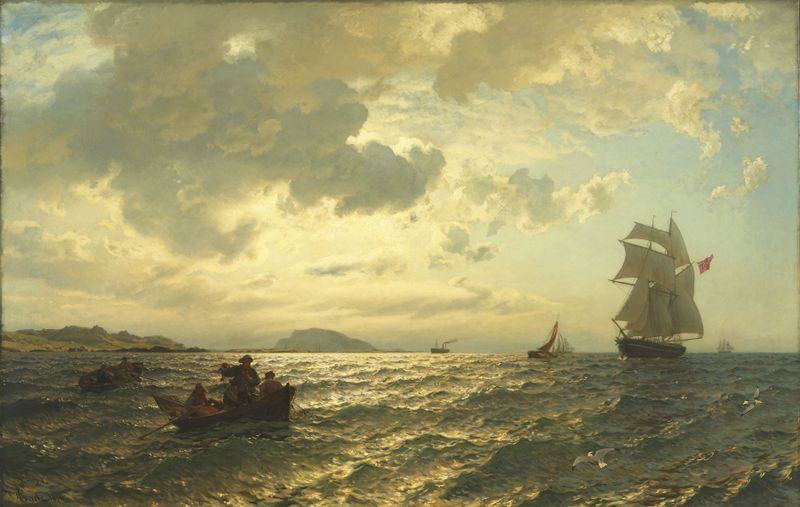
Fresh Breeze on the Norwegian Coast
Hans Gude
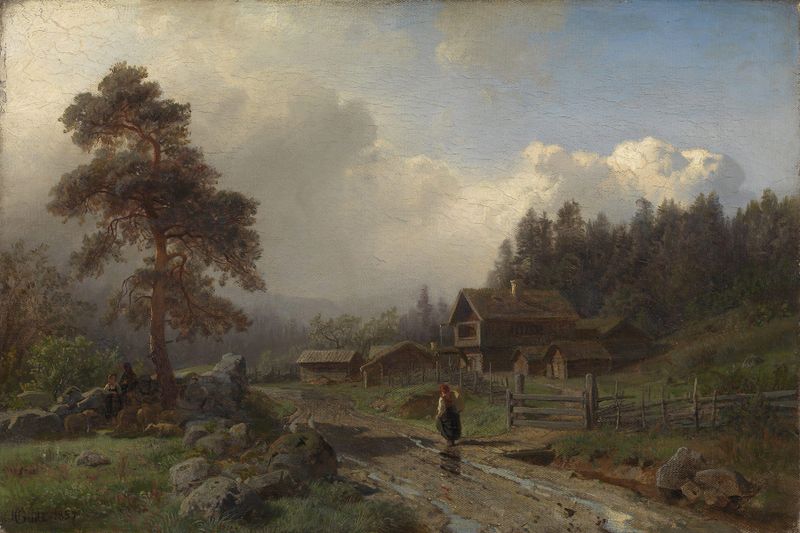
Norwegian Landscape in Rain
Hans Gude
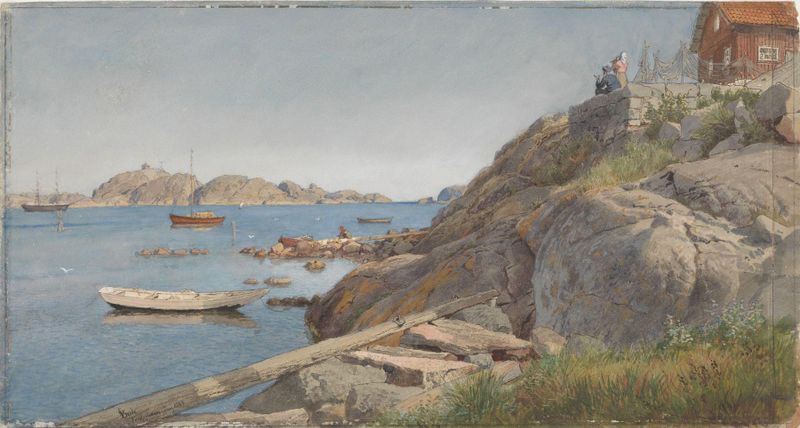
Landscape by Stavern
Hans Gude
Norwegian Highlands in Sunrise
Hans Gude
A Scene at Dusk in Norway
Hans Gude





