Fragment bord uit V.O.C.-schip de 'Witte Leeuw' — History & Analysis
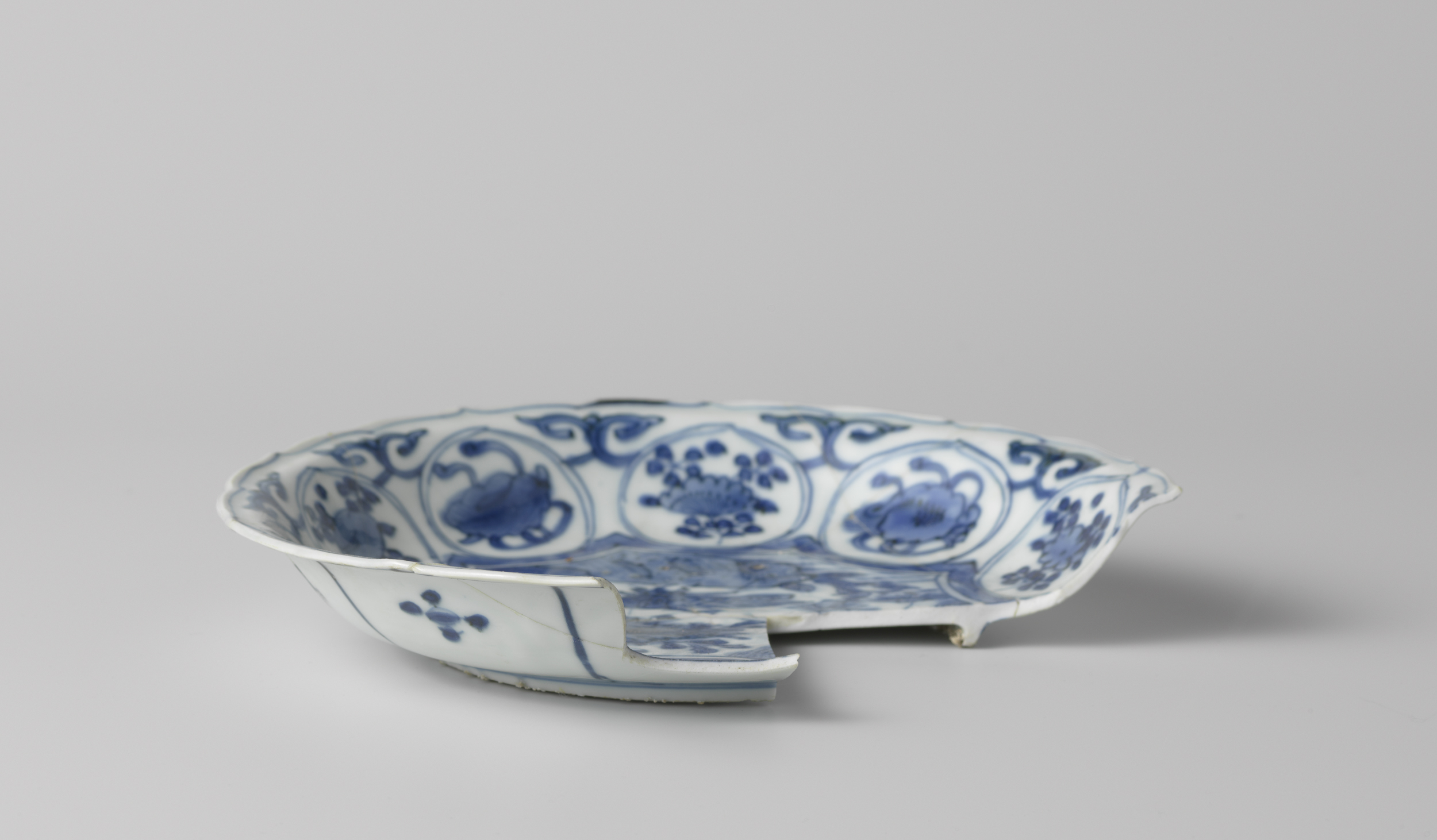
Is this a mirror — or a memory? The delicate fragment of the Witte Leeuw captures a moment lost in time, offering a glimpse into the serene world of maritime life in the early 17th century. Look closely at the intricate details on the fragment's surface, where the remnants of vibrant blue paint hint at the once-proud ship’s decor. The faded ornamentation invites you to trace the contours of the design, leading your eye gently across the curves and swirls that evoke waves dancing on the water.
Notice how the weathered texture intertwines with the muted hues, creating a sense of tranquility amidst the chaos of history. Beneath the surface lies a deeper narrative, one of adventure intertwined with loss. The fragment speaks of voyages across vast oceans, yet its chipped edges remind us of impermanence. Each mark tells a story — of sailors who dared to dream, of the ship that braved the tempests, and of the eventual decay that shadows even the most glorious journeys.
It stands as a poignant reminder of the duality of existence: beauty and fragility coexist, like whispers that fade with time. This fragment emerged before 1613, a testament to an era of exploration and trade. The artist, though unknown, contributed to a broader artistic discourse that celebrated maritime achievements while reflecting on the transient nature of life. During this time, the Dutch Republic was flourishing economically, with artists increasingly turning to themes that celebrated both the sea's promise and its perils, capturing a moment of serenity amidst the unknown.