Franz Joseph I on Taborbrücke — History & Facts
What grips the viewer first in Franz Joseph I on Taborbrücke by August von Pettenkofen is the sense of quiet authority standing amid chaos. The emperor, unmistakable in his uniform and posture, occupies the battered remains of a bridge, while the river below churns with debris and broken timbers. The eye is drawn upward from the turbulent water to the figures above, their dark coats and solemn faces set against a sky heavy with mist.
One man gestures outward, hat in hand—a silent address to the emperor, or perhaps to the city itself, as if to say, “Here is the ruin, here is the witness.” The palette is somber, all earth and iron, lending the scene a mood of aftermath and reckoning. This painting belongs to a world in which public disaster and imperial presence were closely linked, and artists like Pettenkofen found their subjects not only in grand history but in the raw immediacy of contemporary events. Created in 1862, it records a moment after the February flood in Vienna, when Emperor Franz Joseph I visited the wreckage of the Tabor Bridge accompanied by Josef Wimmer, a citizen of Vienna. Such works, often commissioned or acquired by civic institutions, served both as documentation and as a kind of visual reassurance—proof that order, embodied in the emperor, would return.
Now held in the Wien Museum’s collection, the painting stands as a testament to a city’s vulnerability and resilience, inviting us to look again at the faces that meet disaster head-on.
More Artworks by August von Pettenkofen

Der Kuss I
August von Pettenkofen
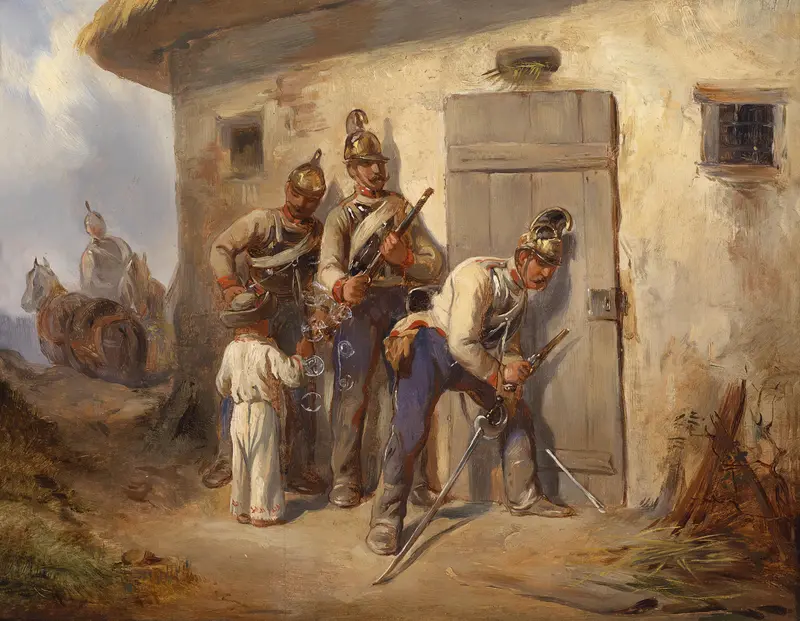
Österreichische Dragoner
August von Pettenkofen
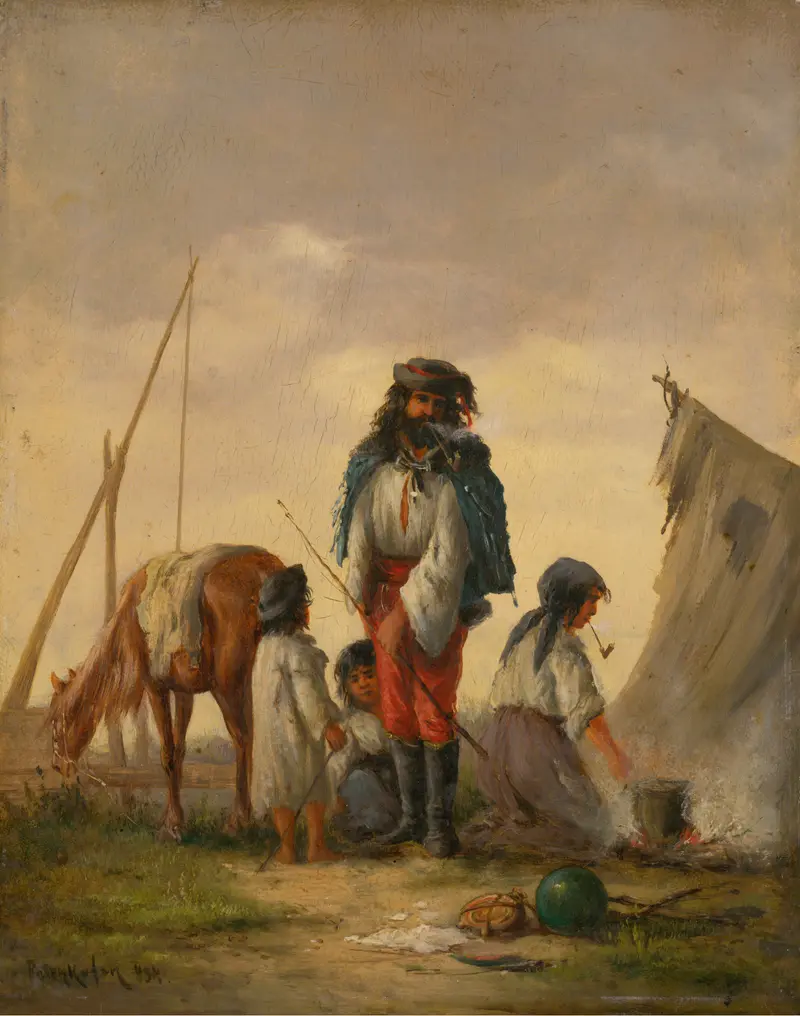
Gypsy Family
August von Pettenkofen
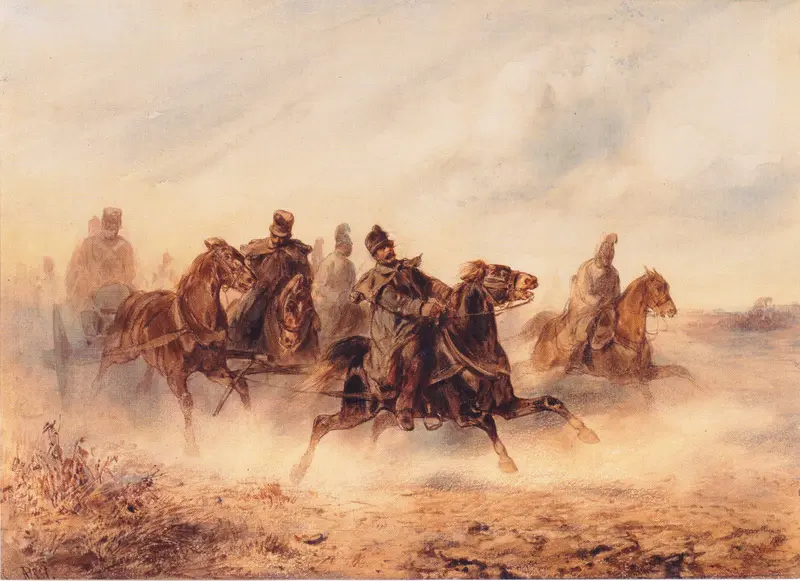
Reiterszene aus dem ungarischen Feldzug
August von Pettenkofen
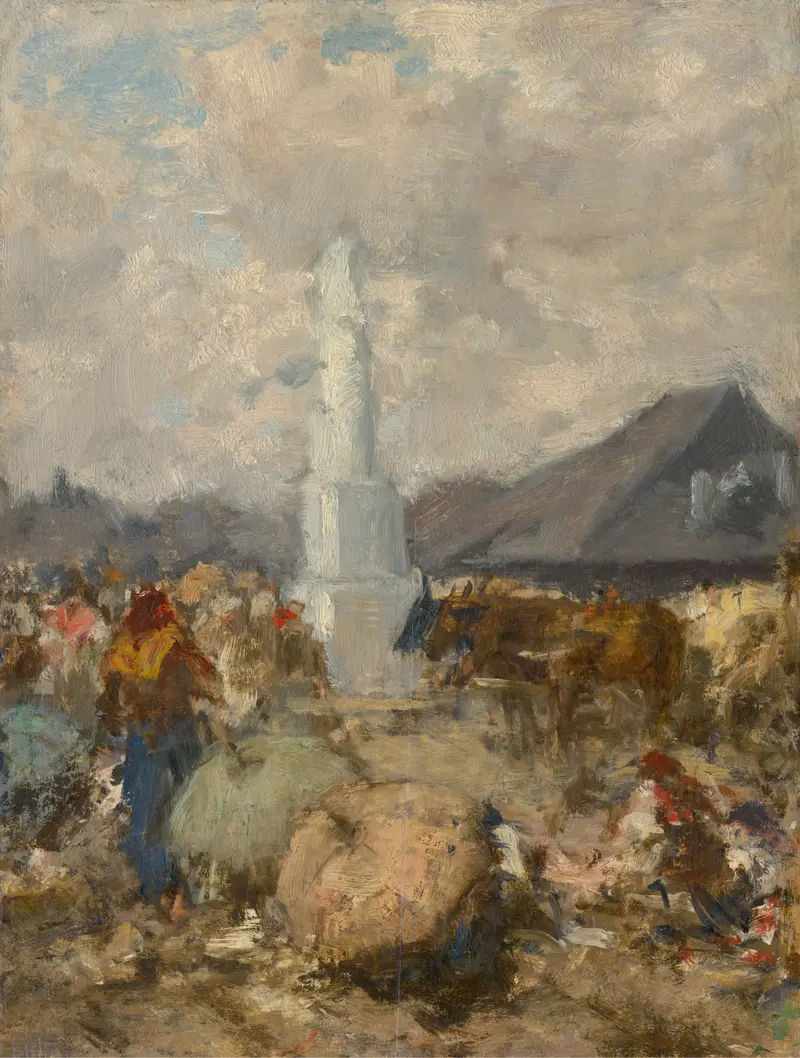
At the Market near the Holy Trinity Column in Szolnok
August von Pettenkofen
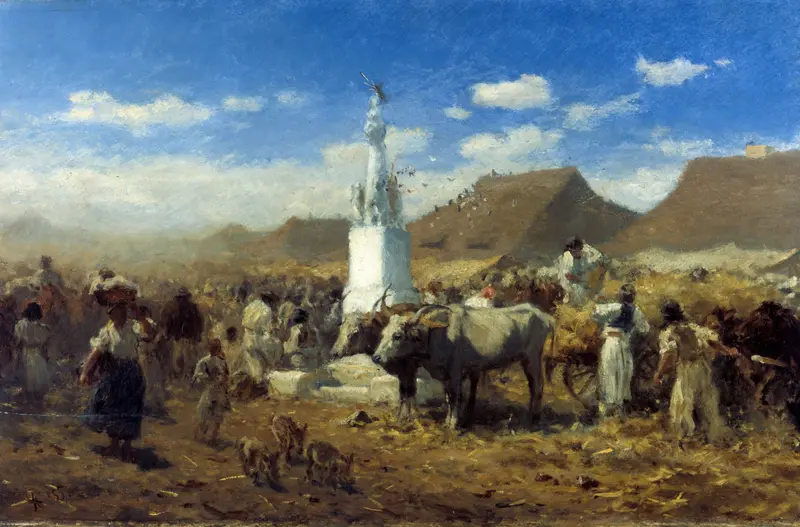
Fair in Szolnok (Market Day)
August von Pettenkofen
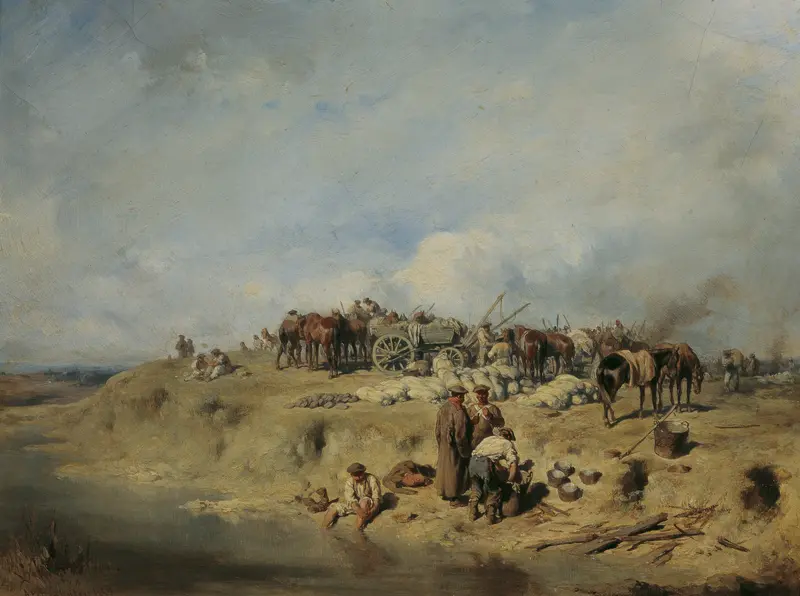
Biwak russischer Soldaten
August von Pettenkofen
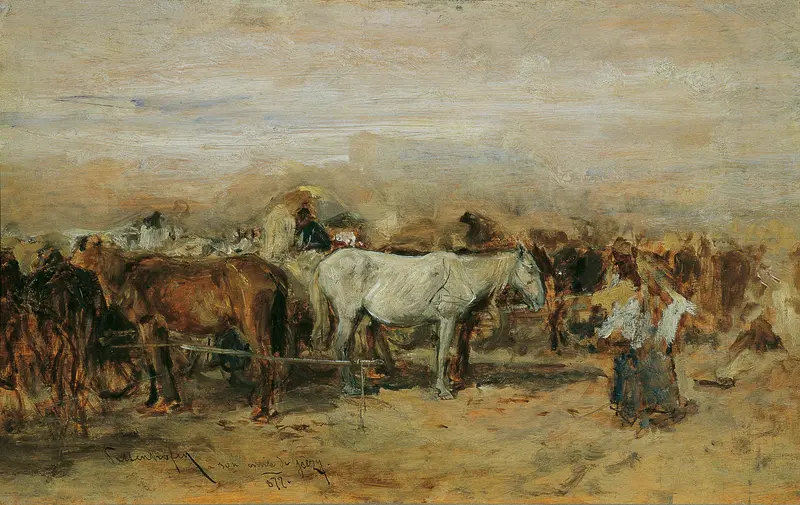
Pferdemarkt in Szolnok II
August von Pettenkofen
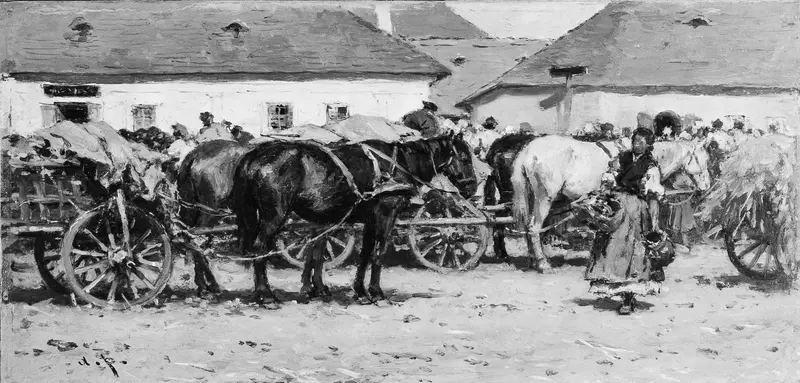
Market Scene
August von Pettenkofen
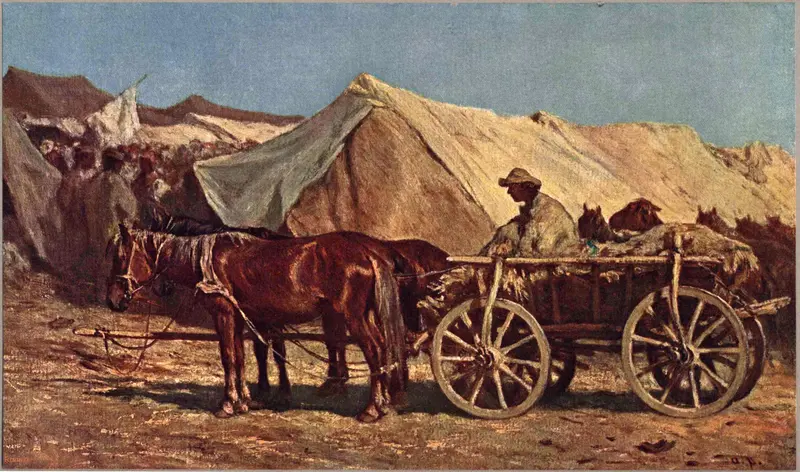
Ungarischer Markt
August von Pettenkofen