Freetown, Sierra Leone — History & Facts
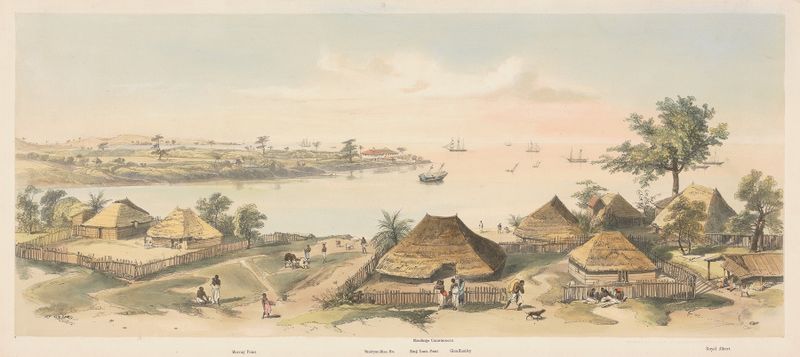
Where does light end, and longing begin? In this evocative tableau, a world unfolds where the vibrancy of creation and the shadows of yearning coexist. Look to the foreground, where delicate brushstrokes weave together a tapestry of verdant foliage. The interplay of light dances through the leaves, illuminating the textures and inviting a sense of intimacy with nature. Now, direct your gaze towards the horizon; the warm hues of the sun setting against the distant land depict a moment of transition—between day and night, presence and absence.
The composition is balanced yet dynamic, guiding the viewer's eye across the intricate details that beckon discovery. Amidst the lush greenery, a deeper narrative swells beneath the surface. The contrasting elements of light and shadow suggest an underlying tension between hope and melancholy, hinting at the struggles faced by those who inhabit this vibrant landscape. The luminous sky may symbolize aspirations, while the formidable earth below reveals the weight of history and unfulfilled desires.
In every stroke, there lies an emotional resonance that speaks to the universal experience of seeking and striving. In 1850, while residing in Paris, Auguste François Laby painted this work during a time when European artists were increasingly drawn to scenes of distant lands and exotic locales. This period saw a fascination with colonialism and the intricate beauty of places like Sierra Leone, shaped by the complex socio-political conditions of the time. As Laby crafted this piece, the world of art was evolving, embracing new themes and techniques, while his own brush captured the essence of a distant land, inviting viewers to pause and reflect on creation itself.