Freetown, Sierra Leone — History & Facts
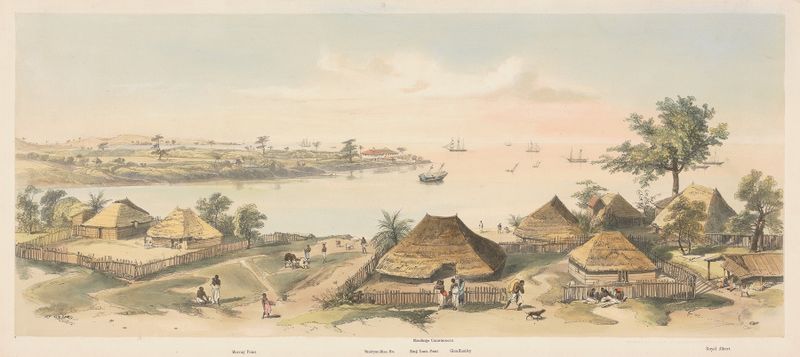
Did the painter know this moment would outlive them? In the subdued hues and somber essence of this work, a haunting melancholy lingers, drawing viewers into the depths of memory and transience. Focus on the soft interplay of light and shadow that bathes the canvas, particularly in the muted browns and greens that depict the landscape. Look to the distant horizon, where the setting sun casts a golden glow, contrasting with the dark silhouettes of trees that stand like sentinels of the past. The gentle brushstrokes evoke a sense of stillness, inviting contemplation while highlighting the fragility of existence. In the foreground, a few figures linger, their postures conveying a quiet resignation that echoes through time.
The juxtaposition of their calm demeanor against the expansive, almost oppressive landscape speaks to the dichotomy of hope and despair. Each element reveals a narrative, a collective struggle infused with a sense of longing for connection and a sense of place, tying together the emotional threads of the scene. In 1850, Laby was at a pivotal moment in his career, working in a time of social upheaval and change in art. He painted this work while residing in a world that was beginning to grapple with the complexities of colonialism.
The mid-19th century saw artists increasingly exploring themes of identity and belonging, as they sought to capture the essence of both place and people.