Frühling bei Litzldorf — History & Facts
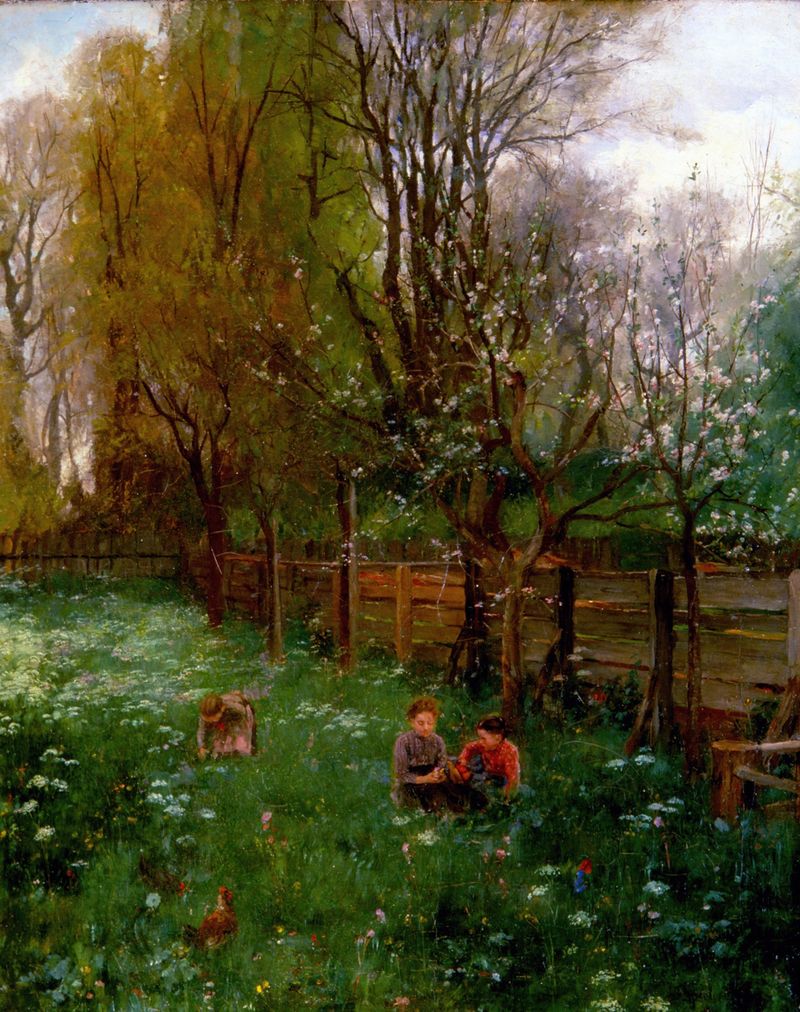
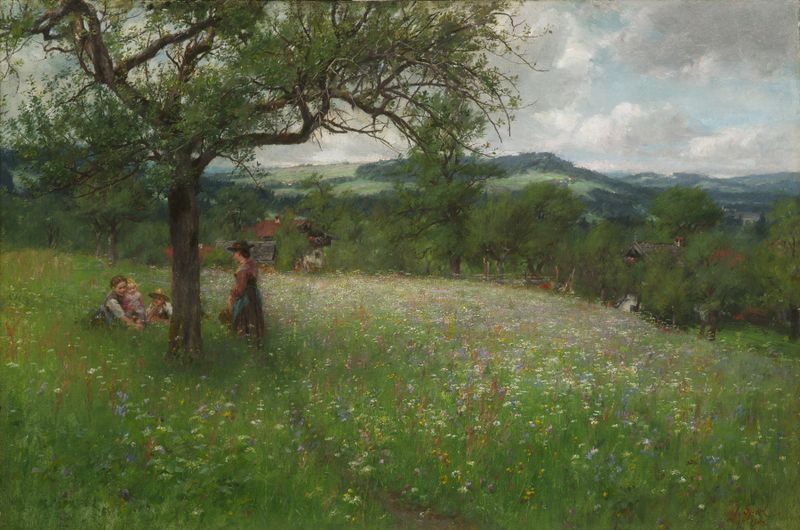
When did color learn to lie? The beauty of Frühling bei Litzldorf invites us to ponder the nature of time as it dances through the lush landscape. Look to the left where the sun-drenched meadow bursts forth with vibrant greens and yellows, a testament to spring's exuberance. The gentle curvature of the hills draws the eye across the canvas, guiding us from the foreground’s lively wildflowers to the distant trees that stand like silent sentinels. The artist employs a soft palette, blending hues with a deft touch that creates an ethereal quality, suggesting the fleeting nature of the season itself. Upon closer inspection, notice how the light plays with shadows, casting an almost dreamlike aura over the scene.
Here, the juxtaposition of bright blossoms against the cool, shaded areas reveals a heartfelt tension between joy and melancholy—a reminder that even the most beautiful moments are ephemeral. In the foreground, a solitary figure kneels to admire the blooms, embodying a sense of quiet reflection, while the expansiveness of nature hints at life’s relentless march forward. Johann Sperl painted Frühling bei Litzldorf in 1903 while living in Vienna, a city pulsating with artistic innovation and cultural change. The early 20th century was a period of shifting paradigms in art, as Impressionism and Symbolism began to influence the styles of his contemporaries.
Sperl, deeply connected to the natural beauty surrounding him, captured this essence during a time when the world was on the brink of modernity—a juxtaposition that infuses his work with both nostalgia and a forward-looking gaze.