Frühlingstag am Waldrand — History & Facts
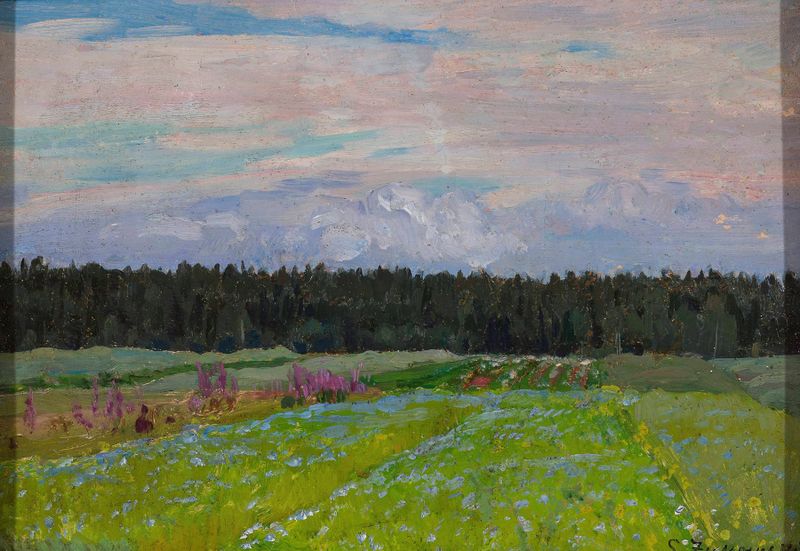
What if beauty was never meant to be finished? In the verdant embrace of nature, the fleeting moments of spring whisper promises of renewal, yet they remain forever elusive. Focus on the gentle gradient of green that envelops the canvas, deftly rendered by the artist’s brush. Notice how the dappled sunlight filters through the trees, casting intricate patterns upon the ground. The delicate interplay of light and shadow suggests not only the vibrancy of life but also the transient nature of spring itself — a season that teeters on the cusp of full bloom yet suggests an unfulfilled potential.
The soft blues and warm earth tones invite the viewer into this serene woodland scene, beckoning them to lose themselves in its depths. Look closer, and the sense of faith emerges amid the beauty — a belief in the continuity of life reflected in the steadfast trunks of the trees. The way the flowers shyly peek from the underbrush hints at quiet resilience, while the gentleness of the wind seems to carry secrets of rebirth. This juxtaposition between the fragile blossoms and the enduring trees emphasizes the inherent tension between the ephemeral and the eternal, urging contemplation of what lies beyond the visible. In 1927, while painting this work, Zukowski found himself immersed in the vibrant art movements of interwar Europe, a time when artists sought solace in nature amidst the chaos of changing times.
His connection to the Polish landscape was profound, reflecting a period of personal exploration and deepening faith in the power of art to capture fleeting moments of beauty.