Remote Russian north — History & Facts
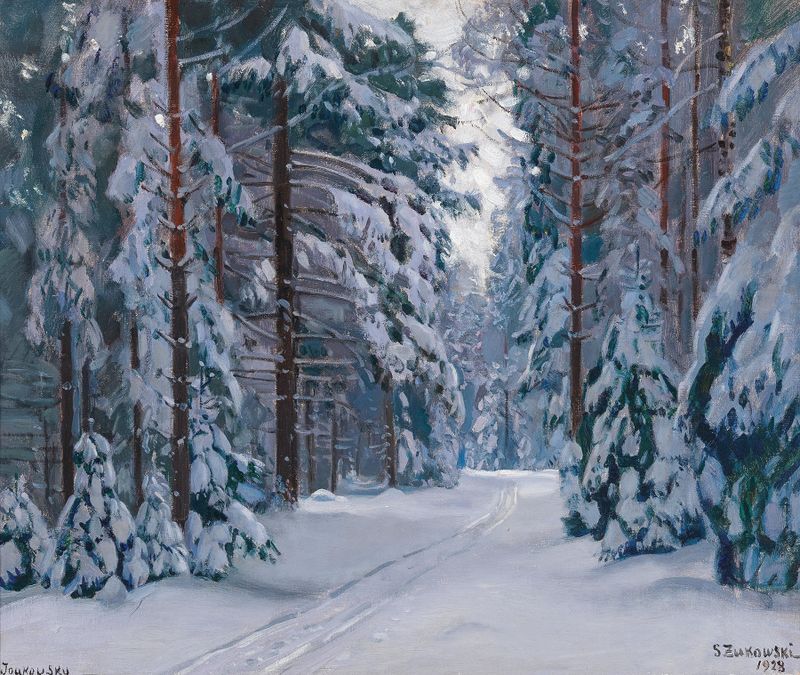
Could beauty survive in a century of chaos? In the quiet embrace of the remote Russian north, the answer finds its expression through both resilience and fragility. Look closely at the expansive, snow-draped landscape where the horizon stretches endlessly, painted in subtle shades of blue and silver. Notice how the crisp, cold light casts long shadows across the undulating surface, creating a stark contrast between the small, weather-beaten wooden cabin nestled amidst the vastness and the ethereal sky above. Each brushstroke reveals the artist's mastery of texture, inviting the viewer to feel the biting chill and the serene solitude of this isolated existence. Within this composition lies an interplay of solitude and strength.
The cabin, a symbol of human endeavor, stands resolute against the vast, indifferent wilderness. Yet, it is also a reminder of isolation, evoking both comfort and vulnerability. The interplay of soft light and deep shadows suggests the passage of time, hinting at stories of endurance and longing that echo through the landscape.
Here, nature reigns supreme, yet the human presence remains a whispered testament to survival amid the inexorable forces of nature. In 1920, Stanislaw Zukowski found himself in an era marked by upheaval in Eastern Europe. Having recently returned to Poland after the devastation of World War I, he sought to explore themes of resilience and beauty in his work. This painting reflects his introspection during a tumultuous period, capturing the haunting allure of desolation while also revealing an intimate connection to the land and its history.
The result is a poignant reminder that even in chaos, beauty can endure.