Rivulet in Polesie — History & Facts
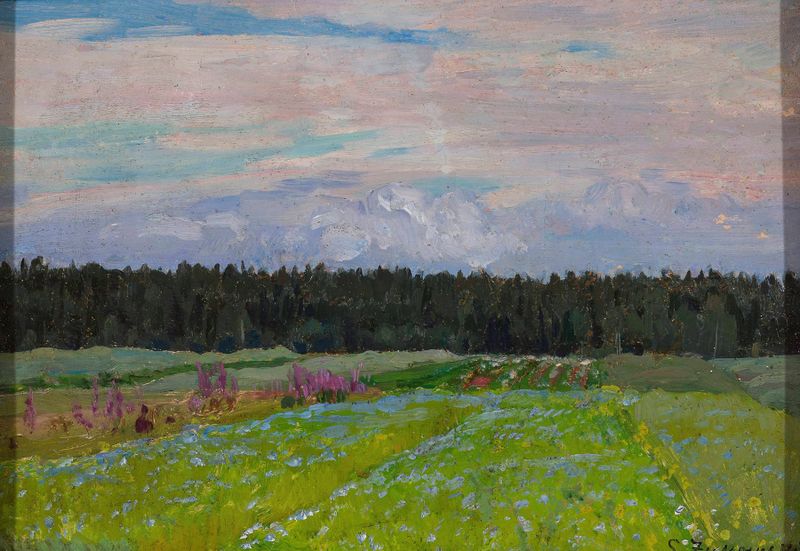
When did color learn to lie? In Rivulet in Polesie, beauty is not merely an illusion; it is a vibrant truth that beckons the viewer’s gaze deeper into its serene embrace. Look to the left at the gentle curve of the water, a shimmering ribbon that reflects a mosaic of greens and blues. The painter’s technique is masterful; soft brushstrokes create a sense of movement while capturing the stillness of the surrounding landscape. Notice how the dappled sunlight filters through the trees, illuminating patches of wildflowers that seem to dance along the riverbank.
Each color is chosen with intention, evoking both tranquility and the fleeting nature of beauty. Yet, beneath the surface lies an emotional complexity. The juxtaposition of the peaceful water and the looming shadows of surrounding trees suggests a tension between serenity and the passage of time. The vibrant flora invites joy, yet their ephemeral nature hints at transience, urging us to contemplate what we perceive as beautiful.
This delicate balance speaks to the essence of life — moments of joy interspersed with the inevitability of change. Stanislaw Zukowski painted Rivulet in Polesie in 1928, a period marked by a growing interest in capturing the essence of nature through Impressionism. Living in Poland, he sought to reflect the local landscape's emotional depth, creating a dialogue between his surroundings and the broader movements in European art. This work emerges during a time of political upheaval in Europe, yet it focuses on the calm, restorative beauty found in nature, capturing a moment of solace amid chaos.