Landscape — History & Facts
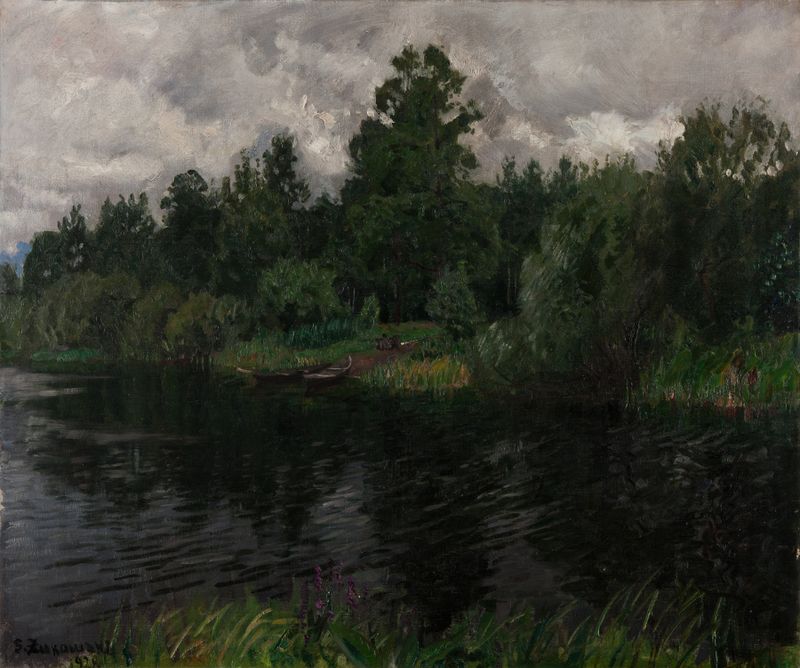
In a time of turmoil and uncertainty, the landscape becomes a sanctuary, a canvas that speaks where words fall short. Look to the foreground, where a tumultuous sky meets a rolling terrain, alive with textures. The brushstrokes are both vigorous and soft, creating an intense contrast between the smooth patches of grass and the chaotic clouds overhead. Notice how the color palette oscillates between dark, brooding tones and intermittent bursts of vibrant green, subtly highlighting the tension between despair and hope. In this artwork, the interplay of light and shadow evokes an unsettling sense of violence lurking just beyond the frame.
The stormy sky, a chaotic swirl of gray and black, contrasts sharply with the serene fields below, suggesting a world grappling with inner turmoil. The illusion of movement within the clouds hints at an impending storm, reflecting the emotional unrest of the era and inviting contemplation of the fragility of peace. Stanislaw Zukowski created Landscape in 1916, a year steeped in the echoes of World War I, while living in Poland. This period saw a profound shift in artistic expression, where traditional notions of beauty collided with the realities of conflict and instability.
For Zukowski, the landscape became more than a mere setting; it was a conduit for expressing the psychological scars left by violence, and a reflection of the human condition amidst chaos.