Grasslands Of The Świsłocka Forest – Scorching June — History & Facts
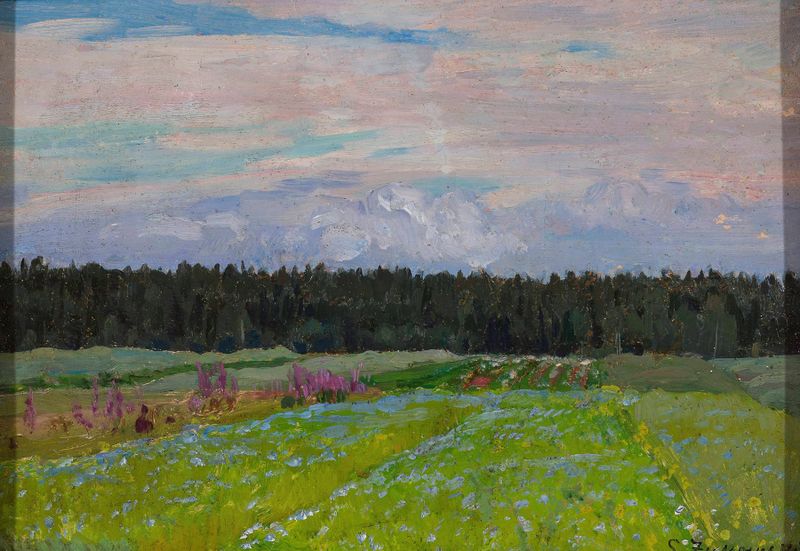
In the vivid hues of Grasslands Of The Świsłocka Forest – Scorching June, decay beckons, whispering tales of transience and the relentless passage of time. Focus on the grassy expanse that stretches across the canvas, where vibrant greens dance under the oppressive summer sun. The artist's brushstrokes blend earthy tones with hints of gold, creating a landscape that is both alive and fading. Notice how the light glimmers on the edge of the forest, illuminating the underbrush, while shadows linger ominously, hinting at the inevitable cycle of life and death.
The composition draws the eye towards the horizon, where the wild grass meets the dark silhouettes of trees, crafting a visual metaphor for nature’s duality. Hidden within the beauty lies a deeper narrative. The vibrant palette contrasts with dark undertones, suggesting that even in abundance, decay is ever-present. The slight withering of certain blades of grass speaks to the impermanence of this lush scene.
This tension invites contemplation of what lies beyond the immediate beauty—an acknowledgment of nature’s relentless march towards decay, and the bittersweet acceptance that beauty is fleeting. In 1938, Stanislaw Zukowski painted this piece during a period of growing tension in Europe. As the world edged toward conflict, he captured an idyllic moment in a Polish landscape, reflecting both a personal connection to his homeland and the broader uncertainties of the time. This work showcases his commitment to portraying the sublime and the temporal, a blend that would resonate with the shifting currents of the art world and society at large.