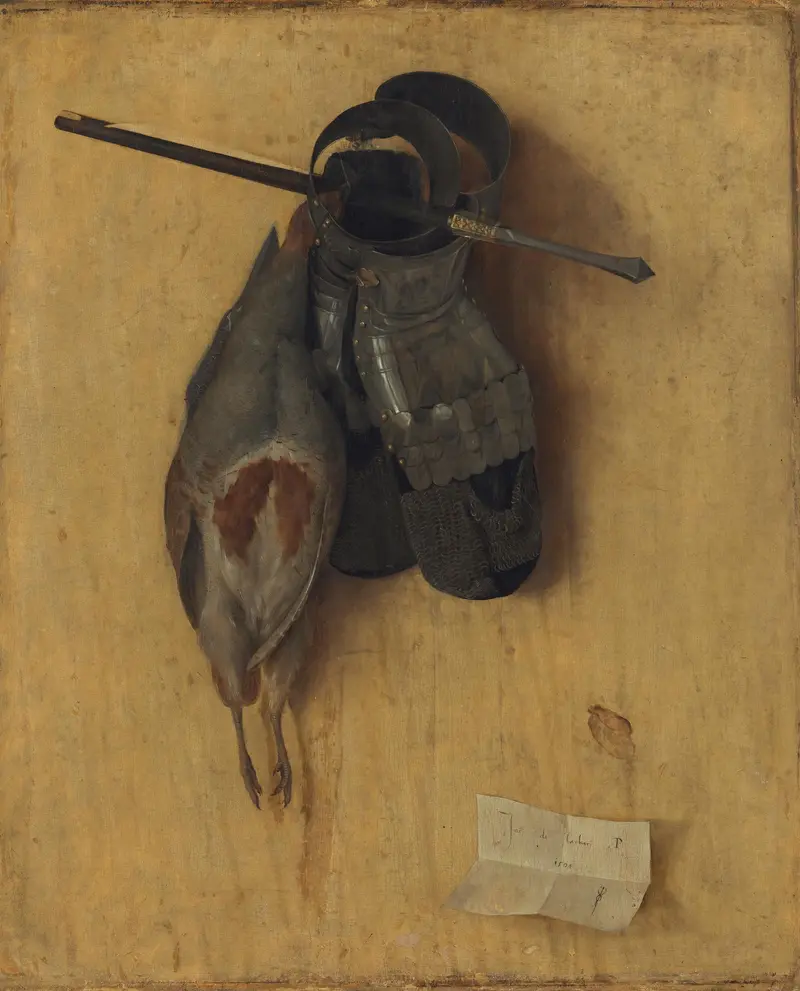
Fruit — History & Facts
When Paul Cézanne painted Fruit in 1880, he was already challenging the conventions of still life, a genre often dismissed as minor by the Parisian art world. What makes this work particularly fascinating is its place in the quiet revolution Cézanne was leading: by the early 1880s, critics and fellow artists were beginning to notice his radical approach to form and color, even as the official Salon continued to reject him. Fruit is one of several still lifes from this period that would later inspire the next generation of painters, including Pablo Picasso and Henri Matisse, who saw in Cézanne’s brushwork and structure the seeds of Cubism and Fauvism.
The painting’s uncertain medium—possibly oil, but not definitively documented—adds a layer of mystery, as does the lack of a clear exhibition record from Cézanne’s lifetime. On the table, a cluster of apples and pears sits in a shallow bowl, their round forms rendered with thick, deliberate strokes. Cézanne chooses a moment of quiet balance: the fruit neither freshly arranged nor in disarray, but caught in a pause between touch and decay. The background is loosely defined, with patches of color that suggest a cloth or wall, but never fully resolve into space, forcing the eye to linger on the objects themselves.
Unlike the lush, detailed arrangements of Jean-Baptiste-Siméon Chardin, Cézanne’s fruit seem to pulse with inner weight, the play of cool and warm tones giving them a solidity that is almost architectural. The brushwork is visible, almost sculptural, emphasizing the act of painting as much as the subject. The early history of Fruit is not well documented; like many of Cézanne’s still lifes, it likely remained in his studio for years before entering a private collection. During his lifetime, Cézanne struggled for recognition, selling few works and often relying on the support of friends such as Camille Pissarro.
Only in the decades after his death did collectors and museums begin to seek out his still lifes, recognizing their foundational role in the birth of modern art. Today, Fruit is valued not only as a study of everyday objects but as a testament to Cézanne’s relentless pursuit of a new pictorial language—a quiet experiment that would change the course of painting.
More Artworks by Paul Cézanne

Apples, Peaches, Pears and Grapes
Paul Cézanne

The Card Players
Paul Cézanne

Rideau, Cruchon et Compotier
Paul Cézanne

The Boy in the Red Vest
Paul Cézanne

Madame Cézanne
Paul Cézanne

Montagne Saint-Victoire
Paul Cézanne

Montagne Sainte-Victoire
Paul Cézanne

Mont Sainte-Victoire Seen beyond the Wall of the Jas de Bouffan
Paul Cézanne

Still Life with Apples
Paul Cézanne

La Montagne Sainte-Victoire
Paul Cézanne