
Galerie Ruinée D’Un Château, d’aprés un vieux dessin — History & Facts
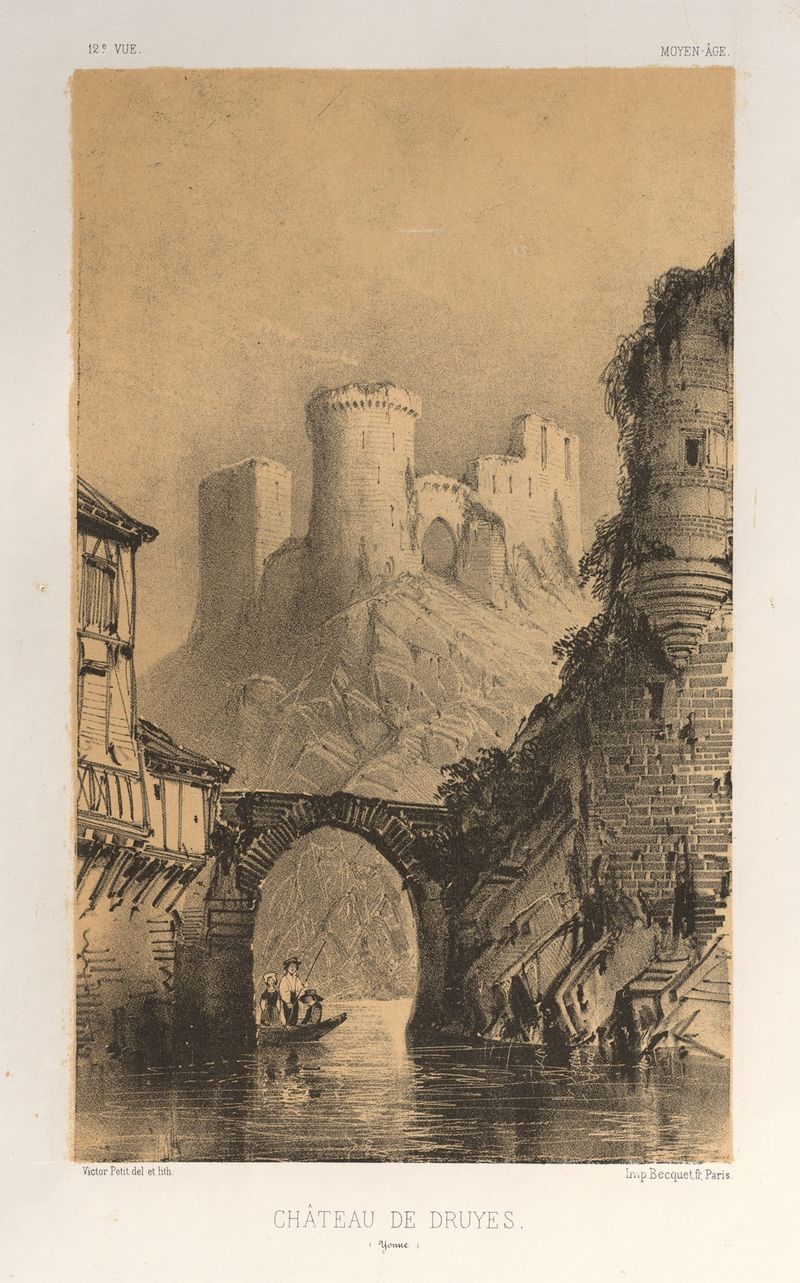
Could beauty survive in a century of chaos? In a world rife with upheaval, a single image can hold the weight of history, whispering truths through its silent corridors. Look to the center of the canvas, where the remnants of a grand château emerge from the shadows of decay. The artist’s delicate brushwork captures the intricate details of crumbling walls and overgrown ivy, inviting the viewer to traverse this hauntingly beautiful ruin. Notice how the muted palette—earthy browns, soft grays, and hints of verdant green—evokes a sense of nostalgia, contrasting the solidity of stone with the fragility of nature’s reclamation.
The play of light across the surface enhances the shifting mood, illuminating the majesty that once was while casting long, dark shadows that hint at what has been lost. As you explore the painting, discover the emotional tension between abandonment and resilience. The twisted vines crawling over the structure symbolize nature’s relentless pursuit of beauty, even in decay, while the empty windows seem to gaze into the void, suggesting the absence of life and laughter once present within these walls. This poignant juxtaposition captures the duality of existence—how beauty can flourish even amidst ruin, a truth that resonates deeply within the human experience. Victor Petit created this work in 1860, a time marked by significant social and political upheaval across Europe.
The artist, working in France, was immersed in a period that sought to balance nostalgia for the past with a fast-changing present. The rise of Romanticism heavily influenced his perspective, encouraging a reflection on lost grandeur and the enduring echoes of history. This painting not only captures a moment in time but also reflects the broader artistic dialogue of its era, revealing a timeless quest for truth amidst chaos.
More Artworks by Victor Petit
Browse all →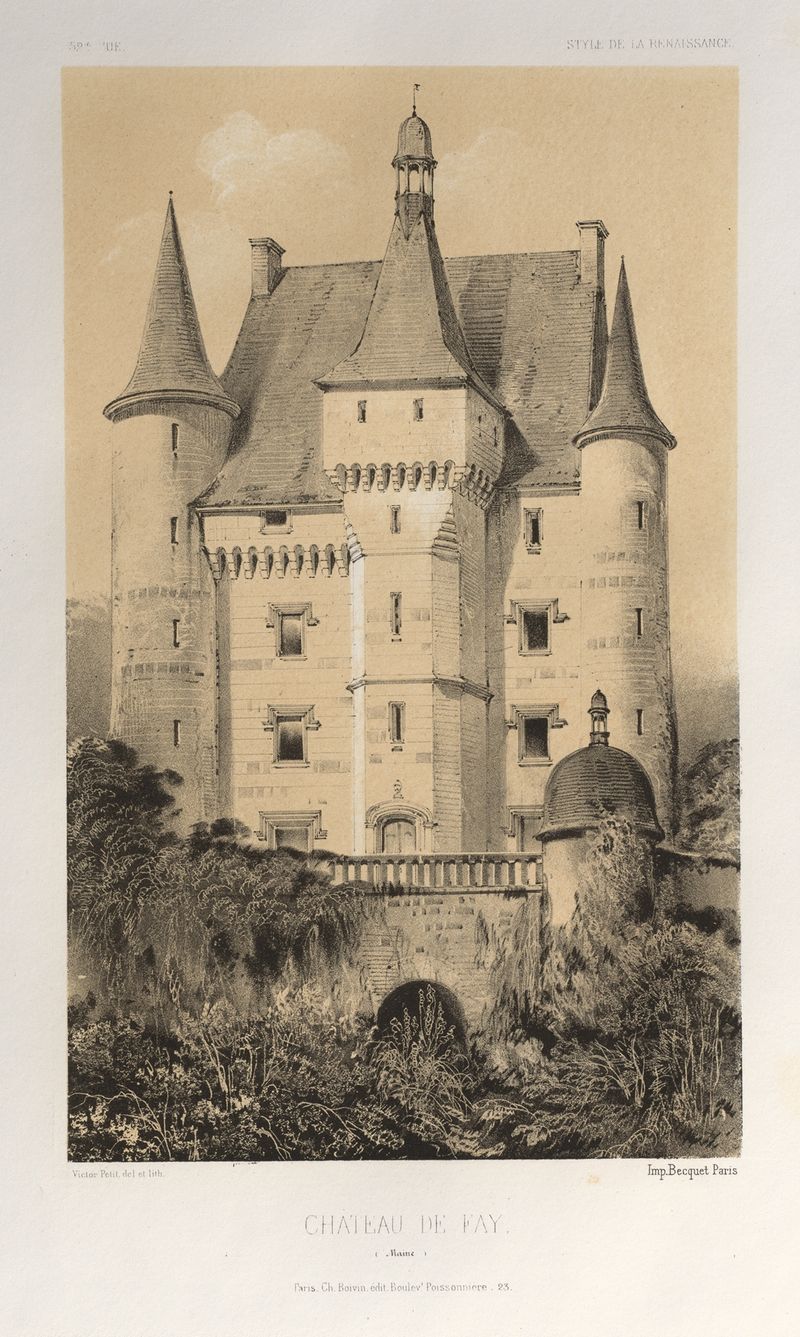
Château De Fay (Maine)
Victor Petit
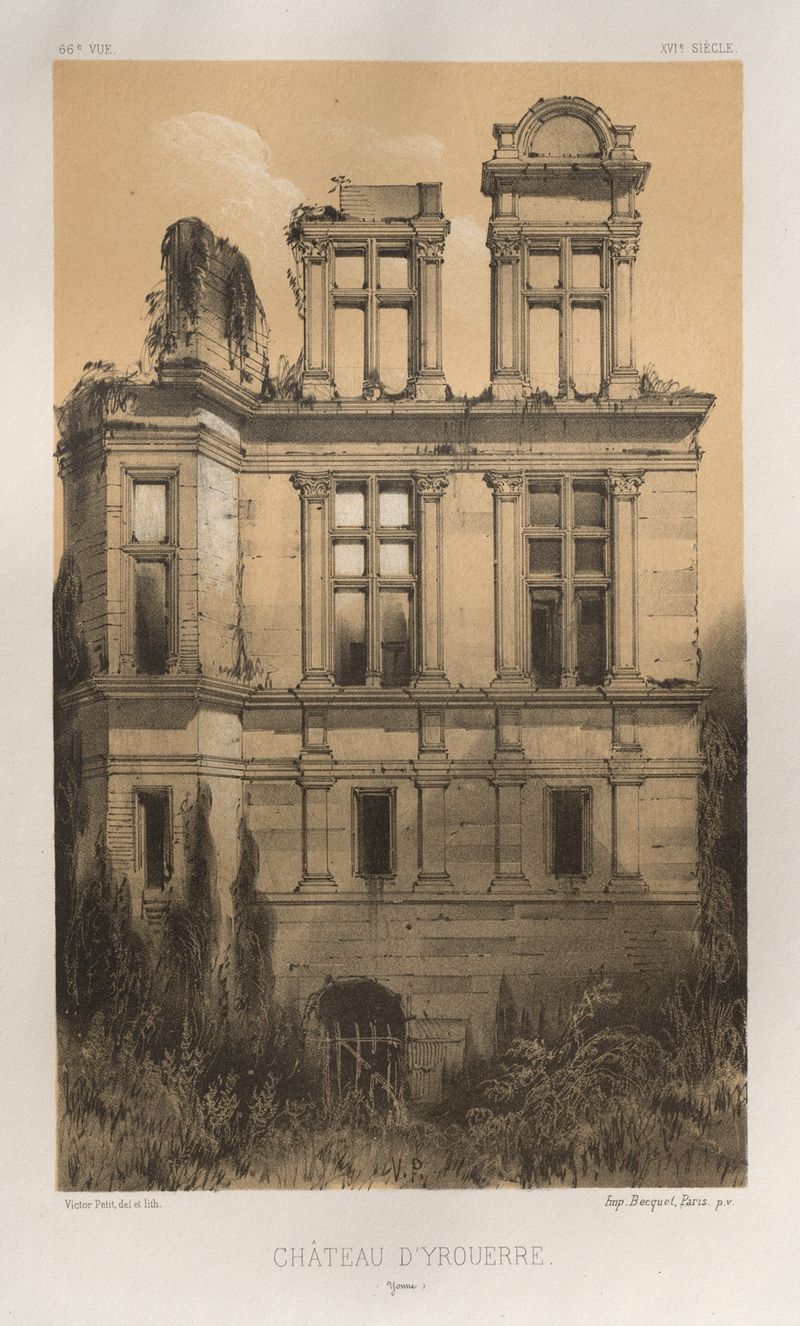
Château D’Yrouerre (Yonne)
Victor Petit
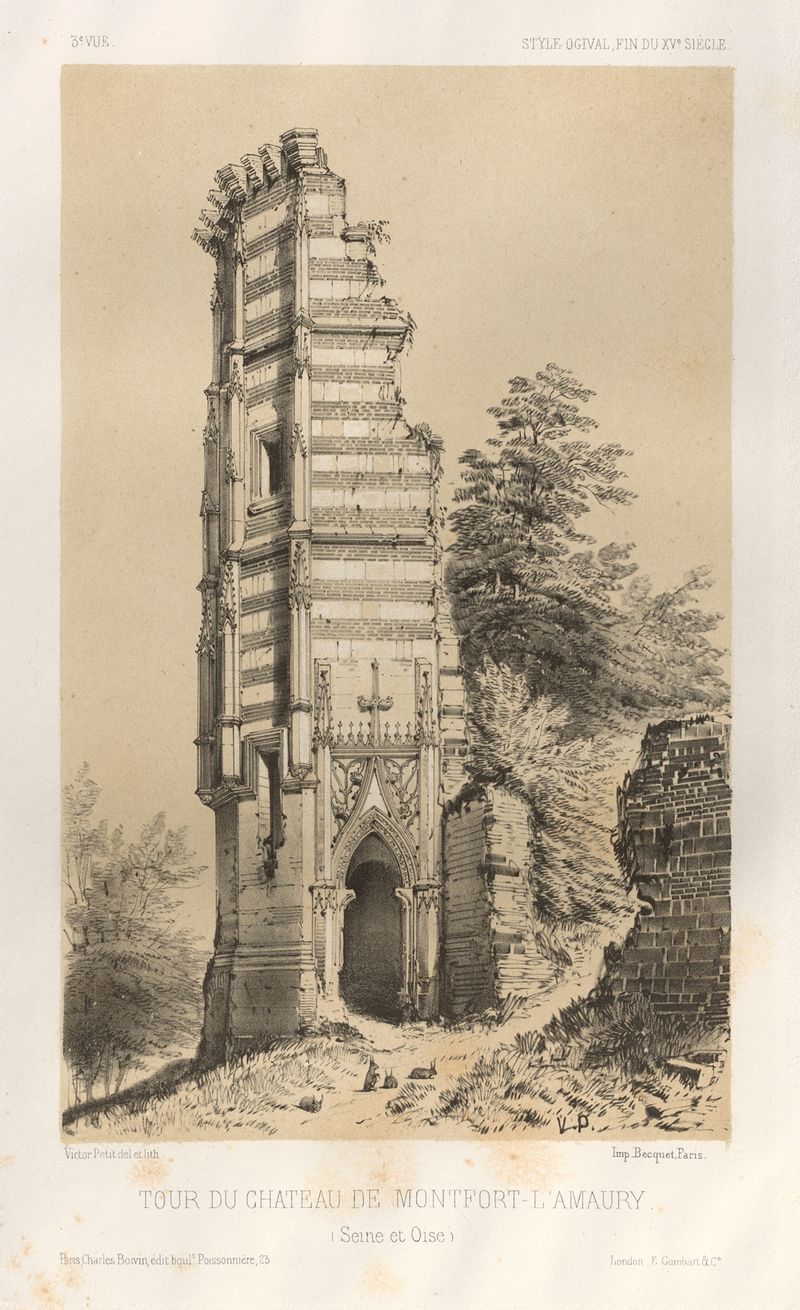
Tour du chateau de Montfort-l’Amaury (Seine-et-Oise)
Victor Petit

Tour Du Port De Marseille (Bouches Du Rhône)
Victor Petit
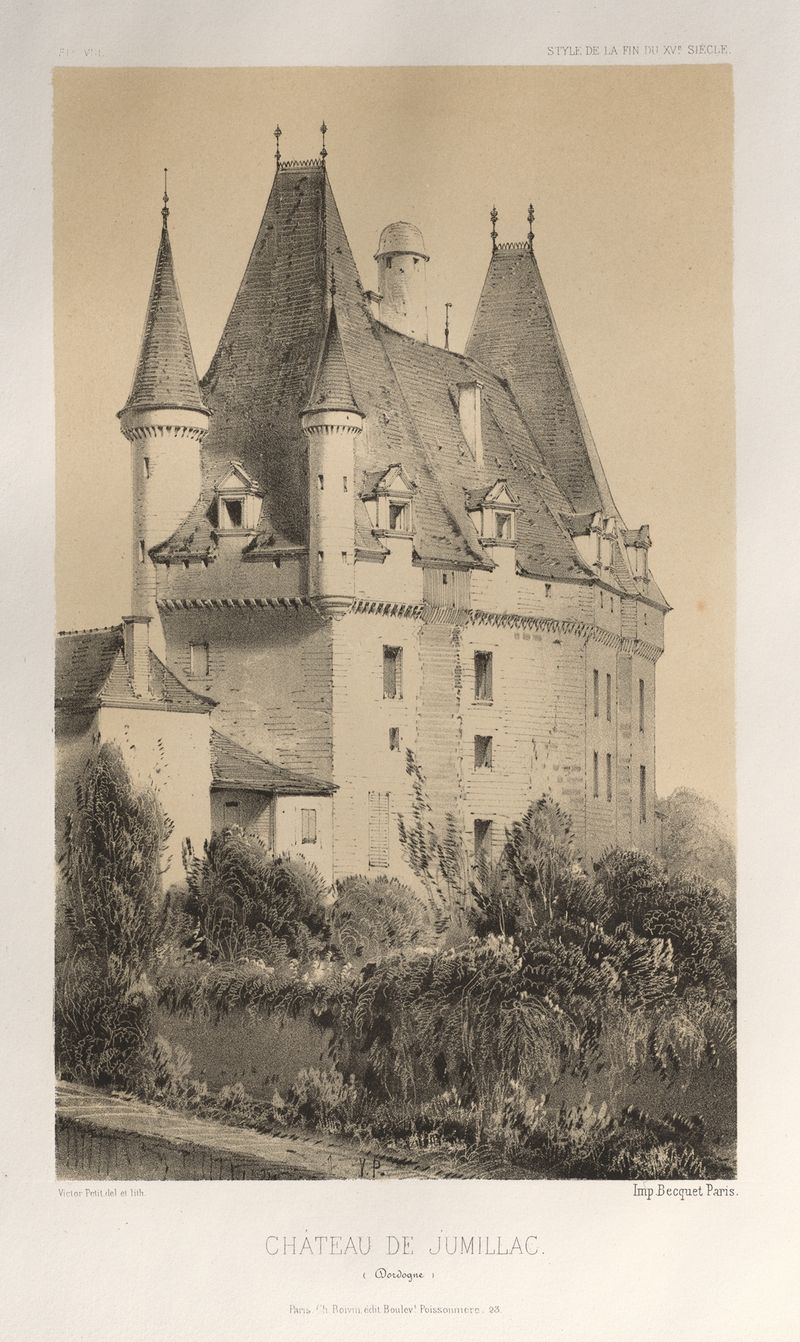
Château De Jumillac (Dordogne)
Victor Petit

Château de Tévray (Eure)
Victor Petit

Galerie Du Château De Jouancy (Saone et Loire)
Victor Petit

Château De Mello (Oise)
Victor Petit
Chateau De Druyes (Yonne)
Victor Petit

Le ChasteLet-Neuf (Corrèze)
Victor Petit





