Garden Motif — History & Facts
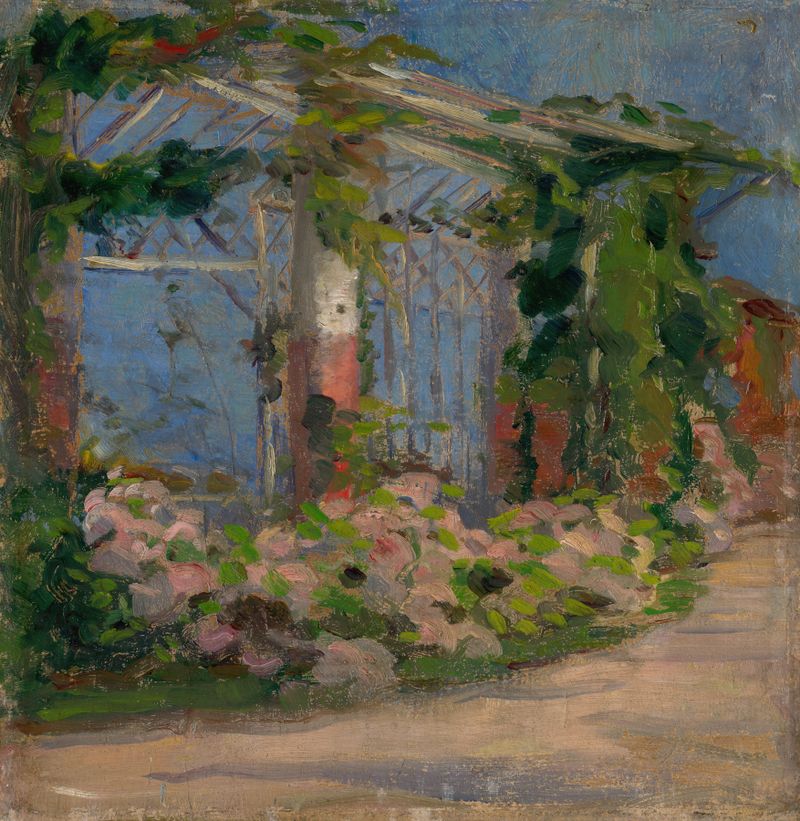
Sunlight filters through a canopy of lush greens, dappling the ground with glimmers of gold. A figure, almost ethereal, weaves through the vibrant tapestry of flowers, their delicate petals swaying gently in the warm breeze. There is a hush in the air, as if the world holds its breath, captivated by the moment of fleeting beauty that dances just beyond grasp. Focus on the cascading foliage in the background, where intricate brushstrokes create a sense of depth and movement.
The palette bursts with vivid greens and vibrant floral colors, drawing your eye to the layers of blossoms and leaves that seem to thrum with life. Notice how the artist employs swirling patterns that invite you to explore the hidden corners of this enchanting garden, each stroke suggesting both reality and the illusion of a dream. In this lush composition lies a delicate tension between reality and artifice—the garden represents not just nature but also the ephemeral nature of beauty itself. While the flowers bloom in their full glory, the shadows hint at the inevitability of decay.
This duality evokes a sense of nostalgia, a longing for moments that are both tangible and fleeting, urging the viewer to reflect on their own experiences with beauty and loss. Pitthordt created Garden Motif between 1905 and 1910 during a period of intense exploration in the realms of impressionism and post-impressionism. Based in Hungary, he was influenced by the rich Art Nouveau movements sweeping across Europe, which celebrated natural forms and organic lines. This painting embodies his desire to capture the ephemeral, merging the vividness of the natural world with a sense of personal introspection in a time when such explorations defined the art landscape.