In a Glade — History & Facts
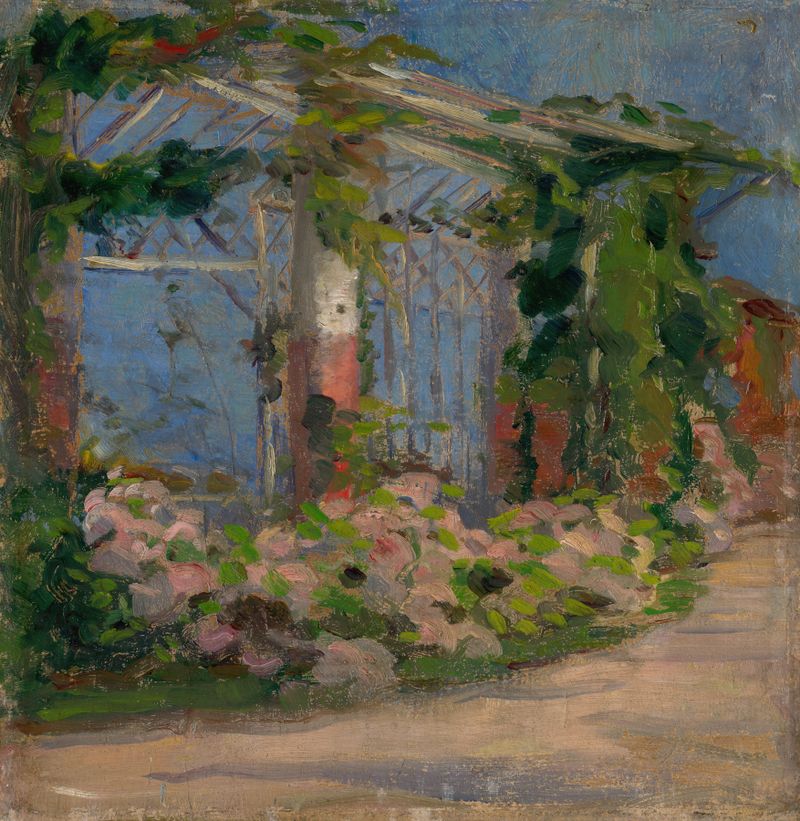
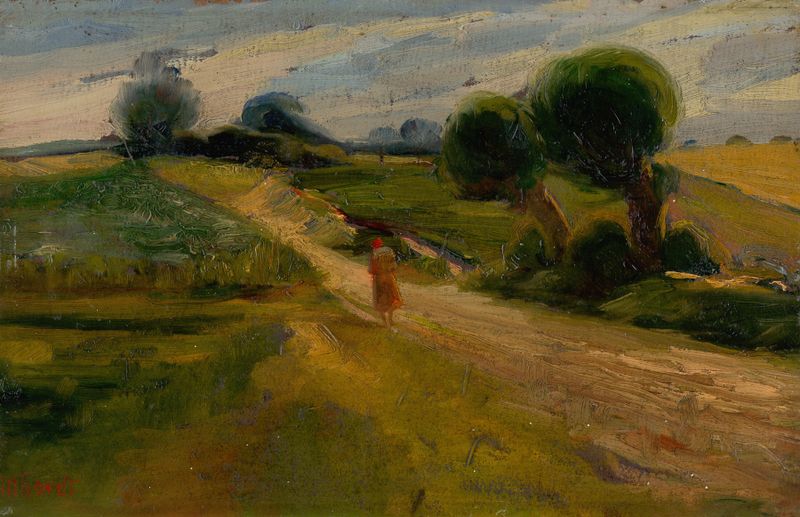
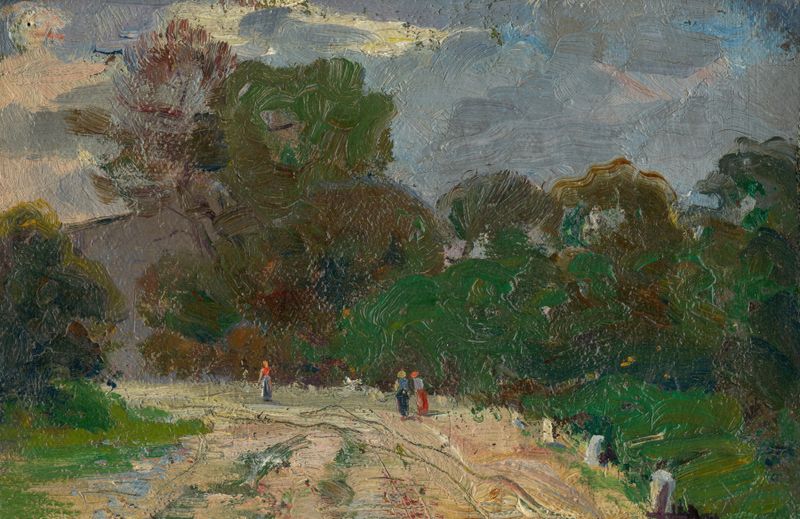
What if beauty was never meant to be finished? In Ľudovít Pitthordt's In a Glade, the interplay of shadow and light invites the viewer to linger in a moment that feels both eternal and ephemeral. Look to the center, where dappled sunlight filters through an arch of verdant branches, casting intricate patterns on the forest floor. The brushwork is soft yet deliberate, creating an atmosphere that feels alive and breathing. Notice the rich greens and earthy browns, which fuse together to form a harmony that mirrors nature’s complexity.
The composition gently draws the eye around the scene, revealing hidden nooks and crannies where details await discovery. Delve into the contrasts within the painting — the bright clarity of light versus the mysterious depths of shadow symbolize the duality of existence itself. Each shadowy corner seems to hold secrets, suggesting that beauty often hides in the depths of the unknown, while the illuminated areas invite contemplation and warmth. This tension between light and dark emphasizes the transient nature of the moment, urging the viewer to appreciate both what is seen and what remains hidden. During the late 19th century, when this piece was created, Pitthordt was immersed in a burgeoning movement towards realism in art.
Working in Hungary during a time of great cultural change, he sought to capture the essence of nature through meticulous observation. This period reflected a broader movement in Europe, where artists endeavored to bridge the gap between romantic ideals and the raw beauty of the natural world.