Landscape — History & Facts
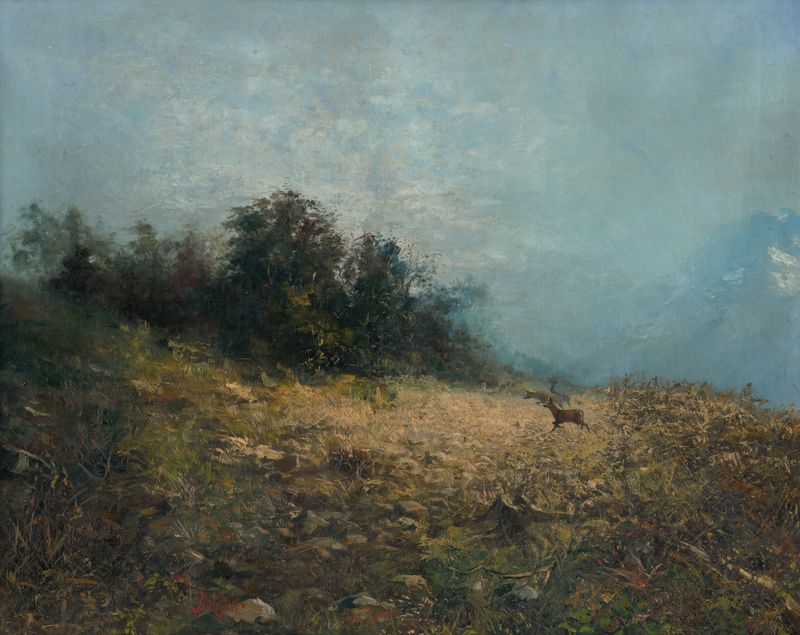
In the stillness of the canvas, destinies intertwine with brushstrokes, inviting introspection on the paths not taken. Focus on the lush greens that dominate the foreground, where the vibrant strokes pulse with life, each blade of grass a testament to nature's resilience. Notice how the light filters through the clouds, casting dappled shadows that dance along the rolling hills. The horizon beckons, painted in soft hues of blue and gold, creating a harmonious contrast that draws the eye outward and upward. In the distance, the looming mountains suggest strength and permanence, while the gentle curves of the land in the foreground evoke a sense of transience and vulnerability.
Amidst this balance lies a tension between the known and the unknown, mirroring the interconnectedness of human experiences and the landscapes they inhabit. Each element appears deliberate, a reminder that every life holds stories of struggle and hope, intertwined with the forces of nature. Created in 1910, this piece emerged during a period of profound transformation in Central Europe, as the Austro-Hungarian Empire faced political and social upheaval. Ľudovít Pitthordt, influenced by the changing tides of modernity, sought to capture the essence of the landscape not just as a visual spectacle, but as a reflection of human destiny within it.
His work stands as a bridge between the natural world and the complexities of contemporary life, resonating with themes of continuity and change.