
Garden outside Rome — History & Facts
In a sun-drenched garden outside Rome, a gentle breeze stirs the vibrant blooms, their colors a riot of reds, yellows, and blues. Nearby, a woman kneels, her fingers tenderly coaxing the soil, while a child rests under a tree, bathed in dappled sunlight. The quiet hum of nature envelops them, punctuated only by the distant song of birds, creating a serene yet dynamic tableau that invites you to breathe deeply and linger. Look to the left at the sunlit flowers, their petals almost glowing with life as they sway slightly in the breeze.
Notice how the artist captures the interplay of light and shadow, illuminating the woman's labor while casting soft edges around the child’s form. The brushstrokes are delicate yet confident, blending color and form to evoke a sense of harmony. The composition invites your eye to traverse the garden, showcasing the lush foliage and the vibrant earth, emphasizing the connection between humanity and nature. Amidst the tranquil beauty, there are deeper themes at play—an exploration of nurturing, both of the garden and the child.
The juxtaposition of the woman’s active toil and the child’s leisurely repose hints at the cycles of life, the labor that sustains growth and the innocence that basks in its abundance. This duality captures the essence of familial bonds and the nurturing aspects of life, reflecting both the labor and the reward of cultivating love and beauty. In 1882, the artist crafted this work while living in Italy, a time when Impressionism was gaining momentum across Europe. Skånberg, influenced by the natural beauty of his surroundings, sought to immortalize fleeting moments of everyday life.
This painting reflects his personal journey and the broader artistic movement that emphasized the significance of light, color, and the intimate relationships between people and their environments.
More Artworks by Carl Skånberg
Browse all →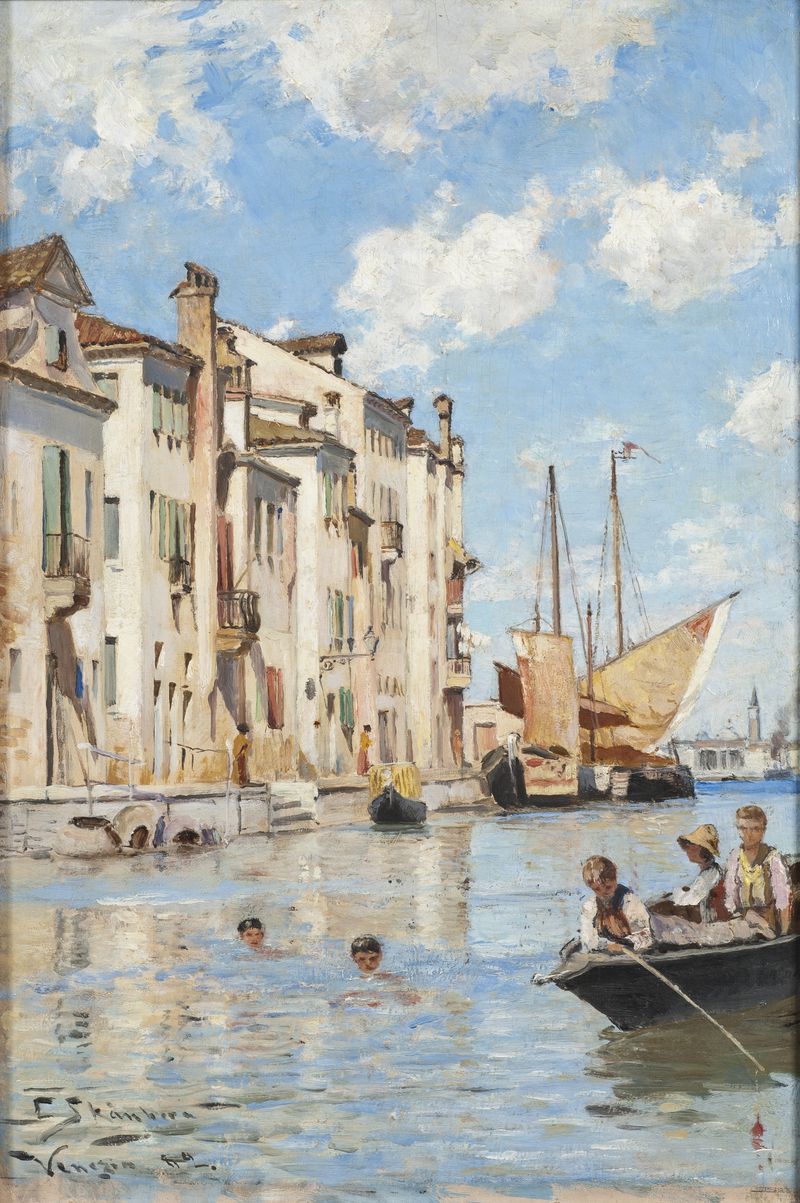
Children Bathing
Carl Skånberg

The Grand Canal, Venice
Carl Skånberg
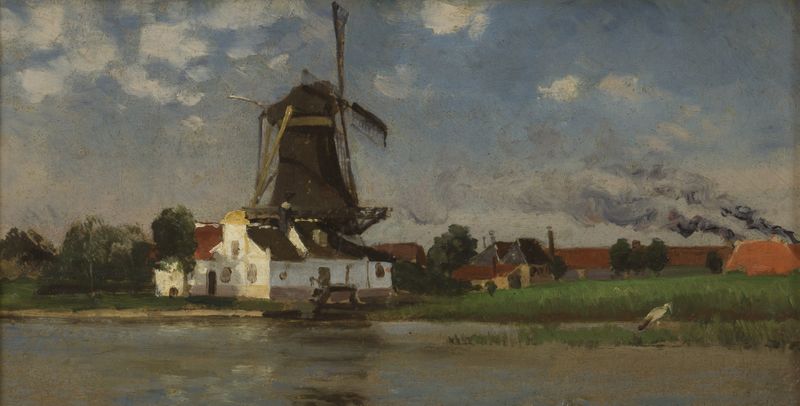
Dutch Motif
Carl Skånberg

Fruit Barge in Venice. Sketch
Carl Skånberg

The Harbour, Dordrecht
Carl Skånberg

Winter. View of Eriksberg, Stockholm
Carl Skånberg

The Church Tower, Dordrecht
Carl Skånberg

Mosebacke Square
Carl Skånberg

Dutch Seaport
Carl Skånberg
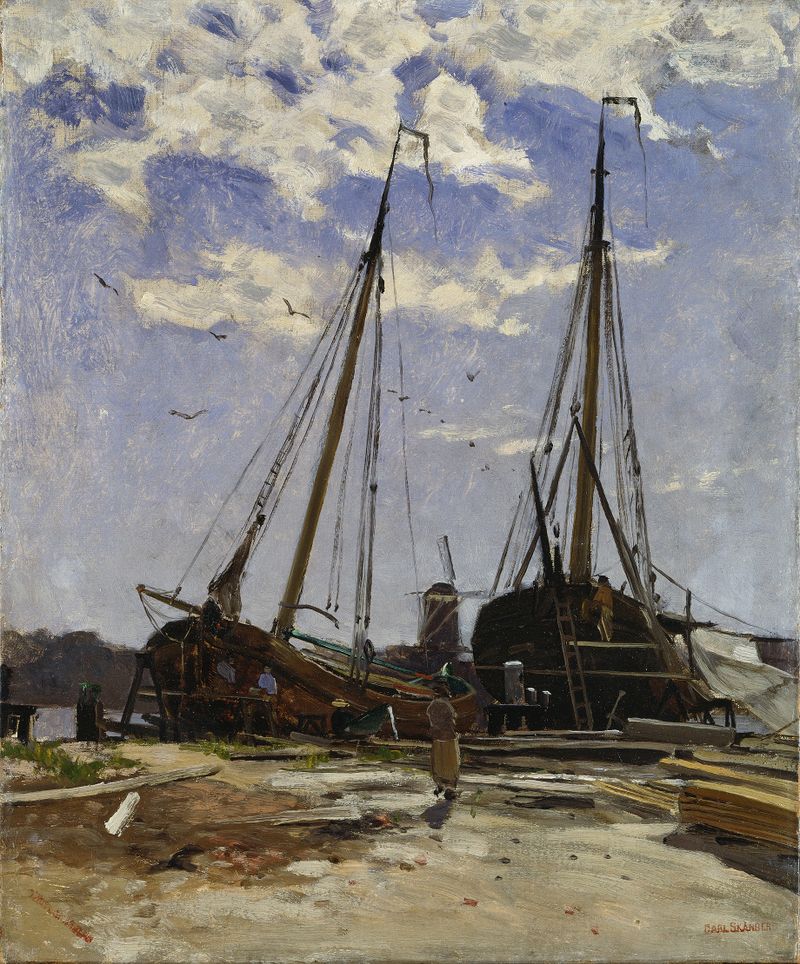
Study for Dordrecht Harbour, 1880, Göteborgs konstmuseum
Carl Skånberg





