
Fruit Barge in Venice. Sketch — History & Facts
Can paint confess what words never could? In the hands of Carl Skånberg, light becomes an unspoken language, revealing the secrets of life and commerce. Focus first on the vibrant interplay of color that defines this sketch. The sunlight dances upon the surface of the water, casting shimmering reflections that capture the essence of Venice. Notice how the artist employs swift, expressive strokes to delineate the barge, its cargo of fruit radiating warmth and vitality against the cool blues and greens of the canal.
Each fruit appears to carry a story, a burst of life against the backdrop of the aging architecture. Delve deeper into the contrasts this work presents; the buoyant life of the market juxtaposed with the stillness of the canal evokes a sense of fleeting moments. The energy surrounding the barge hints at a bustling trade, while the tranquil waters symbolize the passage of time. This coexistence of vibrancy and calm speaks to the duality of existence, capturing the transient beauty of everyday life in a city steeped in history. In 1882, Skånberg painted this work during a time of artistic exploration, when Impressionism was gaining traction across Europe.
Residing in Venice, he was influenced by the local light and atmosphere, aiming to reflect both the physical and emotional landscapes of the city. His sketches and paintings were part of an evolving narrative within the art world, seeking to portray reality through a lens of color and light rather than mere representation.
More Artworks by Carl Skånberg
Browse all →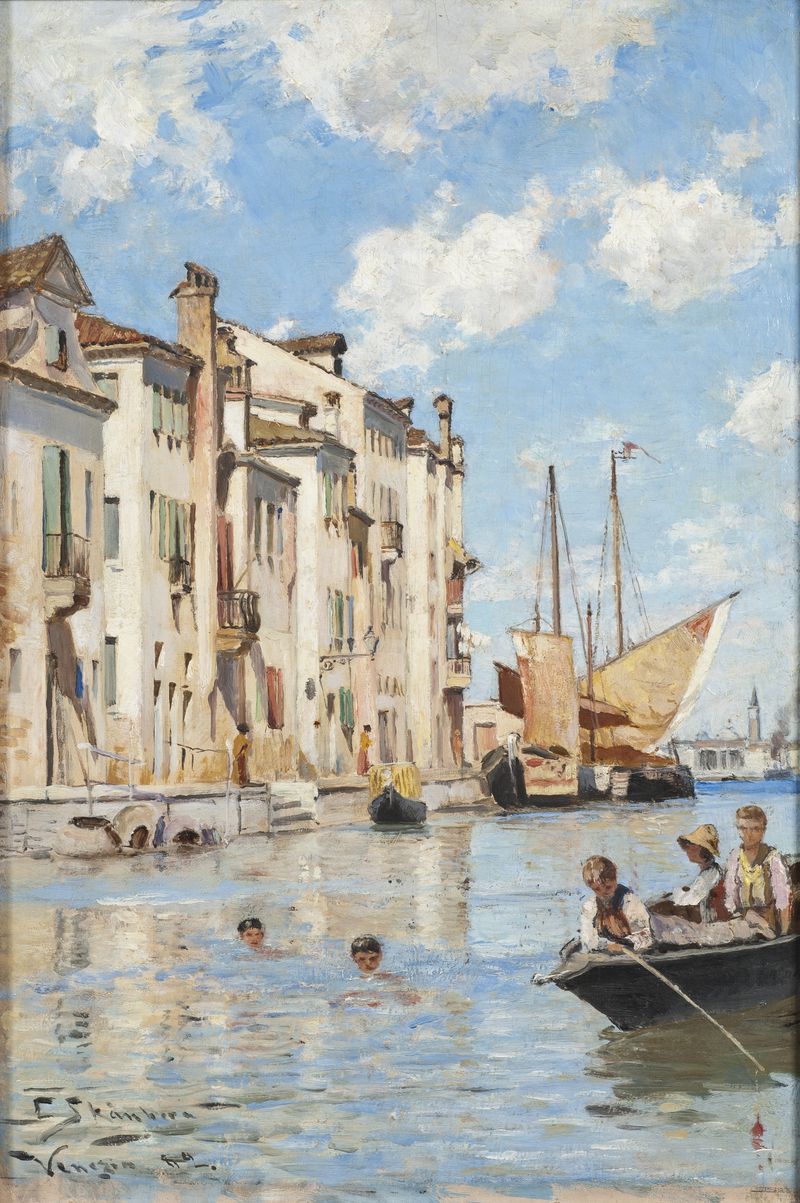
Children Bathing
Carl Skånberg

The Grand Canal, Venice
Carl Skånberg
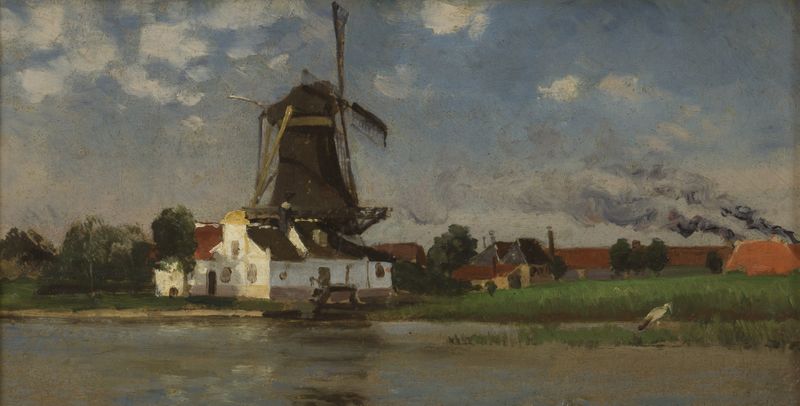
Dutch Motif
Carl Skånberg

The Harbour, Dordrecht
Carl Skånberg

Winter. View of Eriksberg, Stockholm
Carl Skånberg

The Church Tower, Dordrecht
Carl Skånberg

Garden outside Rome
Carl Skånberg

Mosebacke Square
Carl Skånberg

Dutch Seaport
Carl Skånberg
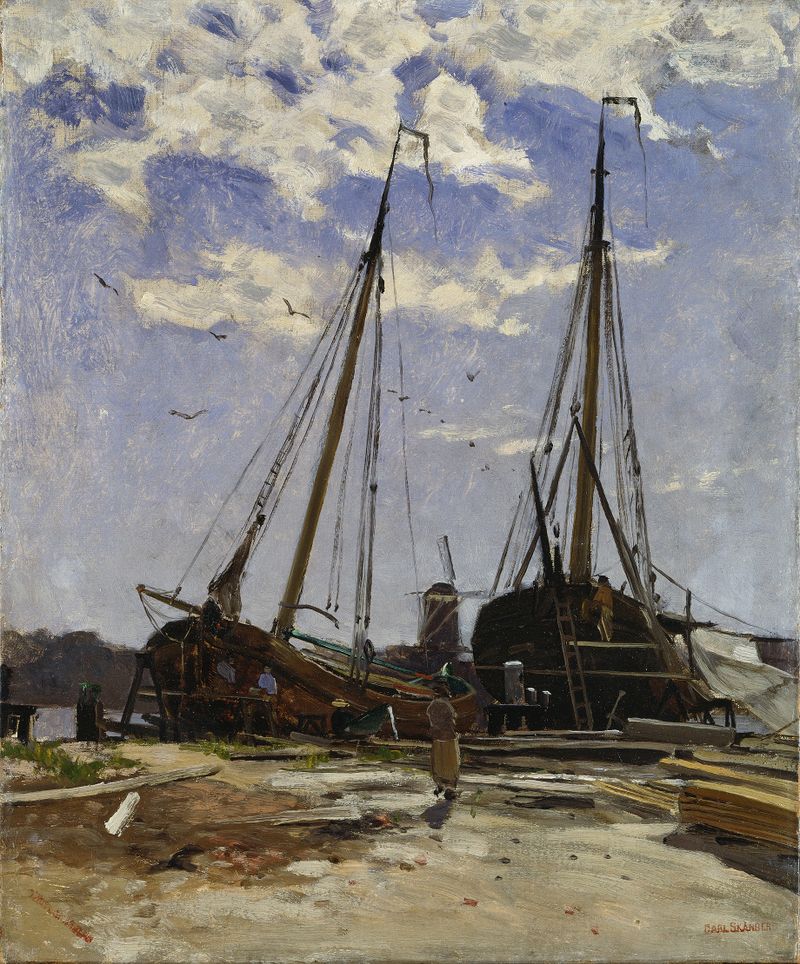
Study for Dordrecht Harbour, 1880, Göteborgs konstmuseum
Carl Skånberg





