
The Grand Canal, Venice — History & Facts
In this moment of reflection, we find ourselves caught between reality and illusion, as if stepping into a world where transformation is inevitable. Look to the left at the fluid brushstrokes that mimic the gentle ripple of water, inviting you to trace the path of sunlight dancing across the Grand Canal. Notice how the soft pastels of blue and gold blend harmoniously, evoking a sense of nostalgia and serenity. The meticulously depicted gondolas glide through the scene, their dark forms contrasting against the luminous reflections on the water, while the architectural grandeur of Venice stands watch, silent yet vibrant. Deeper still, the painting speaks of a fleeting moment – a pause before the inevitable shift of time.
The vibrant hues suggest the warmth of a fading day, a reminder that beauty is often transient. The interplay between light and shadow enhances the emotional tension, illustrating not only the physical space of the canal but also the deeper currents of life that flow through it, hinting at both the joy and melancholy inherent in memory. In 1882, Carl Skånberg created this piece while residing in Venice, a city that was undergoing its own transformations amidst changes in the broader art world. Impressionism was gaining ground, challenging traditional techniques and perspectives, and Skånberg was influenced by these evolving ideas.
His work reflects this transitional moment in art history, bridging classical themes with the modern perceptions emerging in the late 19th century.
More Artworks by Carl Skånberg
Browse all →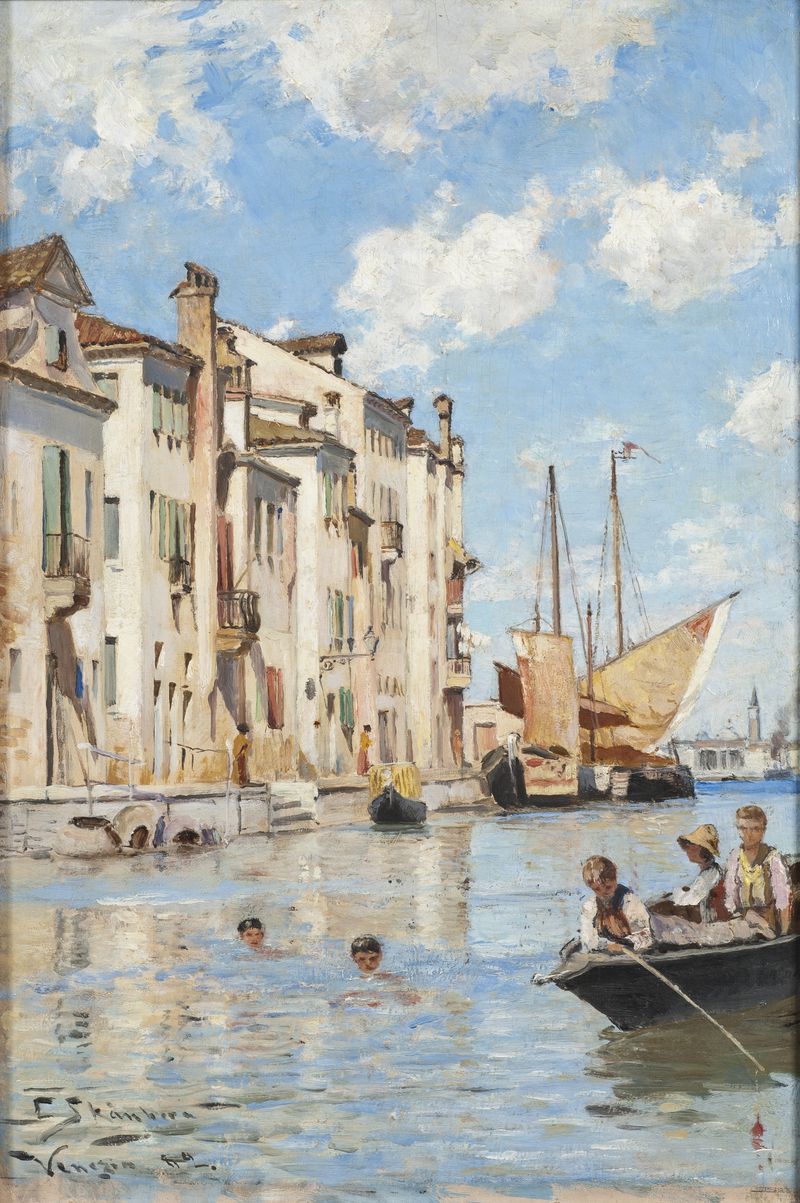
Children Bathing
Carl Skånberg
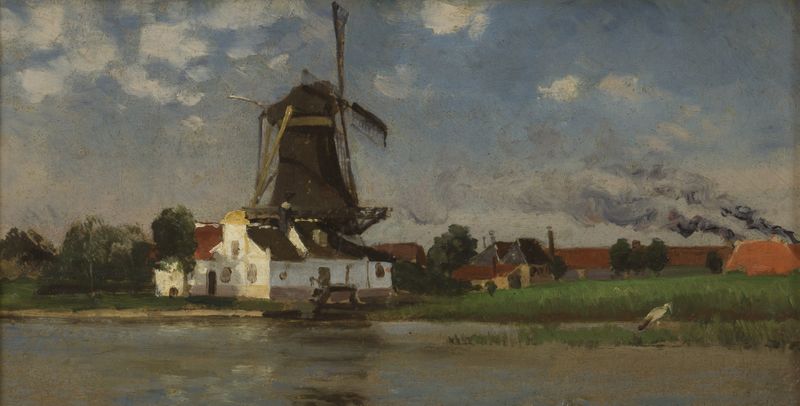
Dutch Motif
Carl Skånberg

Fruit Barge in Venice. Sketch
Carl Skånberg

The Harbour, Dordrecht
Carl Skånberg

Winter. View of Eriksberg, Stockholm
Carl Skånberg

The Church Tower, Dordrecht
Carl Skånberg

Garden outside Rome
Carl Skånberg

Mosebacke Square
Carl Skånberg

Dutch Seaport
Carl Skånberg
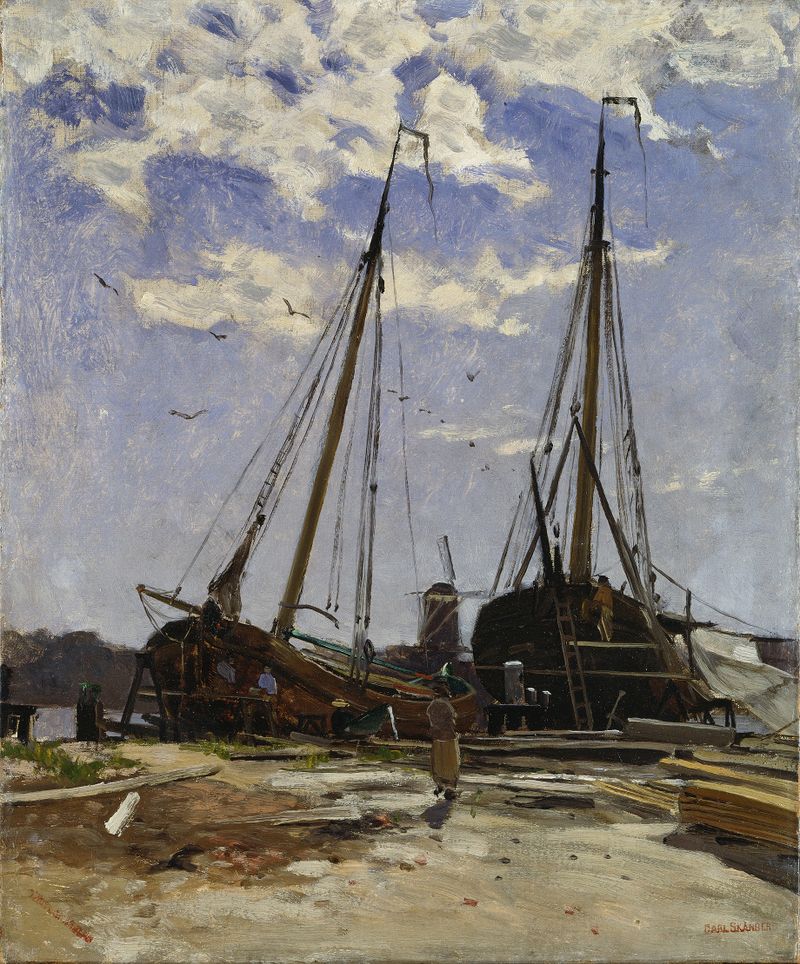
Study for Dordrecht Harbour, 1880, Göteborgs konstmuseum
Carl Skånberg





