
The Harbour, Dordrecht — History & Facts
In the embrace of shadow, a deeper truth awaits, where the ordinary becomes extraordinary. Look to the left at the gentle curves of the water's edge, where soft, muted blues meet the whisper of the horizon. Notice how the light dances across the surface, transforming the familiar into a symphony of movement that flows with the boats. The palette, rich with earthy tones contrasted by strokes of sky and water, invites the eye to wander and linger, weaving through the myriad of details that populate this serene moment—a floating world seemingly untouched by time. Delving deeper, consider the tension between the vessels anchored in the foreground and the expansive emptiness of the water behind them.
Each boat, with its unique character, hints at stories untold, while the stillness of the scene evokes a feeling of pause—a breath suspended in time. Shadows cast by the boats stretch languidly across the surface, suggesting the weight of history and the promises of journeys yet to come. In 1880, The Harbour, Dordrecht emerged during a pivotal moment for Carl Skånberg, who was seeking to capture the essence of everyday life through impressionistic techniques. Living in the heart of the Dutch landscape, he was influenced by the surrounding beauty and serenity while also navigating the evolving art scene that favored a burgeoning sense of realism and emotional depth.
More Artworks by Carl Skånberg
Browse all →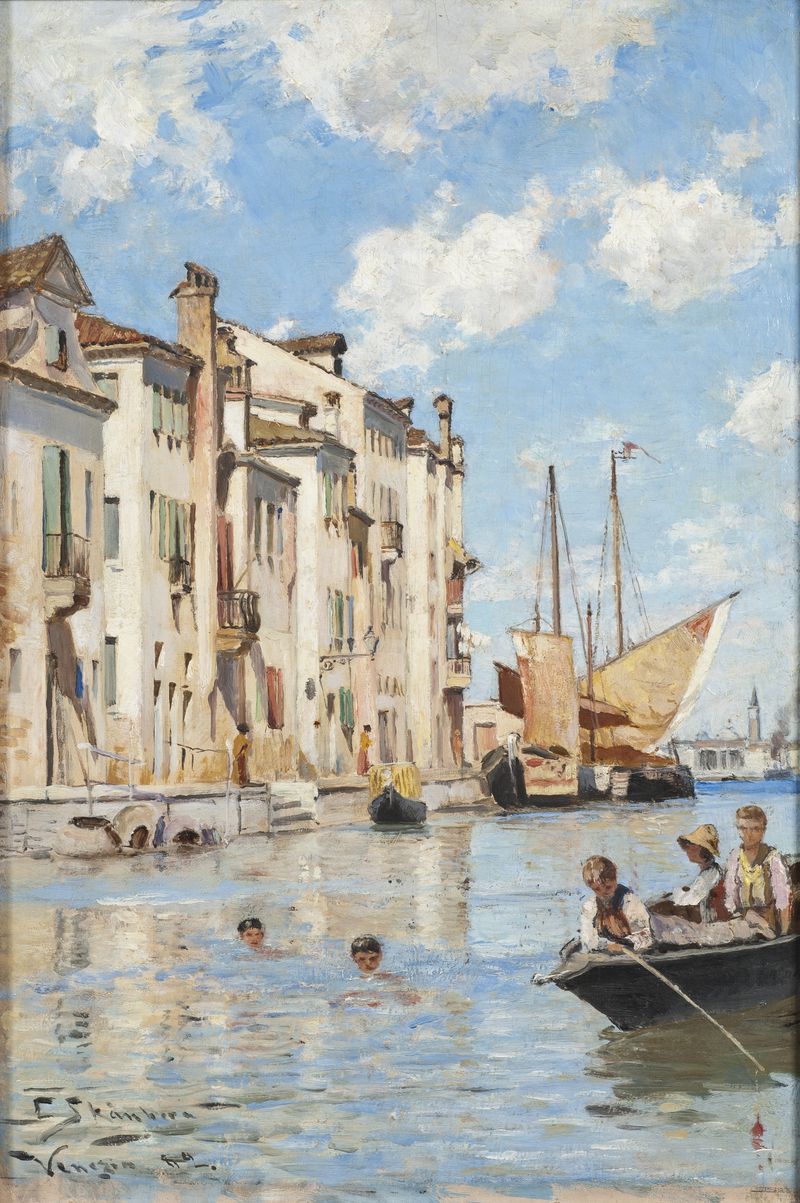
Children Bathing
Carl Skånberg

The Grand Canal, Venice
Carl Skånberg
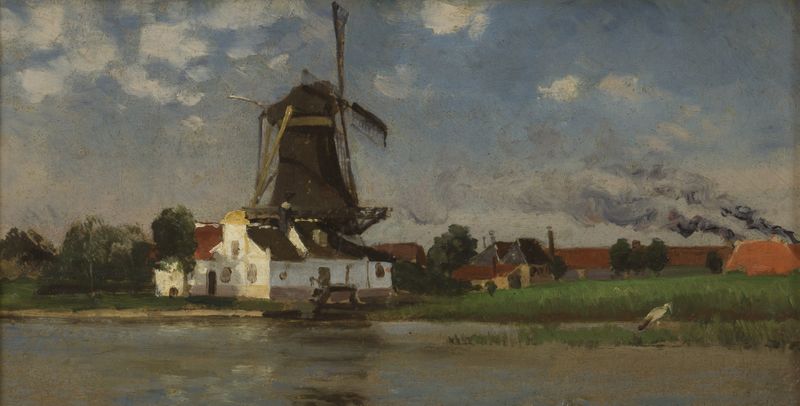
Dutch Motif
Carl Skånberg

Fruit Barge in Venice. Sketch
Carl Skånberg

Winter. View of Eriksberg, Stockholm
Carl Skånberg

The Church Tower, Dordrecht
Carl Skånberg

Garden outside Rome
Carl Skånberg

Mosebacke Square
Carl Skånberg

Dutch Seaport
Carl Skånberg
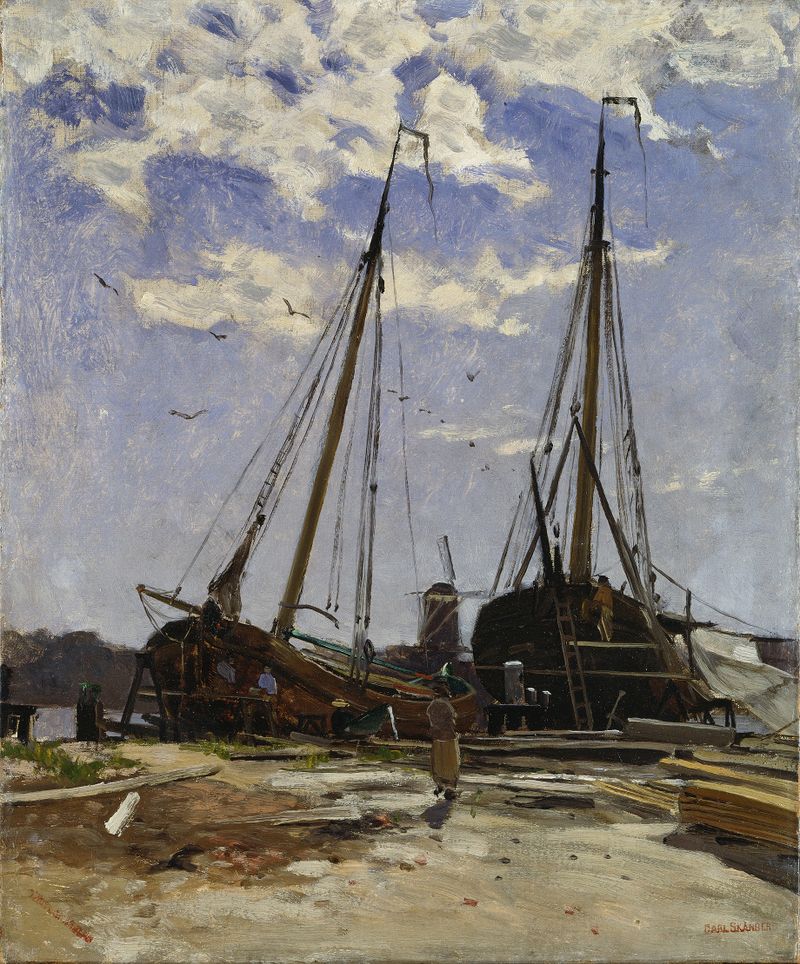
Study for Dordrecht Harbour, 1880, Göteborgs konstmuseum
Carl Skånberg





