
Winter. View of Eriksberg, Stockholm — History & Facts
This profound reflection invites us to consider the delicate balance between beauty and impermanence, a theme deftly captured within the canvas before us. It speaks to the fleeting nature of life and the weight of memories that linger in the frosty air of winter. Look to the foreground where the gentle sway of bare trees reaches into the crisp, pale sky, their stark branches contrasting with the soft white blanket of snow below. The soft, muted palette of grays and blues envelops the landscape, evoking a sense of stillness, while dashes of warm ochre hint at the life that once flourished.
Notice how the light plays upon the snowy terrain, casting delicate shadows that dance like whispers of what was, leading the eye towards the distant horizon. Beneath the tranquil surface lies an emotional tension, a meditation on mortality and the passage of seasons. The skeletal trees serve as reminders of life’s transience, each branch a testament to time’s relentless march. Yet, there’s an underlying warmth in the glowing light that brushes the snow, inviting the viewer to reflect on the beauty in change and the memories woven through the fabric of winter. In 1880, when this piece was painted, Skånberg was deeply immersed in the artistic environment of Sweden, a period marked by burgeoning nationalism and a focus on capturing the natural landscape.
This work reflects his personal explorations with light and form, as well as a broader movement embracing the romanticism of the Nordic experience. It is a quiet yet poignant statement in a world where the ephemeral often eclipses the eternal.
More Artworks by Carl Skånberg
Browse all →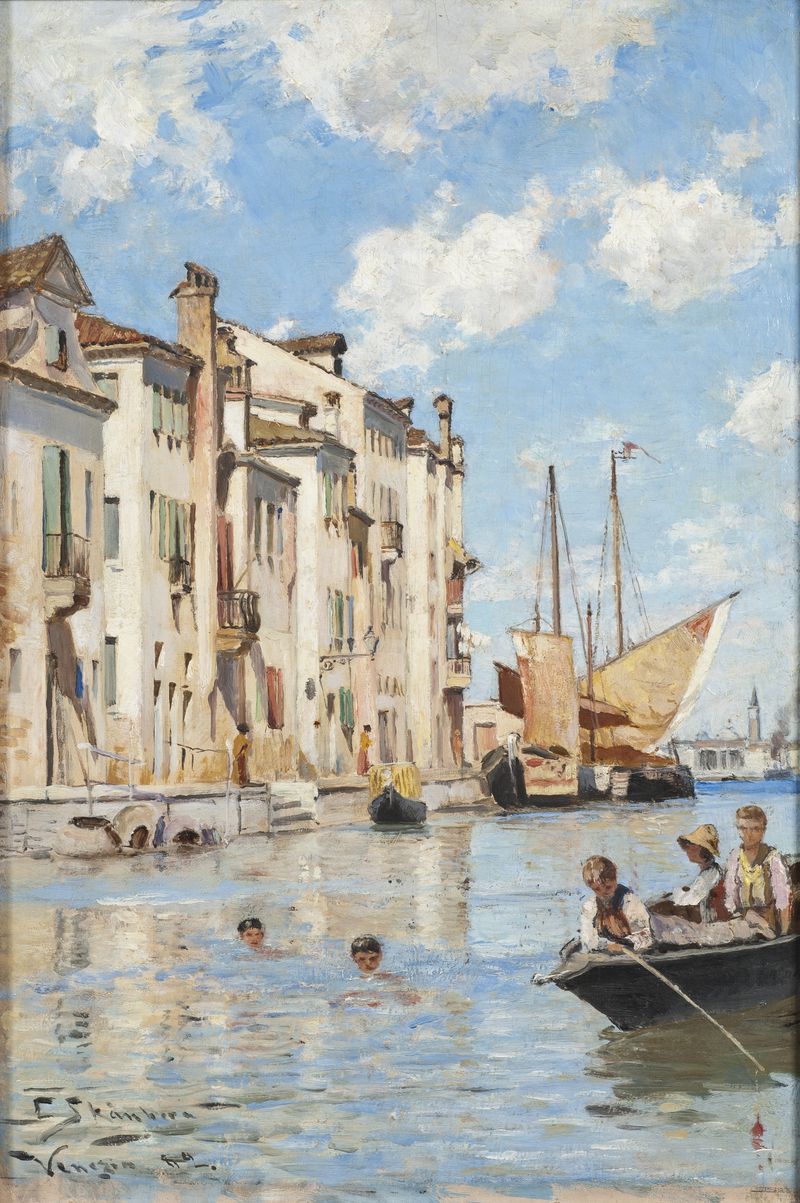
Children Bathing
Carl Skånberg

The Grand Canal, Venice
Carl Skånberg
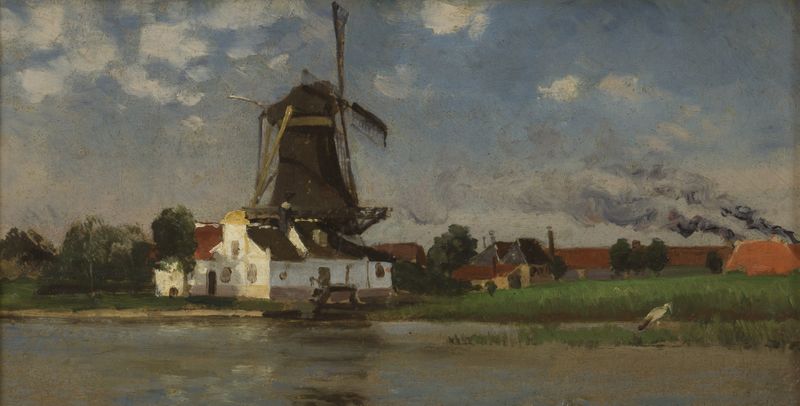
Dutch Motif
Carl Skånberg

Fruit Barge in Venice. Sketch
Carl Skånberg

The Harbour, Dordrecht
Carl Skånberg

The Church Tower, Dordrecht
Carl Skånberg

Garden outside Rome
Carl Skånberg

Mosebacke Square
Carl Skånberg

Dutch Seaport
Carl Skånberg
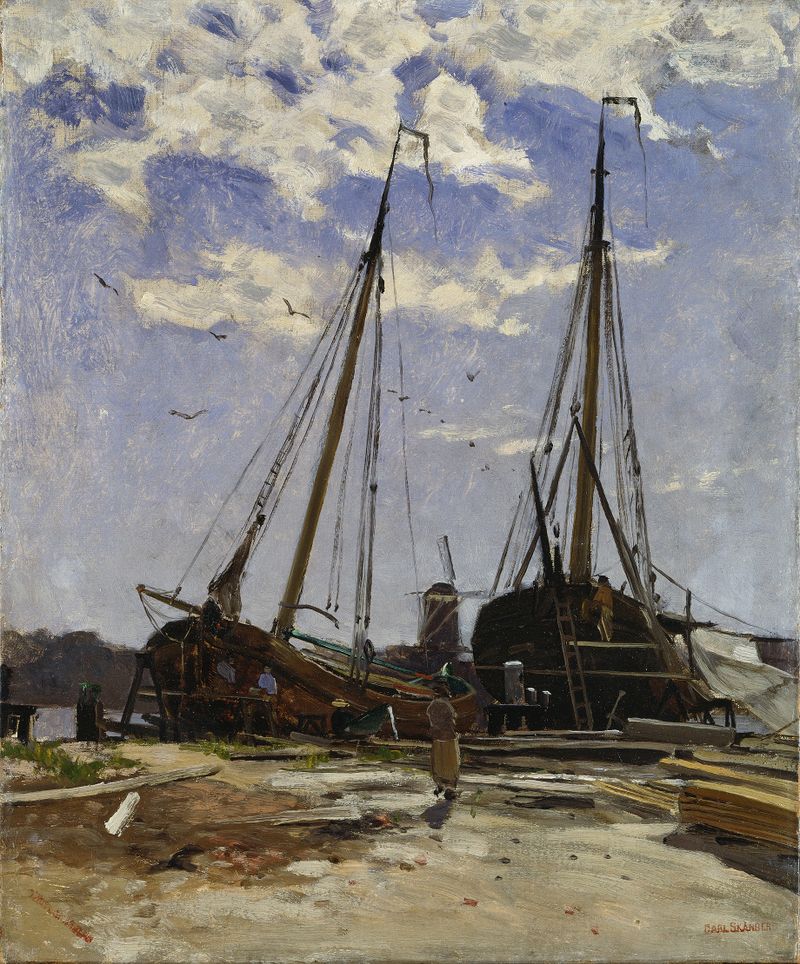
Study for Dordrecht Harbour, 1880, Göteborgs konstmuseum
Carl Skånberg





