
Dutch Seaport — History & Facts
What if silence could speak through light? In Carl Skånberg’s Dutch Seaport, this question reverberates through the stillness of the scene, hinting at unspoken tensions beneath the surface. Look to the foreground, where the water seems to cradle the ships gently, reflecting the muted colors of the twilight sky. Notice how the light falls upon the sails, illuminating their form with a golden hue that contrasts starkly against the somber blues and grays of the harbor. The composition elegantly balances the bustling clutter of vessels with the tranquil embrace of the water, drawing your eye from the active docks to the serene horizon. Yet, beneath this picturesque setting lies a deeper narrative of betrayal.
The boats, seemingly at rest, might symbolize the precarious balance of trust among the merchants and sailors, caught in an age where commerce could be as treacherous as the tides. The distant figures, their postures relaxed yet watchful, suggest an underlying tension; perhaps they are wary of the fragile alliances that keep the peace in this bustling seaport. The play of light and shadow further accentuates this duality, blending comfort with unease. In 1875, Skånberg painted this work during a period marked by rapid industrial growth in Europe, where the seaports symbolized both opportunity and risk in trade.
Living in the Netherlands, he captured the essence of his surroundings while reflecting on the broader societal changes impacting the maritime world. This painting stands as a testament to his keen observation of both the beauty and fragility of human connections in the bustling economy of the time.
More Artworks by Carl Skånberg
Browse all →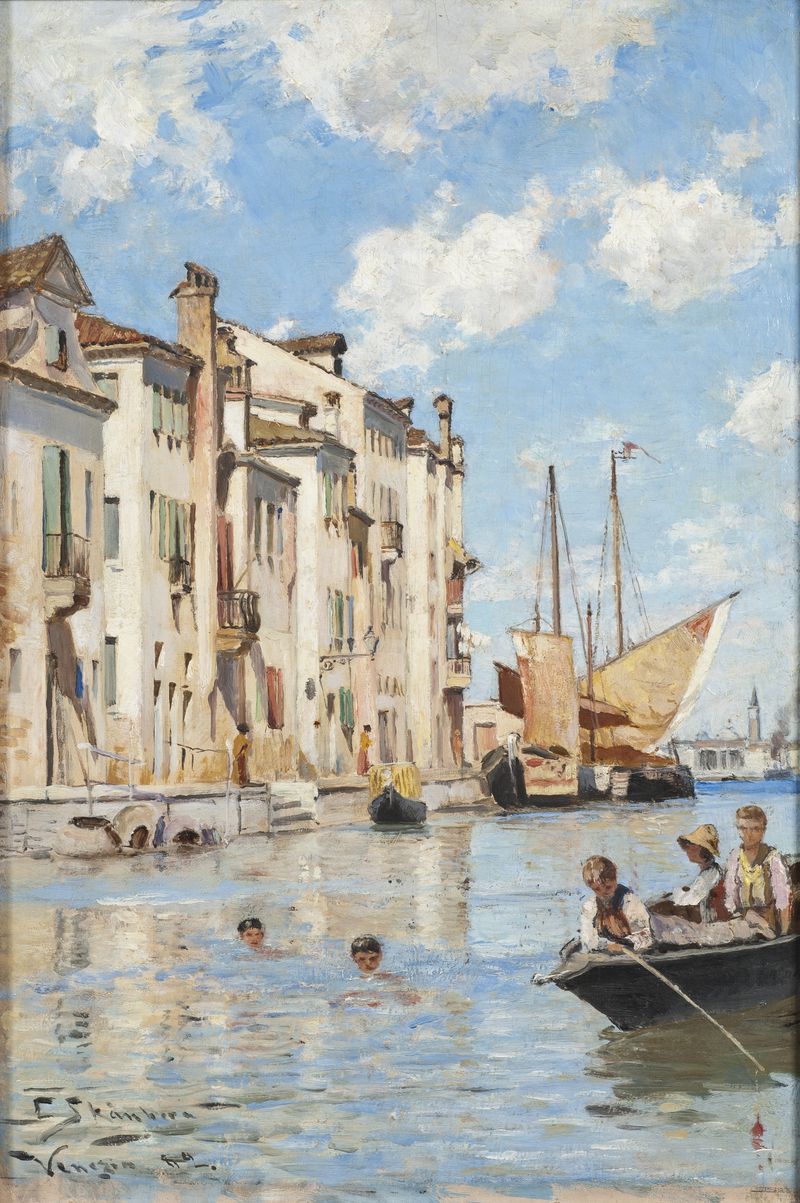
Children Bathing
Carl Skånberg

The Grand Canal, Venice
Carl Skånberg
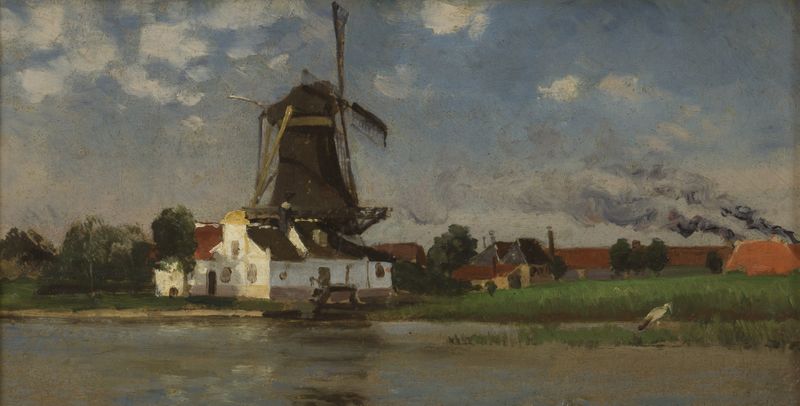
Dutch Motif
Carl Skånberg

Fruit Barge in Venice. Sketch
Carl Skånberg

The Harbour, Dordrecht
Carl Skånberg

Winter. View of Eriksberg, Stockholm
Carl Skånberg

The Church Tower, Dordrecht
Carl Skånberg

Garden outside Rome
Carl Skånberg

Mosebacke Square
Carl Skånberg
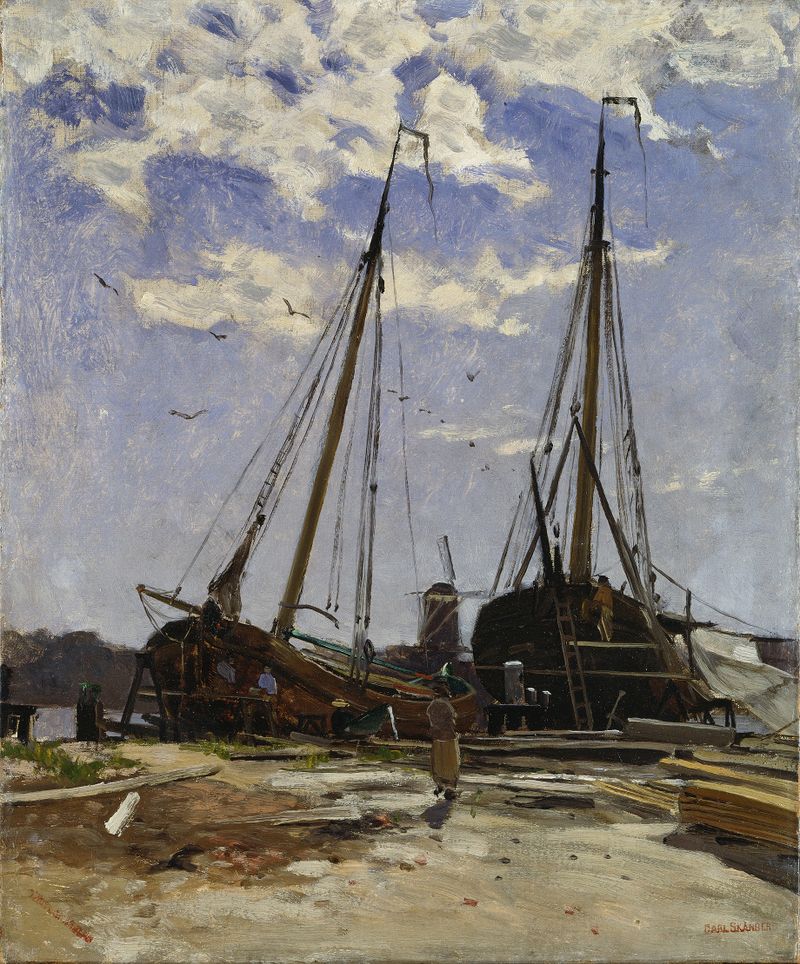
Study for Dordrecht Harbour, 1880, Göteborgs konstmuseum
Carl Skånberg





