Garden with ruins — History & Facts
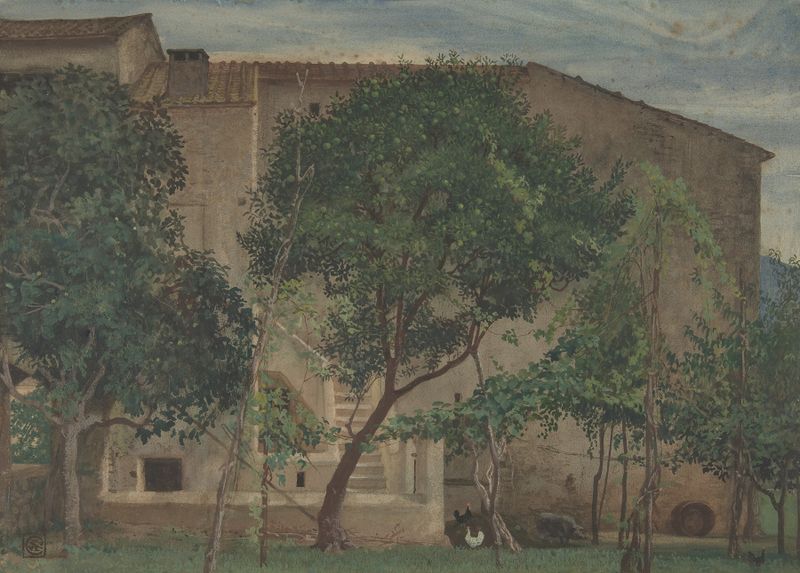
A soft breeze stirs the air, whispering through the leaves as vibrant blooms exude their intoxicating fragrance. Sunlight filters gently through the intertwined branches, casting playful shadows over the crumbling remains of a forgotten structure. In this lush sanctuary, serenity reigns—a dreamlike tableau that blurs the boundaries between nature and memory. Look to the center, where a cluster of radiant flowers bursts forth in hues of crimson and gold, drawing the eye like a magnet.
Notice the subtle interplay of light and shadow, masterfully orchestrated by the artist's brush, which captures each petal's delicate texture and the lush greenery surrounding them. At the edges, the ruins stand as testament to time, their weathered stones softened by the embrace of nature, evoking an exquisite contrast between decay and flourishing life. Yet, beneath this tranquil exterior lies an emotional tension: the juxtaposition of vitality and ruin suggests the cyclical nature of existence. The vibrant garden, teeming with life, speaks to hope and renewal, while the dilapidated structure hints at loss and the passage of time.
Together, they create a poignant dialogue, inviting contemplation on the impermanence of beauty and the inevitability of change. In 1890, Walter Crane painted this piece during a period of personal reflection and artistic evolution, navigating the complexities of the Arts and Crafts Movement. Living in England, he was influenced by a desire to return to craftsmanship and the beauty of nature, driven by a belief in the power of art to shape the world. This work embodies that spirit, merging natural beauty with historical echoes, a timeless exploration of both life and legacy.