Coastal scene — History & Facts
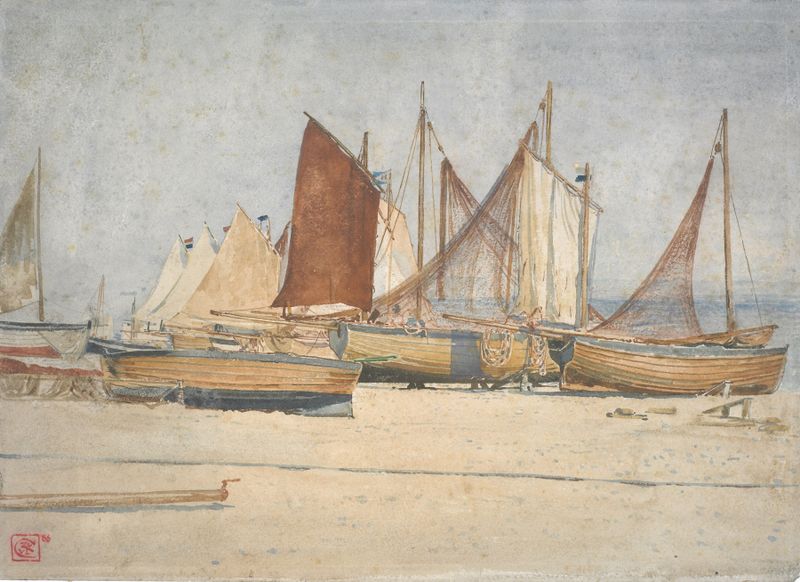
Where does light end, and longing begin? This question dances on the edges of innocence, inviting the viewer to explore the delicate interplay between the two. Look to the soft hues that wash over the canvas, a gentle blend of blues and sandy beiges that suggest both the sea's tranquility and the warmth of the shore. Focus on the way light spills across the horizon, subtly illuminating the figures scattered along the coast. Their silhouettes are mere whispers against the vast backdrop, evoking a sense of collective solitude as they engage with the elements, their gestures imbued with quiet contemplation. In the foreground, the child, with outstretched arms, embodies a pure, instinctive yearning for connection with the ocean's embrace.
This innocence contrasts sharply with the deeper, muted colors of the distant waves, hinting at the complexities of nature that lie beyond childish curiosity. The juxtaposition of light and shadow amplifies this emotional tension, suggesting that while innocence can thrive in sunlight, it remains vulnerable to the darker undertones of the world. Walter Crane created this evocative piece during a time when the arts were embracing the ethos of the Aesthetic Movement, championing beauty and sensory experiences. Although the exact date of this work remains uncertain, it reflects his engagement with nature and childhood themes prevalent in the late 19th century, a period marked by a search for meaning amidst rapid industrial change.