Harvest field, Normandy — History & Facts
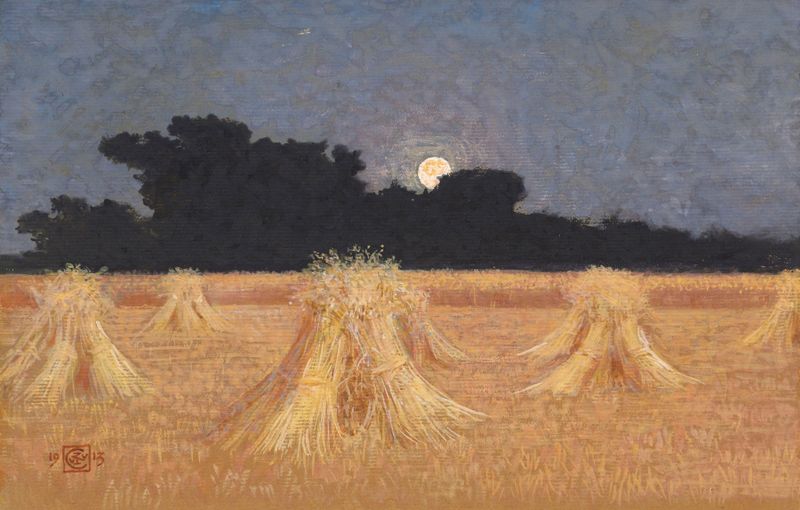
Did the painter know this moment would outlive them? The quiet unfolding of life within Harvest Field, Normandy invites contemplation on the essence of awakening, both in nature and in the human spirit. Look to the left where lush fields stretch beneath a luminous sky, dappled with hints of gold and green. The figures of laborers, their postures infused with both diligence and grace, stand out against the vibrant backdrop, creating a harmonious balance between man and earth. Notice how the gentle brushwork imparts movement to the scene, with the golden wheat swaying as if whispering secrets to the wind.
The choice of warm colors evokes a sense of nostalgia, suggesting that this moment is not just seen but felt deeply. Beneath the surface, there lies a poignant contrast between the toil of the workers and the serenity of the landscape. Each stroke of paint captures the tension between labor and leisure, underscoring the resilience of life amidst the demands of agriculture. The sky, painted with both softness and intensity, reflects the duality of hope and hard work; it beckons the viewer to consider the cyclical nature of existence and growth.
In this way, the painting becomes a celebration of both the earth’s bounty and the human endeavor entwined with it. In 1904, Walter Crane created this work during a time of artistic transformation and social change. Settling in England, he was deeply influenced by the Arts and Crafts movement, which sought to harmonize beauty with utility. As the world moved toward modernity, his work continued to champion the importance of traditional craftsmanship, weaving a connection through generations that allowed the spirit of the past to permeate the present.