Southwold – a study of sails — History & Facts
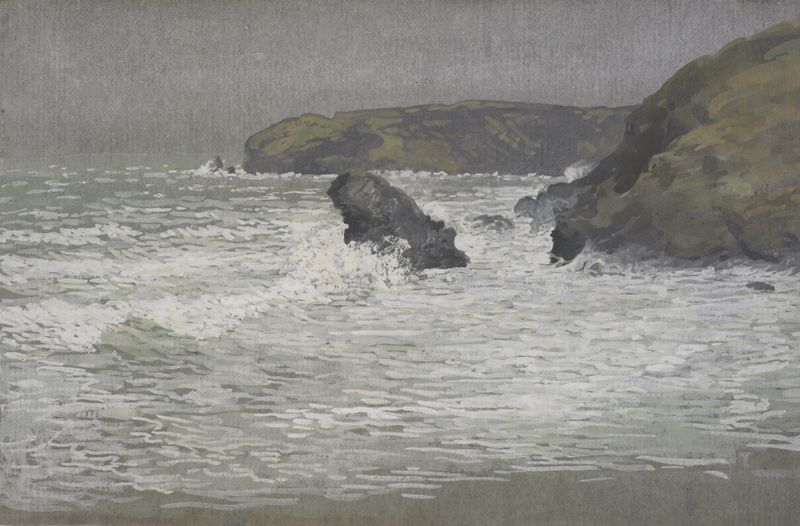
In Southwold – a study of sails, the canvas becomes a vessel of longing, capturing whispers of a world both distant and intimately close. This intricate study evokes the desire to hold onto fleeting moments, to inscribe them into the annals of memory. Focus on the vibrant sails that dominate the scene, their colors alive against the muted backdrop of the sea. Look closely at how the sunlight dances upon the fabric, revealing layers of texture and movement that seem to breathe with every brushstroke.
The gentle undulation of the water mirrors the sails’ billowing forms, creating a harmonious relationship between the elements. The palette, rich with blues and whites, suggests both serenity and restlessness, inviting the viewer to explore the depths of emotion woven into this coastal tableau. Upon deeper reflection, the contrast between the active sails and the stillness of the shore resonates with an underlying tension. Each sail, filled with air and purpose, embodies a desire for freedom and adventure, while the anchored boats suggest a longing for stability.
This duality speaks to the human condition: the constant push and pull between the desire to venture forth and the need for sanctuary. The small details, such as the delicate ripples on the water’s surface and the distant horizon, encapsulate the beauty of life’s transitory nature. Created in 1886, this work emerged during a pivotal moment in Walter Crane's career, as he transitioned from illustrator to painter. Based in England, he was influenced by the Arts and Crafts movement, which emphasized the connection between art and everyday life.
At this time, he was exploring themes of nature and the maritime world, reflecting a broader cultural fascination with the coast as a symbol of both adventure and refuge.