
Geboorte van Christus en aanbidding van herders — History & Facts
In this divine act of creation, the ephemeral essence of birth and worship is immortalized, inviting us to ponder the intersections of humanity and the celestial. Look closely at the central figures, where the newborn Christ lies cradled in a humble trough, bathed in a gentle light that emanates from above. The folds of Mary’s garment, rendered in soft blues and whites, draw the eye, highlighting her serene expression as she gazes down at her child. Notice the juxtaposition of the shepherds, rugged and earthy, their coarse attire contrasting against the divine luminosity surrounding the infant.
The composition is masterfully orchestrated, leading our gaze in a circular motion that binds these characters together in a sacred embrace. Delve deeper into the details, where the shepherds’ varied expressions reveal a spectrum of awe and reverence. Each figure is unique, suggesting a rich tapestry of emotions that reflect their diverse backgrounds. The animal quietly watching from the corner symbolizes peace, while the starry night sky hints at the broader cosmos, echoing the significance of this miraculous event.
The overall color palette—a harmonious blend of deep blues and warm golds—evokes both the solemnity and joy of this moment, illustrating the divine connection between heaven and earth. Georg Pencz created this work between 1534 and 1535, amidst a period of significant change in the art world, marked by the influence of the Northern Renaissance. Residing in Nuremberg, he was affected by the Reformation's theological upheavals and the evolving ideas of spirituality, which infused his art with a profound sense of devotion and humanity. This painting reflects not only the religious fervor of the time but also Pencz's own exploration of the sacred through a lens of intimate realism.
More Artworks by Georg Pencz
Browse all →
Parabel van de zaaier
Georg Pencz

Parabel van de arbeiders in de wijngaard
Georg Pencz
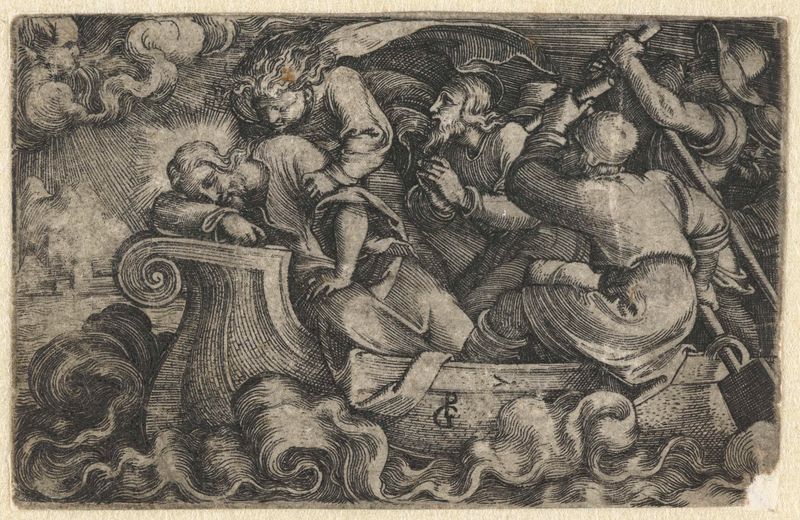
Discipelen wekken slapende Christus tijdens storm op Meer van Galilea
Georg Pencz

Afgunst (Invidia)
Georg Pencz
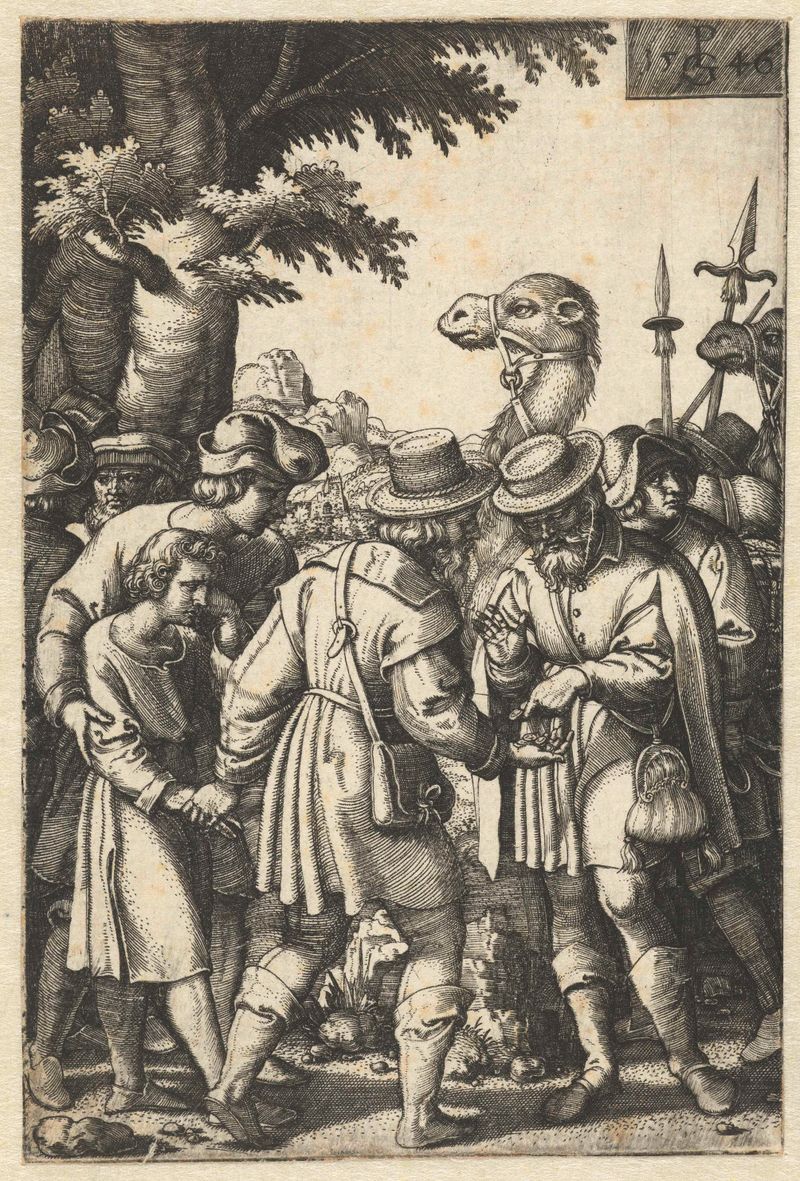
Jozef wordt verkocht aan kooplieden op weg naar Egypte
Georg Pencz

Aanbidding der koningen
Georg Pencz
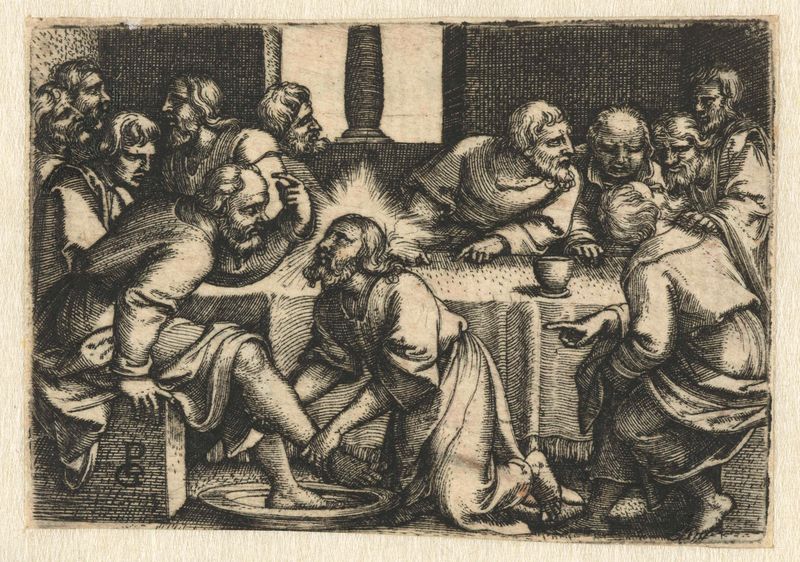
Petrus protesteert als Christus zijn voeten wast
Georg Pencz
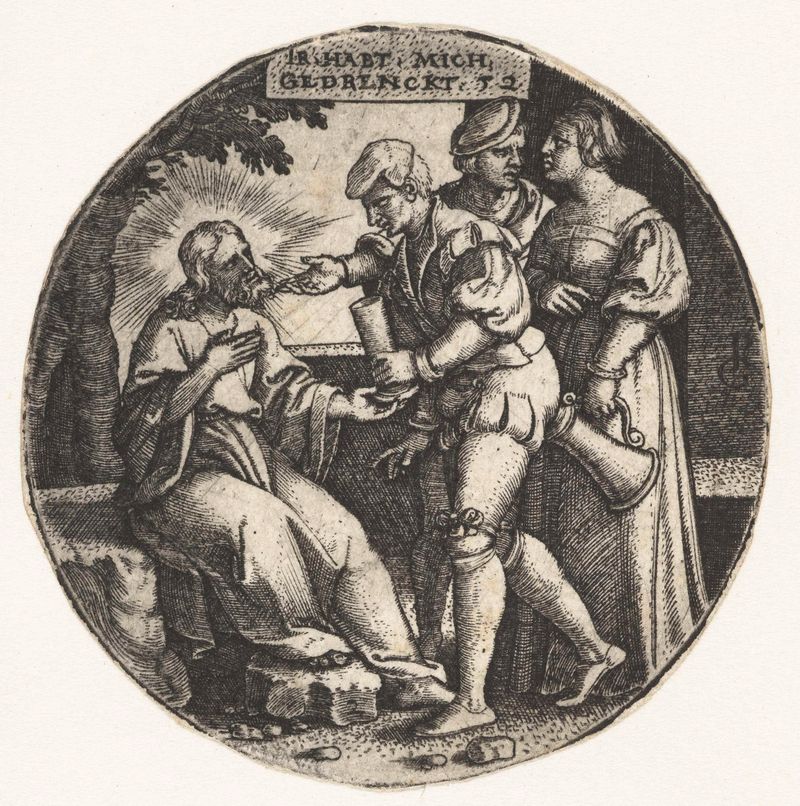
Christus heeft dorst en krijgt drinken aangeboden
Georg Pencz
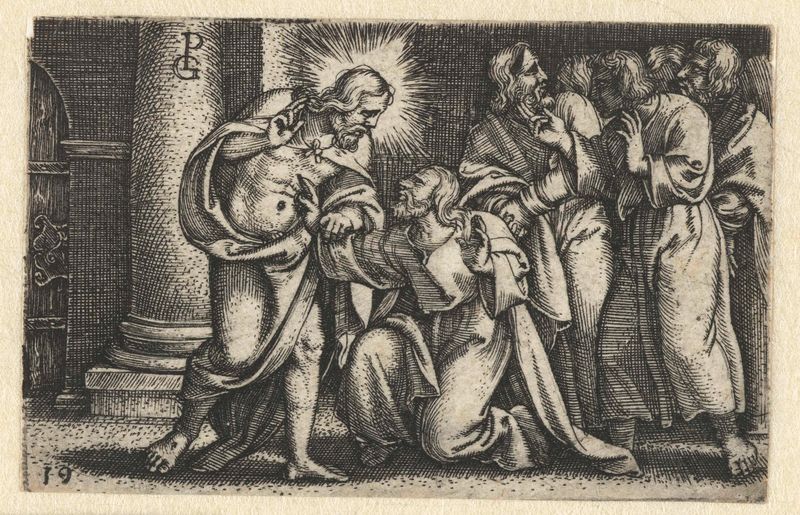
Ongelovige Thomas raakt wonden Christus aan
Georg Pencz

Offer van Abraham van Isaak
Georg Pencz
More Religious Art
Browse all →
The Return of the Prodigal Son
Rembrandt van Rijn

The Garden of Earthly Delights
El Bosco

Count Orgaz’ funeral
El Greco

The Hundred Guilder Print: the central piece with Christ preaching, the plate arched
Rembrandt van Rijn

The Descent from the Cross
Rogier van der Weyden

The return of the prodigal son
Rembrandt van Rijn