
Genoveva in the forest seclusion — History & Facts
A shaft of golden light falls on a woman and child nestled at the mouth of a rocky cave, their delicate forms ringed by animals and wildflowers, as if the forest itself is holding its breath. The eye is drawn first to this intimate clearing, where the long-haired figure in red, her head bowed, becomes the still center of a world otherwise ruled by towering trees, tangled undergrowth, and the cool shadows of the woods. The contrast between the illuminated figures and the deep, enveloping greens of the forest is no accident: it signals not just physical seclusion, but a kind of sanctuary, a pause in the relentless march of nature.
The careful rendering of moss, bark, and water invites the viewer to linger, to notice how the world closes in and yet, in this moment, offers shelter. Painted in 1841, this work belongs to a moment in German art when the forest was more than a backdrop—it was a stage for stories of exile, innocence, and redemption. Artists like Adrian Ludwig Richter were drawn to such themes, weaving together the real forests of central Europe with the imagined trials of legendary figures. While little is recorded about the specific journey of Genoveva in the forest seclusion, its home today in the Hamburger Kunsthalle places it among the treasures of nineteenth-century Romanticism, a movement that saw the landscape as both adversary and ally.
The painting asks us to look again: what other stories might be hidden in the half-light beneath the trees?
More Artworks by Adrian Ludwig Richter

Landschaft bei den Sabiner Bergen (Rocca di Mezzo)
Adrian Ludwig Richter

The Fountain at Grottaferrata
Adrian Ludwig Richter
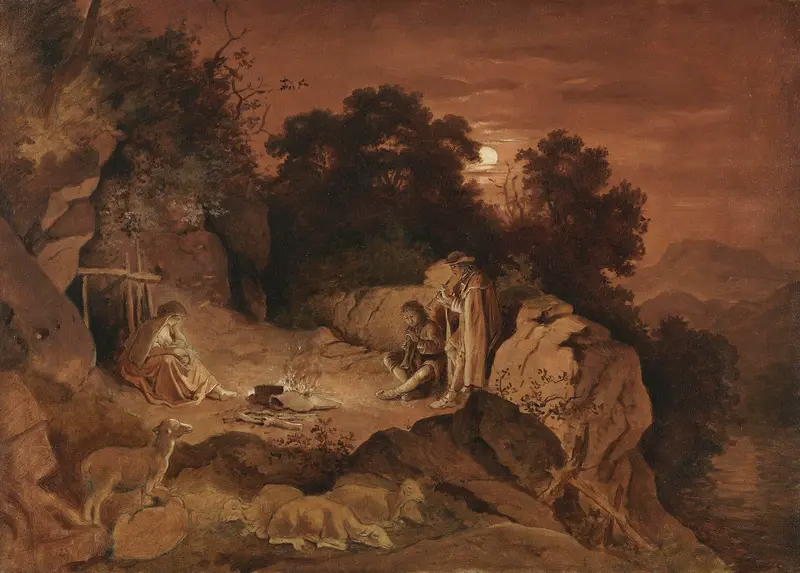
Hirten am Feuer (Abendlandschaft)
Adrian Ludwig Richter
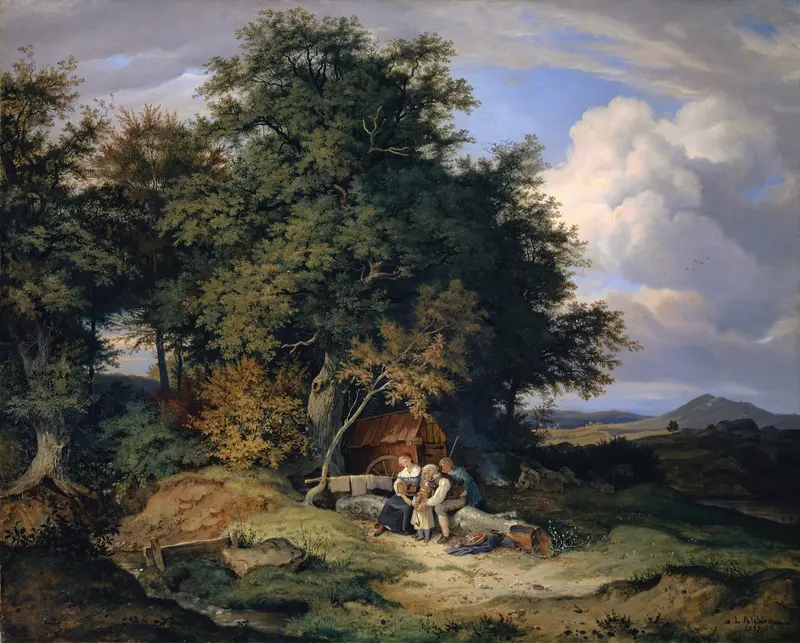
Herbstlicher Wald mit Schäferfamilie
Adrian Ludwig Richter
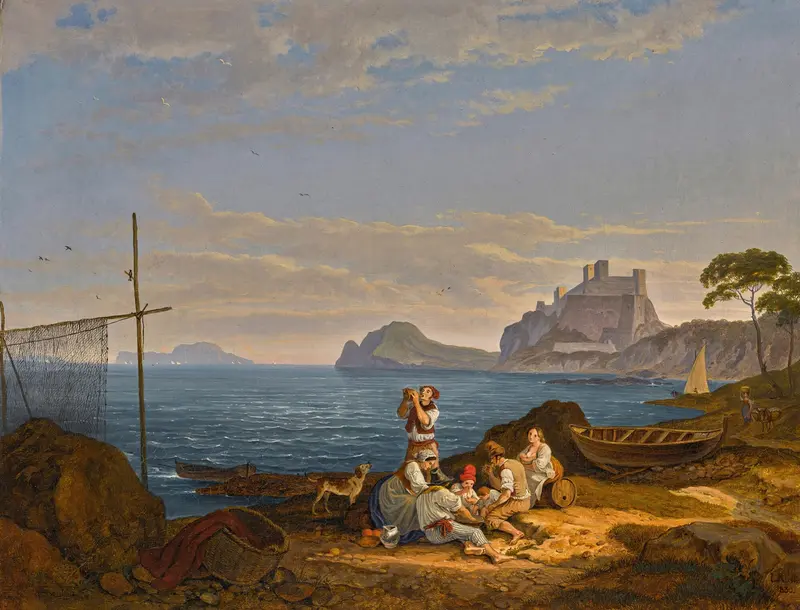
The Bay Of Naples, Capri Beyond
Adrian Ludwig Richter
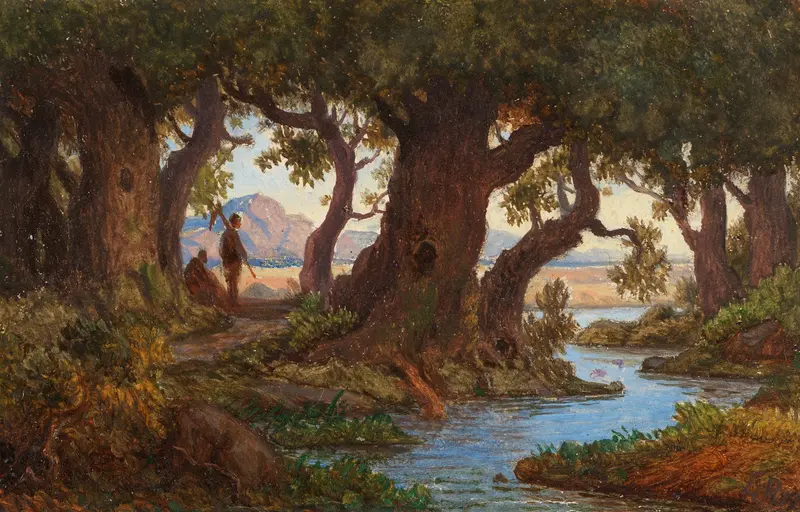
Italienische Flusslandschaft
Adrian Ludwig Richter
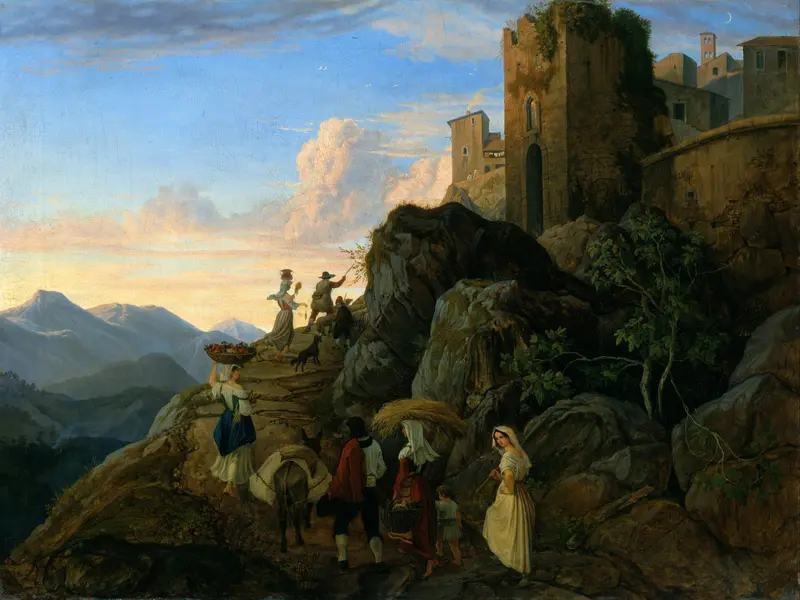
Civitella
Adrian Ludwig Richter
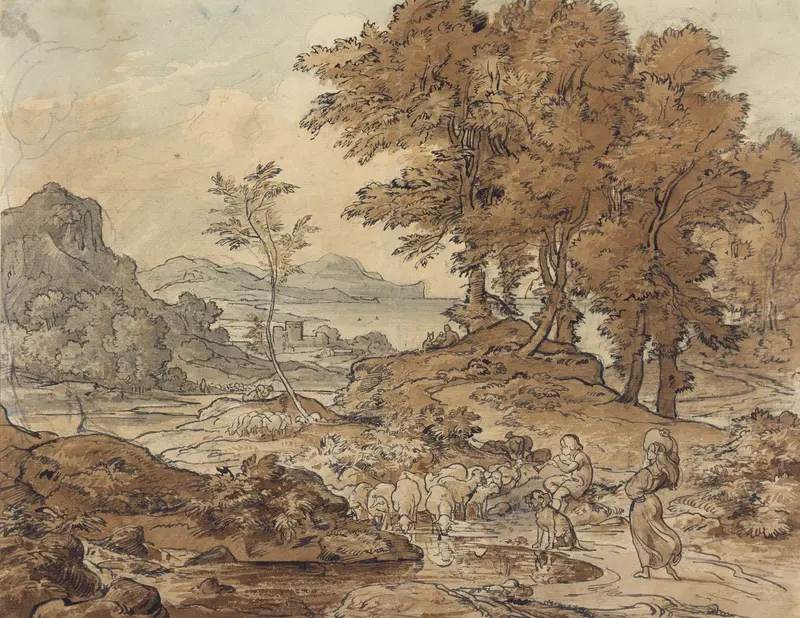
Italienische Landschaft mit Schafherden
Adrian Ludwig Richter
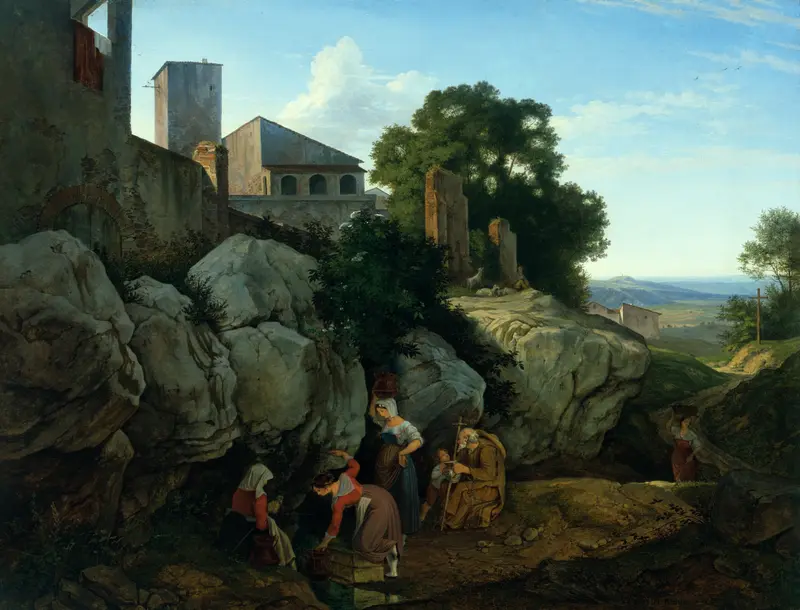
Ariccia
Adrian Ludwig Richter
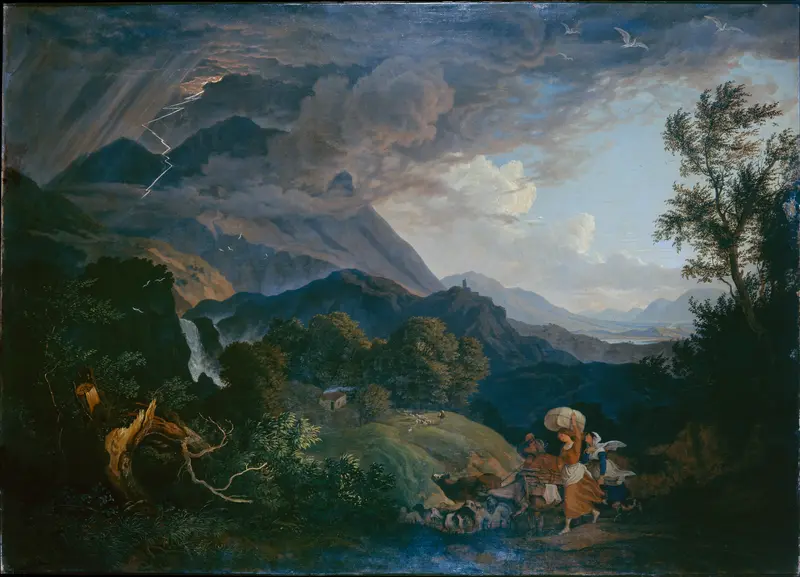
Thunderstrom over Monte Scalambra near Olevano in the Sabine Mountains
Adrian Ludwig Richter
More Landscape Art

The Starry Night
Vincent van Gogh

View of Delft
Johannes Vermeer

Water Lilies
Claude Monet

The Grand Canal, Venice, looking north-west from the Ca' Corner to the Ca' Contarini degli Scrigni, with the campanile of Santa Maria della Carità
Canaletto

Windsor Castle
Canaletto

The Grand Canal looking North-East from the Palazzo Dolfin-Manin to the Rialto Bridge
Canaletto