
Gezicht op Maassluis — History & Facts
Did the painter know this moment would outlive them? In Gezicht op Maassluis, the essence of a fleeting scene grapples with time, capturing both beauty and decay in a single glance. Look to the left at the clusters of boats, their forms softened by a gentle haze, as if they are about to fade into the mist. The muted blues and grays dominate the canvas, evoking a sense of calm yet hinting at an inevitable decline. The water reflects a vast sky, where streaks of light intermingle with clouds, suggesting a transitory moment between day and evening.
Each brushstroke captures the texture of the rippling water, emphasizing the fragility of this serene landscape. Hidden within this tranquil vista lies a deeper contemplation of impermanence. The aging structures of the town loom in the background, their muted colors signifying both history and decay. The juxtaposition of the delicate, shimmering water against the steadfast yet crumbling architecture stirs an emotional tension — a reminder that all beauty is transient.
The composition invites viewers to reflect on the passage of time, subtly whispering stories of lives that once thrived in the embrace of such scenes. In 1862, Jongkind painted this work in the Netherlands during a period marked by a shift in artistic focus toward realism and the Dutch landscape. As an artist closely associated with the Barbizon School, he embraced the outdoors and captured moments often overlooked. At this time, he was also forging connections with notable contemporaries, influencing the direction of Impressionism, which would later come to define a new era in art.
More Artworks by Johan Barthold Jongkind
Browse all →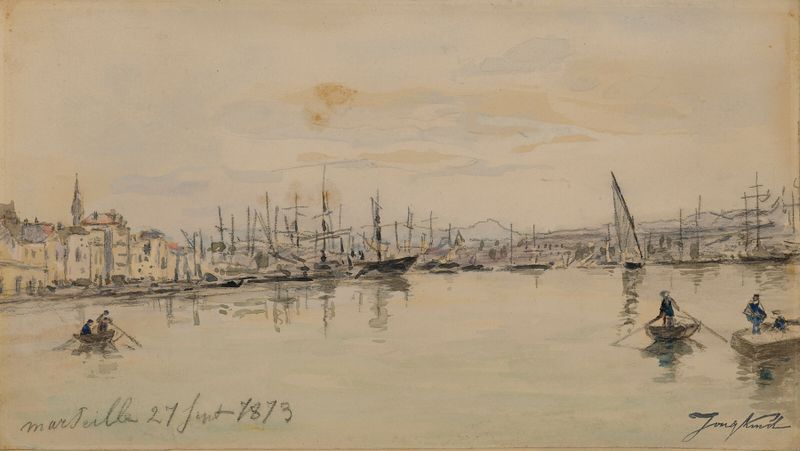
Le Port de Marseille
Johan Barthold Jongkind

Canal Saint-Martin
Johan Barthold Jongkind

Countryside near Brezins, between Grenoble and Vienne
Johan Barthold Jongkind

Notre-Dame vue du quai de la Tournelle
Johan Barthold Jongkind

Environs de Grenoble
Johan Barthold Jongkind

Clair de lune à Overschie (environs de Rotterdam)
Johan Barthold Jongkind

Port de Honfleur
Johan Barthold Jongkind
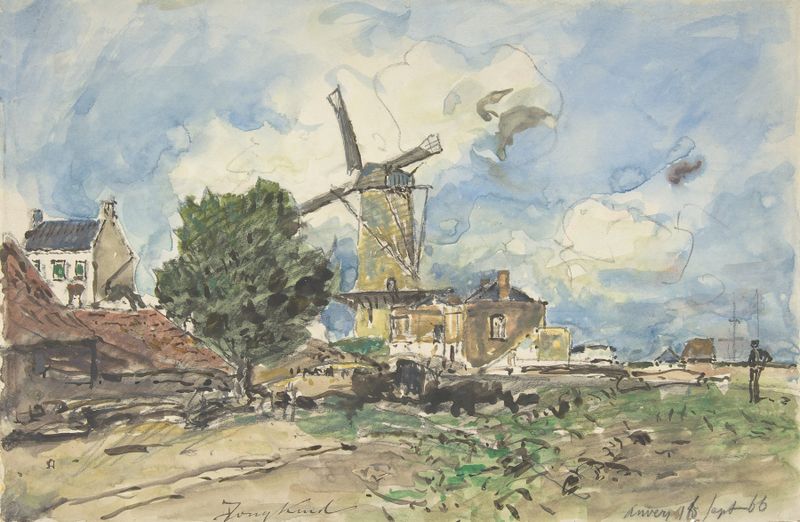
Wind Mill at Antwerp
Johan Barthold Jongkind

Le Havre
Johan Barthold Jongkind

The Church of Overschie
Johan Barthold Jongkind





