
Girl in White (Margaret Greene) — History & Facts
What first catches the eye is the way light seems to cling to the girl’s white dress, drawing her out from the deep, enveloping darkness behind her. The painter, Abbott Handerson Thayer, has chosen a moment of quiet poise: the sitter turns her head just enough to meet our gaze, her pale hands delicately arranging a cluster of flowers. Every fold of her gown is carefully caught by the light, setting off the soft flush of her cheek and the steady blue of her eyes.
The composition is a study in restraint—her figure is luminous, almost sculptural, while the background recedes into shadow, giving her presence an air of gentle isolation. Painted in 1888, Girl in White (Margaret Greene) belongs to a world that prized the portrait as both personal keepsake and social declaration. In late nineteenth-century America, artists like Thayer were often commissioned to capture the youth and grace of their sitters, sometimes family, sometimes patrons, in a manner that balanced realism with an idealized calm. The white dress, so meticulously rendered, was more than a garment: it signaled purity, refinement, and a certain hopeful innocence that the era cherished.
Today, the painting resides in the collection of the Museum of Fine Arts, Boston, a quiet testament to the ways in which light, gesture, and gaze can hold a viewer long after the sitter’s world has faded. Look again at her expression—there is a story there, half-told, waiting for you to finish it.
More Artworks by Abbott Handerson Thayer
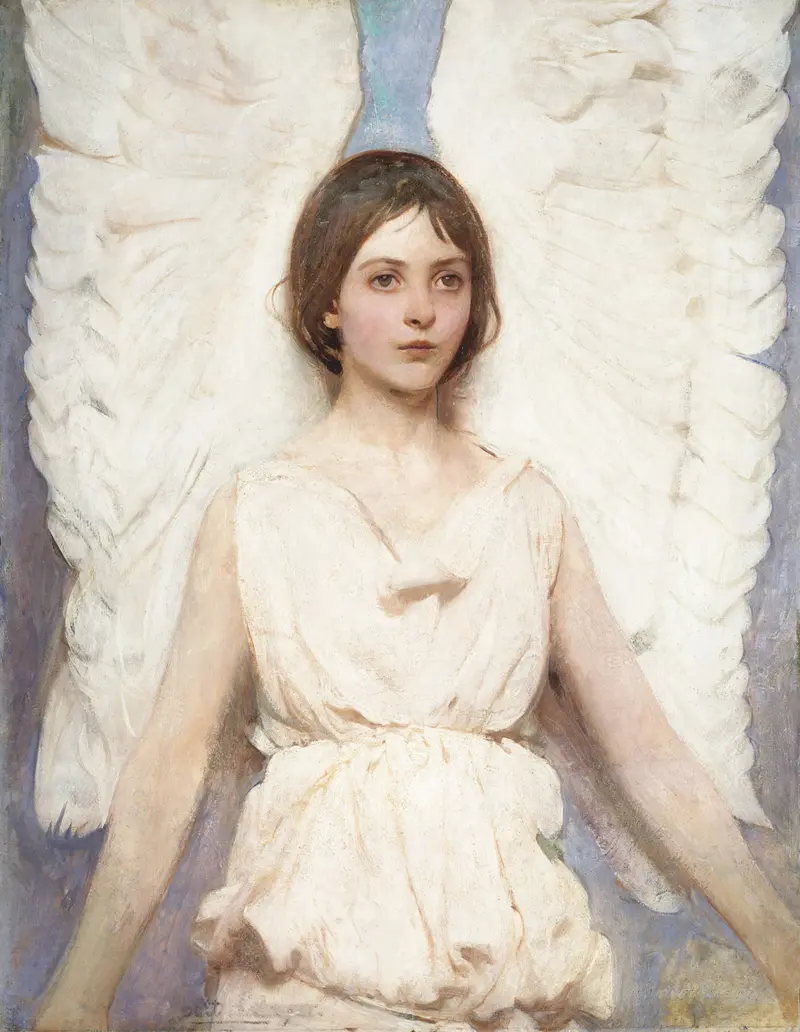
Angel
Abbott Handerson Thayer

Mount Monadnock
Abbott Handerson Thayer
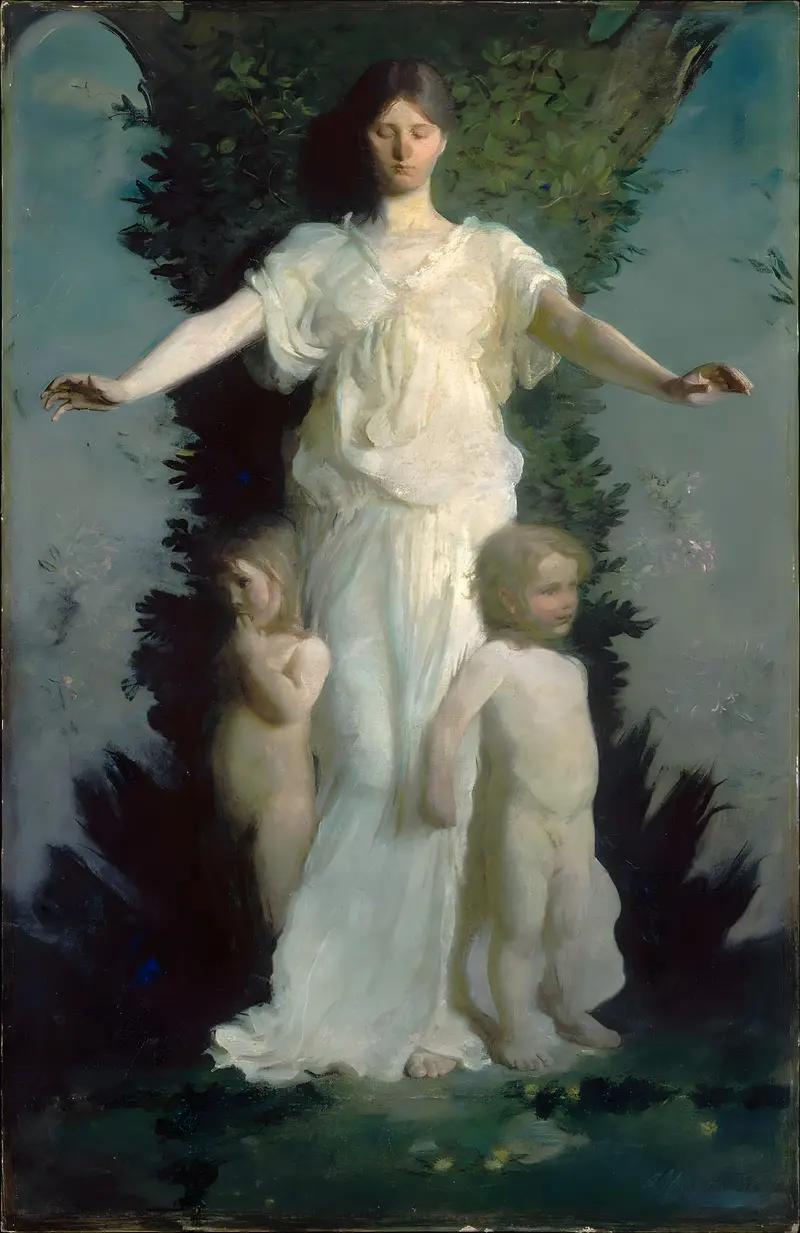
Caritas
Abbott Handerson Thayer

Winter, Monadnock
Abbott Handerson Thayer
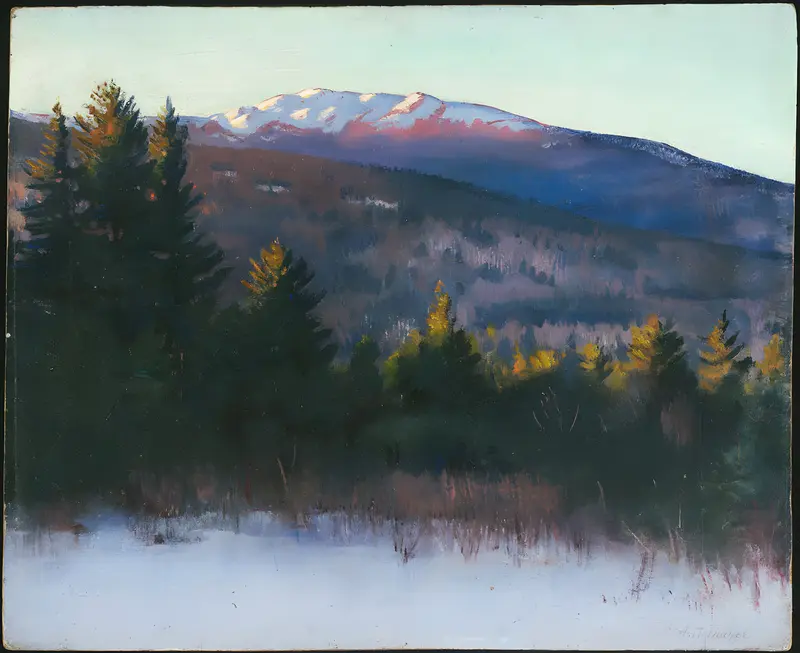
Mount Monadnock
Abbott Handerson Thayer
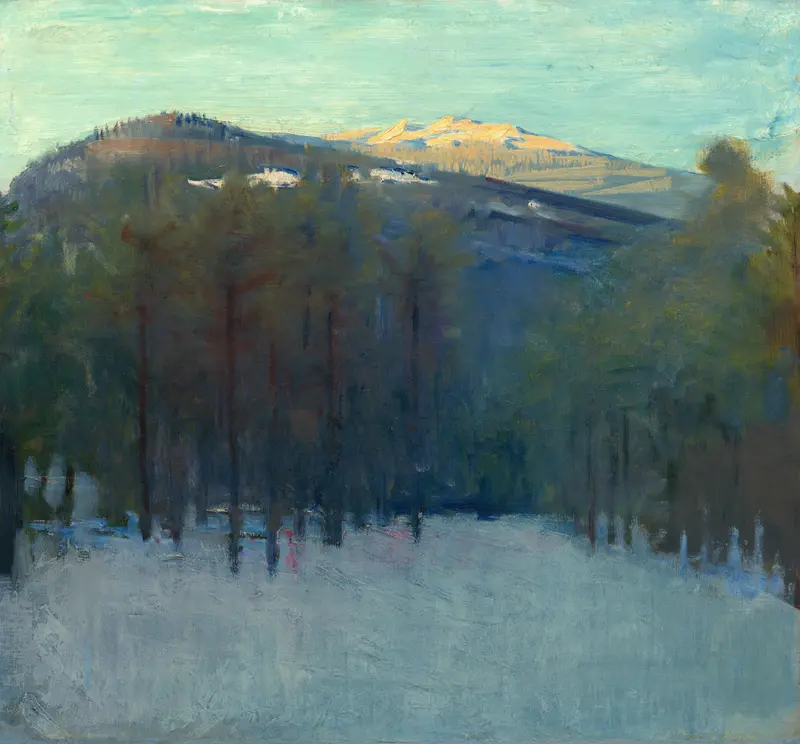
Mount Monadnock
Abbott Handerson Thayer
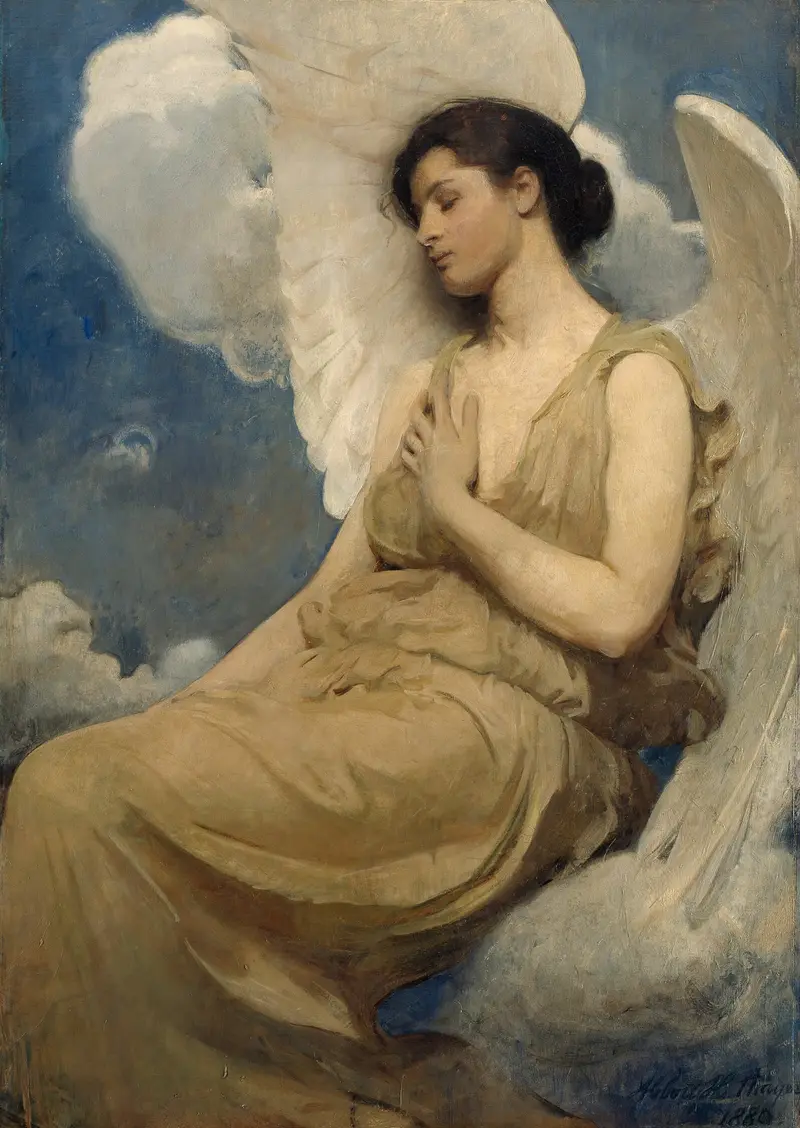
Winged Figure
Abbott Handerson Thayer
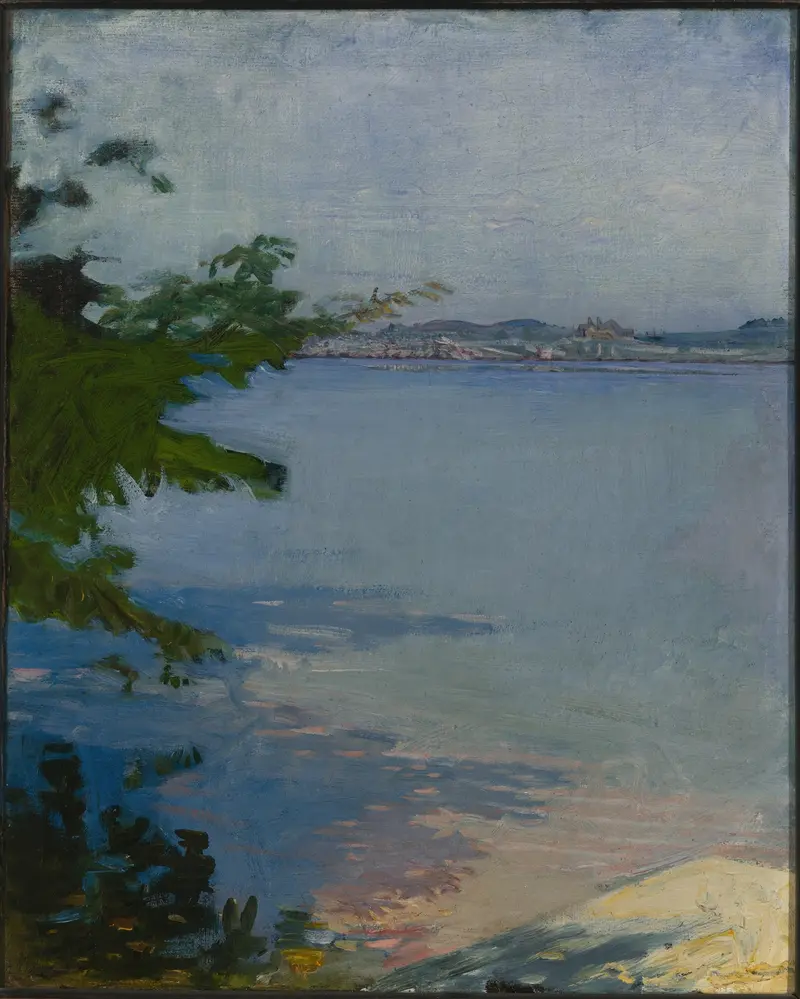
Dublin Pond, New Hampshire
Abbott Handerson Thayer
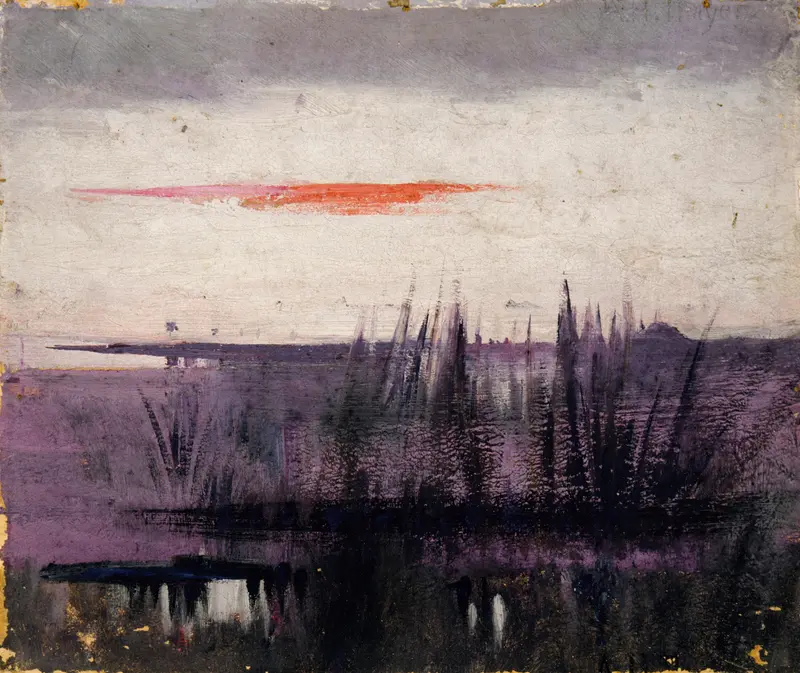
The Sky Simulated By White Flamingoes Study For Book, Concealing Coloration In The Animal Kingdom
Abbott Handerson Thayer
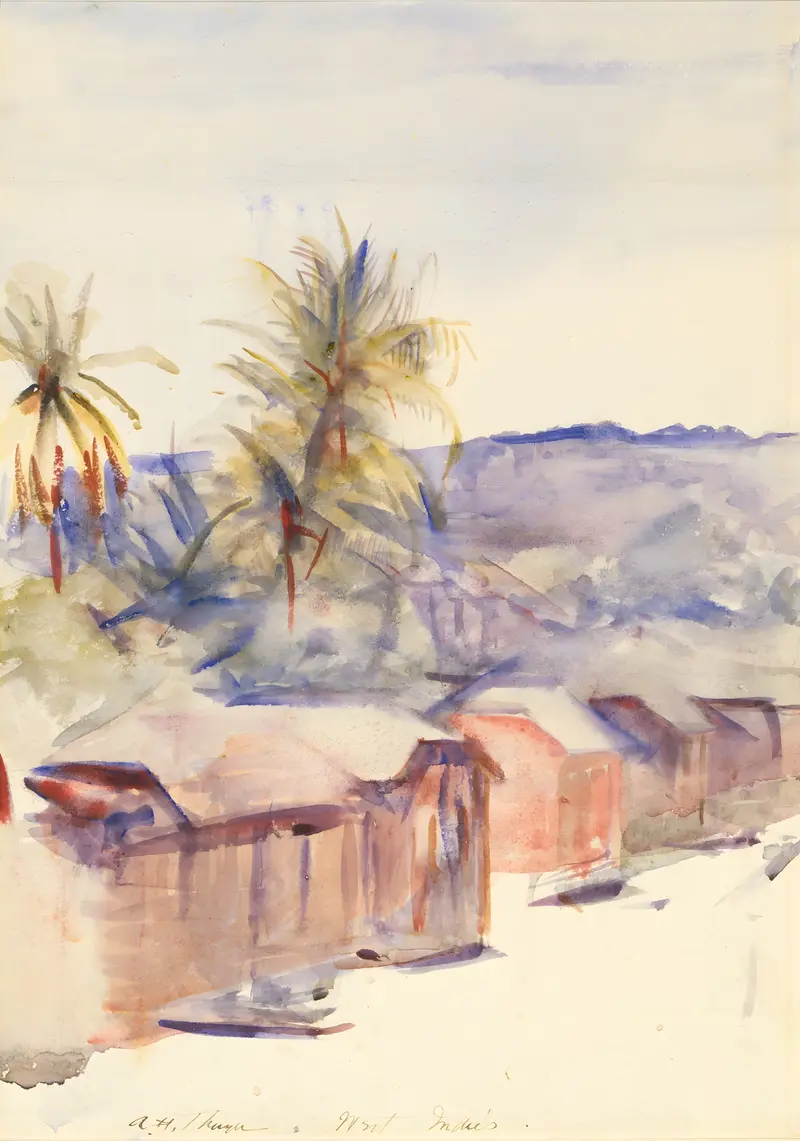
Village Street, Dominica
Abbott Handerson Thayer





