
Girl with Fish Bowl — History & Facts
The first thing that catches the eye in Girl with Fish Bowl is the way the world seems to dissolve into colored fragments, as if the girl and her surroundings are being glimpsed through the very water she contemplates. The figure, rendered without clear facial features, draws us in with her posture—her body turned slightly toward the bowl, her hand resting on its edge, both present and absorbed elsewhere. The fish bowl itself becomes the painting’s second protagonist, its surface fractured into prismatic shapes that echo the kaleidoscopic foliage behind her.
Light and color swirl together, suggesting a moment of quiet observation and inward reflection, while the palette—dominated by cool blues and greens, with flashes of red and yellow—creates a sense of calm that is anything but static. Painted in July 1914, this work stands at the threshold of a world about to change. August Macke was a leading figure in the Expressionist movement, and his late works often explore the interplay between the visible world and the artist’s inner vision. Paintings like this, with their faceted forms and luminous color, were part of a broader search for new ways to see and feel.
In the years before the First World War, artists across Europe experimented with color and abstraction, seeking to capture fleeting sensations and the complexity of modern life. Little is recorded about the specific journey of this painting, but its very existence invites us to linger, to look again, and to imagine the quiet moment it preserves on the edge of history.
More Artworks by August Macke
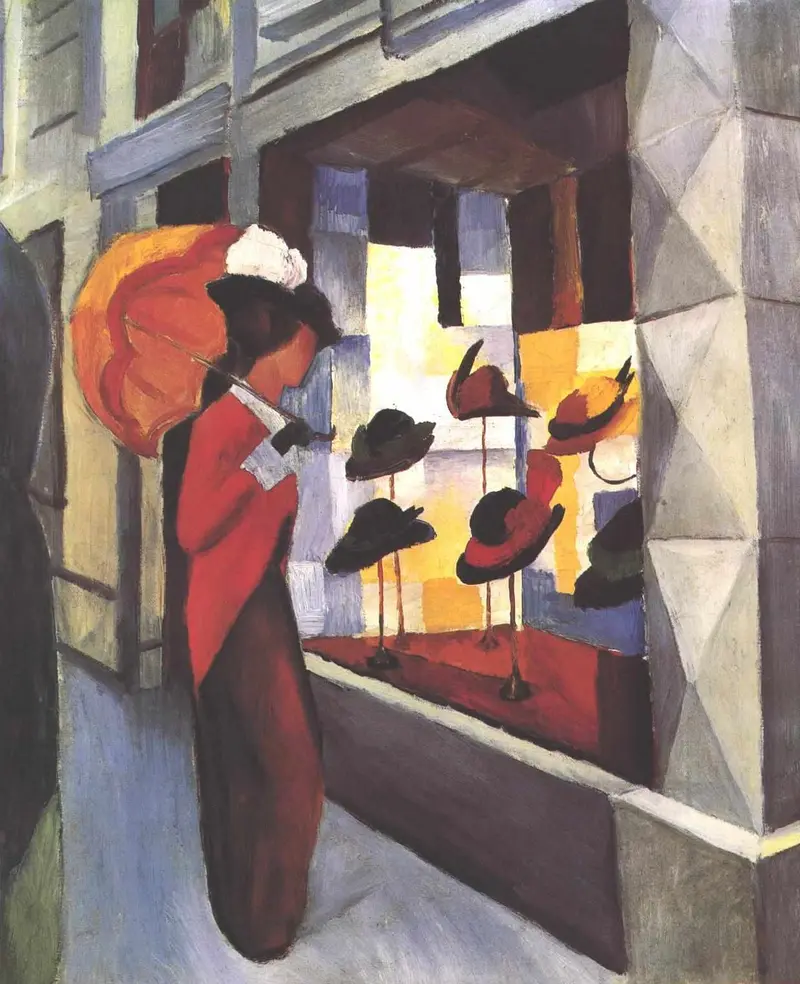
Woman with a Parasol in Front of a Hat Shop
August Macke

Street with Church in Kandern
August Macke
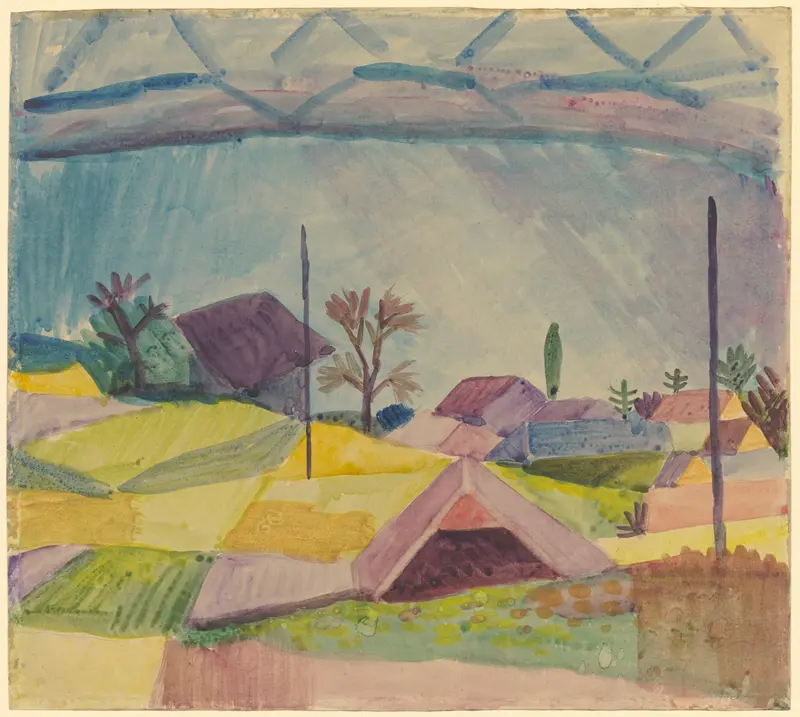
View of Hilterfingen
August Macke

Paar im Nachen
August Macke
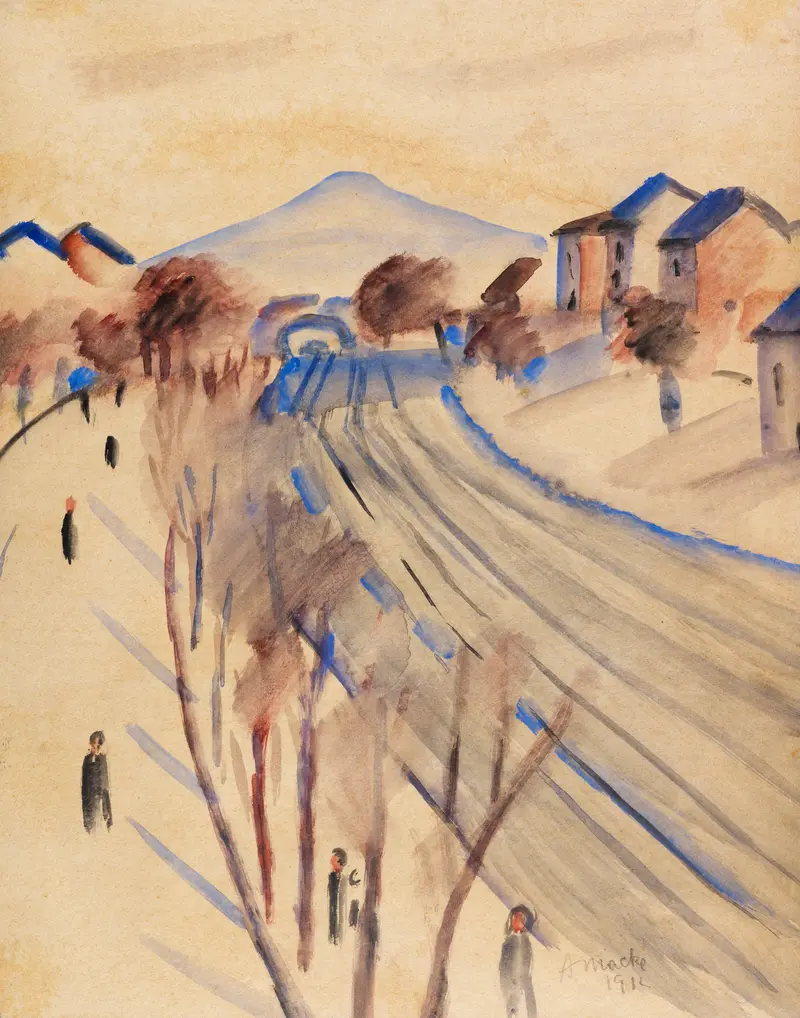
Ölberg mit Bahngleisen II
August Macke
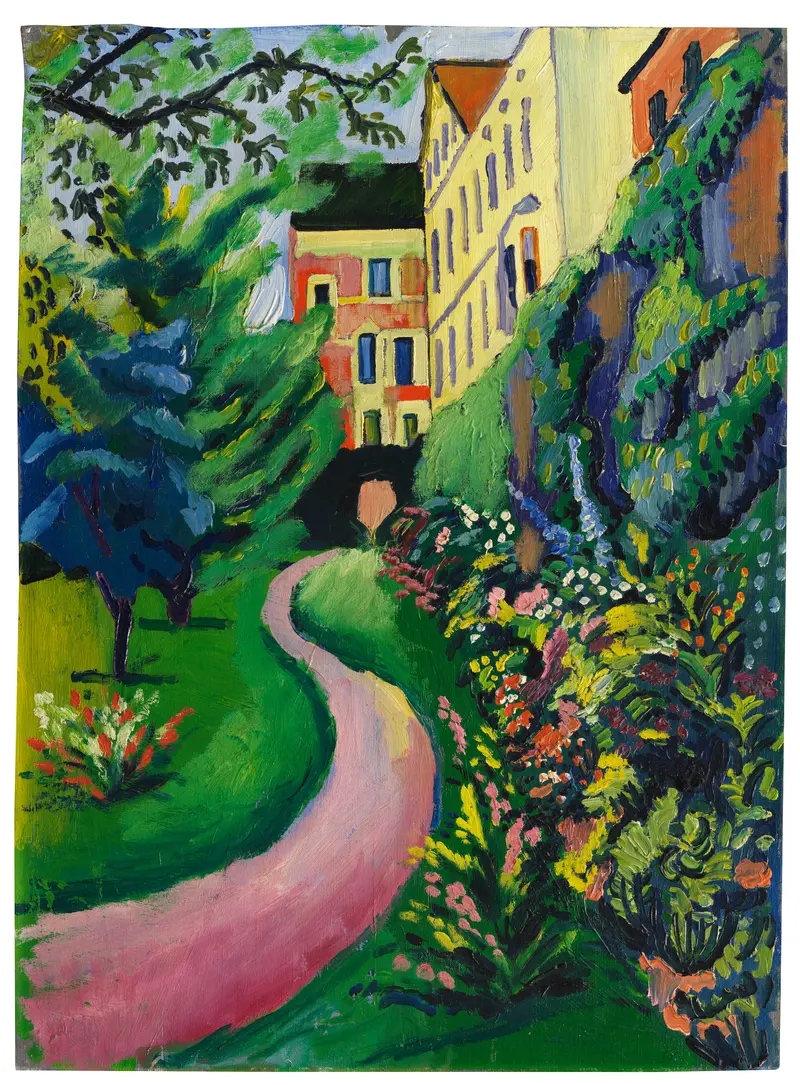
Unser Garten mit blühenden Rabatten
August Macke
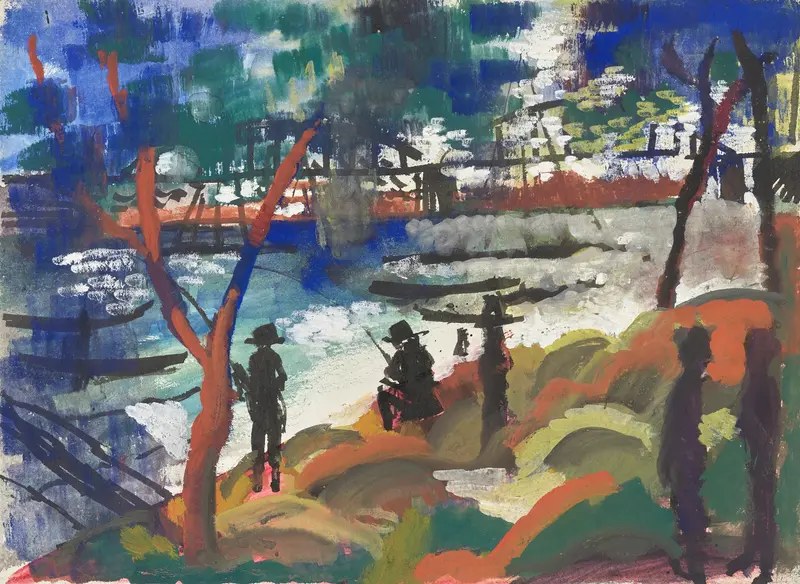
Angler am Fluss
August Macke
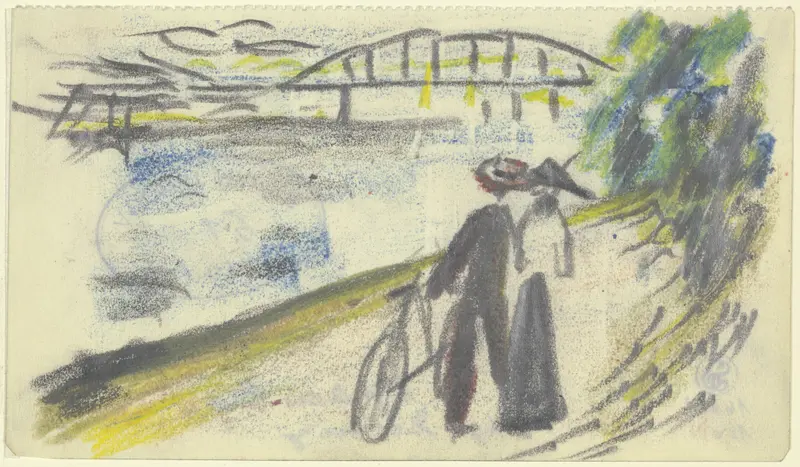
Path at the Rhine
August Macke
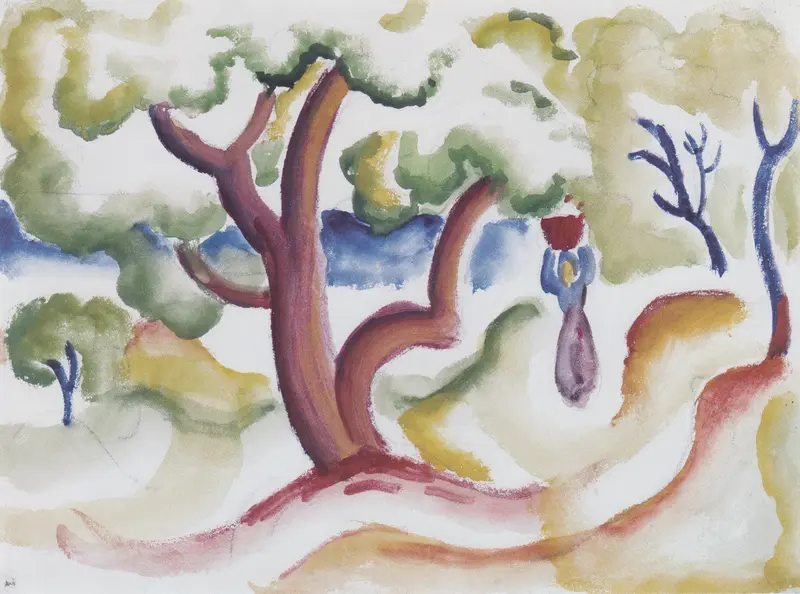
Frau mit Krug unter Bäumen
August Macke
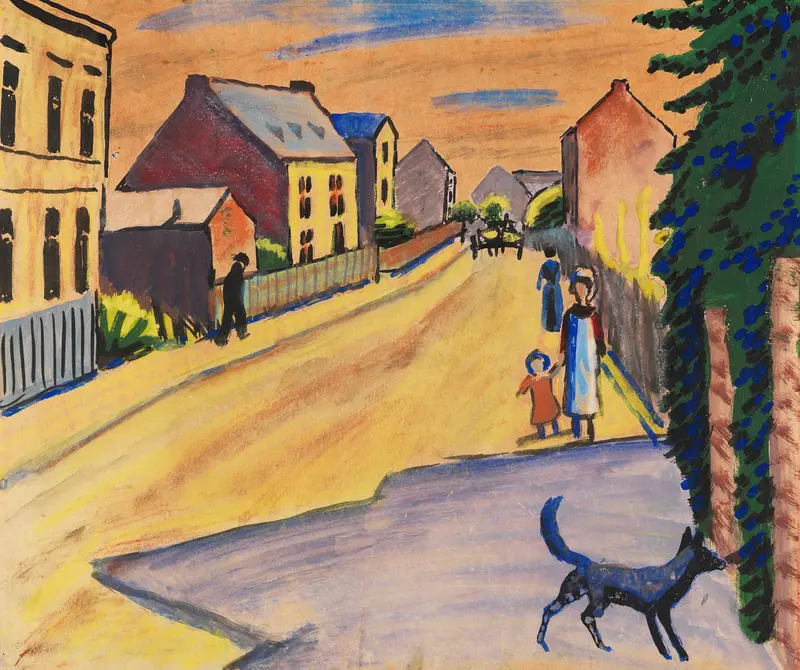
Sonnige Straße mit Hund
August Macke
More Genre Scene Art

Banquet of the Officers of the St George Civic Guard
Frans Hals

Rembrandt and Saskia in the Scene of the Prodigal Son
Rembrandt van Rijn

Bal du moulin de la Galette
Pierre-Auguste Renoir

Quadrille at the Moulin Rouge
Henri de Toulouse-Lautrec

A Burial at Ornans
Gustave Courbet

When Will You Marry?
Paul Gauguin