
Girls on the Bridge — History & Facts
In Girls on the Bridge, Edvard Munch presents two girls standing on a bridge, immersed in a lush natural setting. The colors are vibrant, with deep greens and soft blues dominating the scene. The girls are depicted in a moment of contemplation, their expressions reflecting a mix of innocence and curiosity.
The bridge itself serves as a symbolic threshold between the known and the unknown. The painting is characterized by Munch's signature brushwork, which creates a sense of movement and emotional depth. The use of color is particularly striking, as it enhances the mood of the scene. The figures are rendered with a blend of realism and stylization, typical of Munch's work during this period.
Viewers can appreciate the texture and layering of paint, which adds to the overall impact of the piece. Edvard Munch was a key figure in the Symbolism movement, known for exploring themes of love, anxiety, and existential dread. 'Girls on the Bridge' reflects his interest in the psychological states of his subjects. Interestingly, this work is often seen as a precursor to his more famous pieces, such as 'The Scream'.
Munch's ability to capture complex emotions through simple scenes is what makes this painting noteworthy.
More Artworks by Edvard Munch

The Scream
Edvard Munch

The Scream (1910 version)
Edvard Munch

Despair
Edvard Munch

The Day After
Edvard Munch
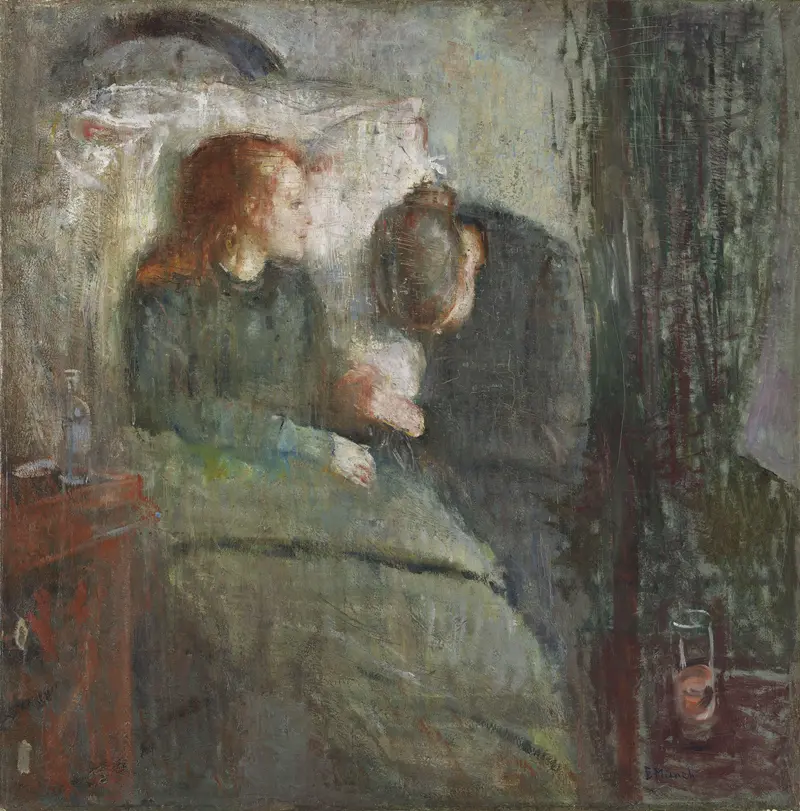
The Sick Child
Edvard Munch
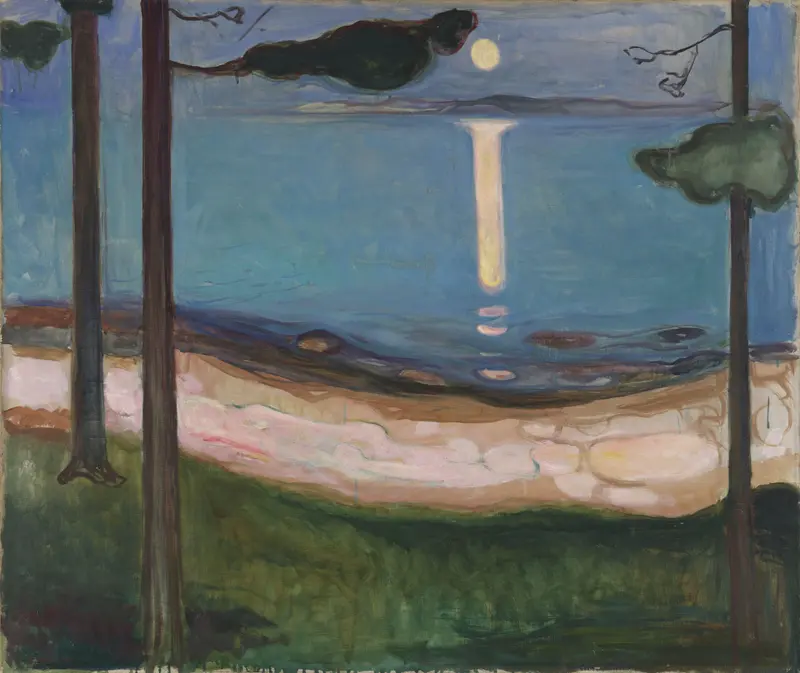
Moonlight
Edvard Munch
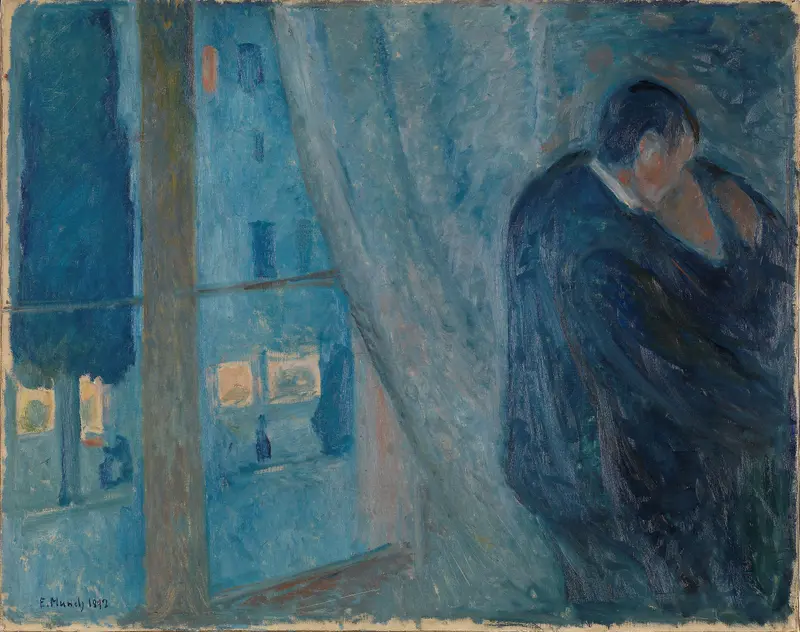
The Kiss
Edvard Munch
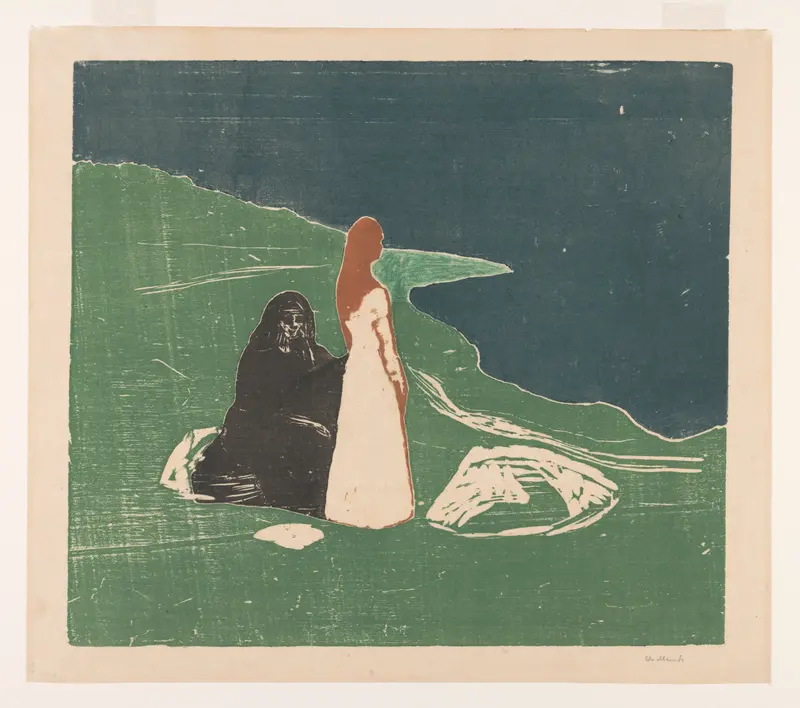
Two Women on the Shore
Edvard Munch
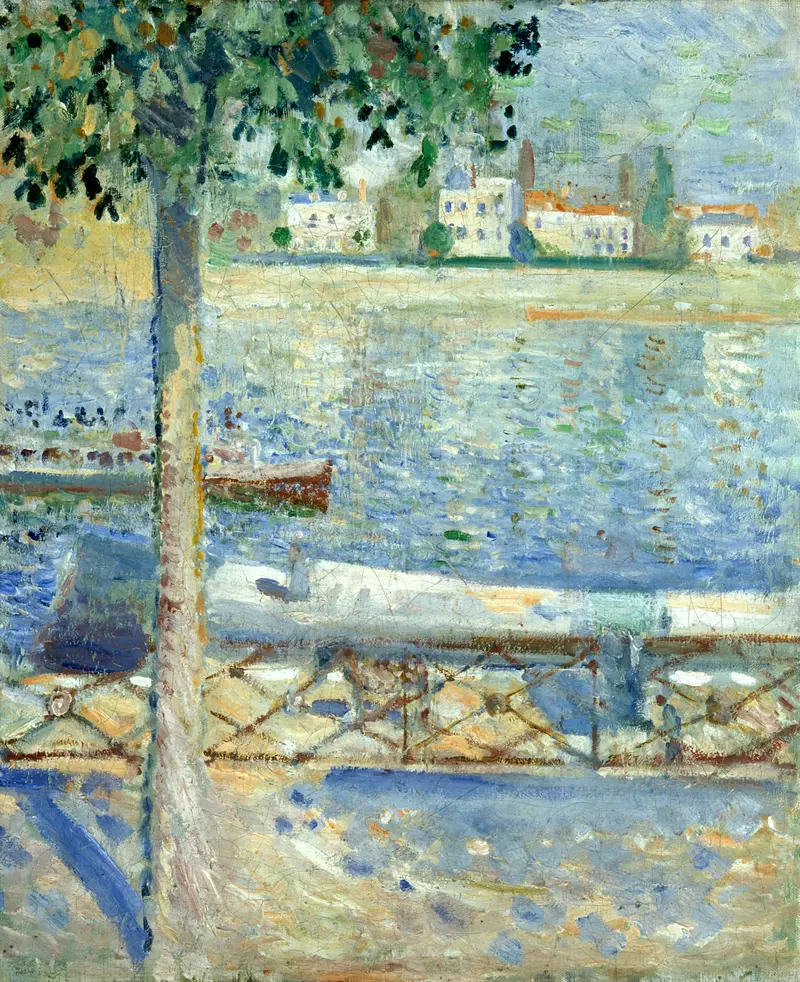
The Seine At Saint-Cloud
Edvard Munch
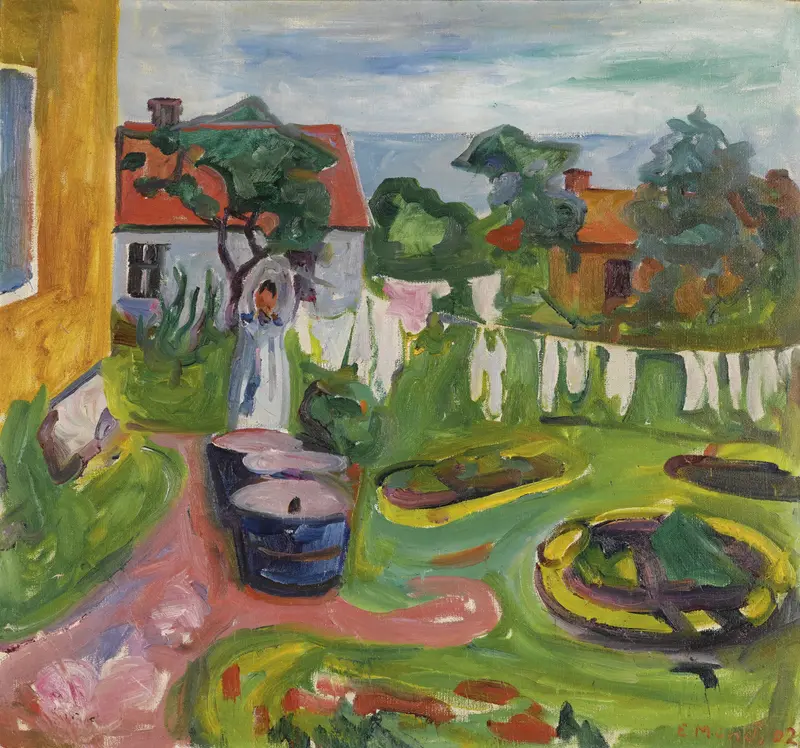
Klestørk I Åsgårdstrand (Clothes On A Line In Åsgårdstrand)
Edvard Munch
More Genre Scene Art

Banquet of the Officers of the St George Civic Guard
Frans Hals

Rembrandt and Saskia in the Scene of the Prodigal Son
Rembrandt van Rijn

Bal du moulin de la Galette
Pierre-Auguste Renoir

Quadrille at the Moulin Rouge
Henri de Toulouse-Lautrec

A Burial at Ornans
Gustave Courbet

When Will You Marry?
Paul Gauguin