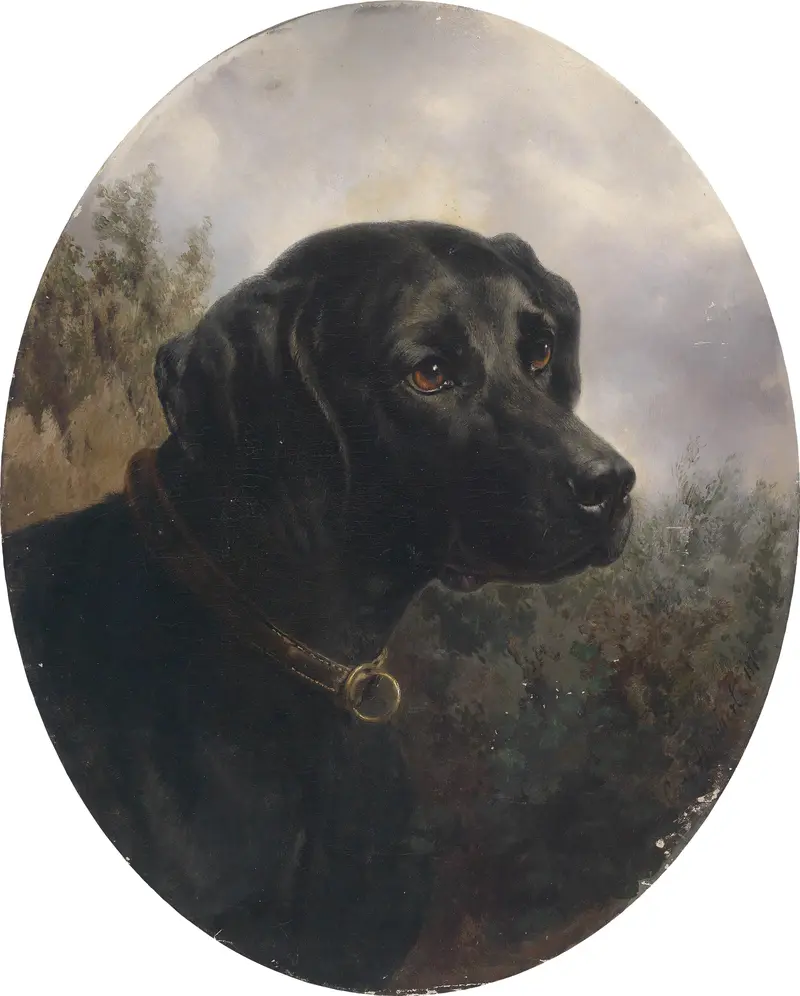
Gordon Setter with Mallard Duck — History & Facts
What draws the eye first is not the prize clutched in the dog’s mouth, but the expression in its eyes—a gaze at once dutiful and almost apologetic, as if aware of the delicate balance between pride and gentleness required in this moment. The glossy black and tan fur of the Gordon Setter is rendered with a precision that makes every strand seem to shimmer, framing the soft, downy feathers of the mallard duck. The bird’s iridescent green head and chestnut breast, painted with a jewel-like intensity, contrast with the setter’s somber coloring, guiding the viewer from the dog’s steady muzzle to the limp, vivid form of the quarry.
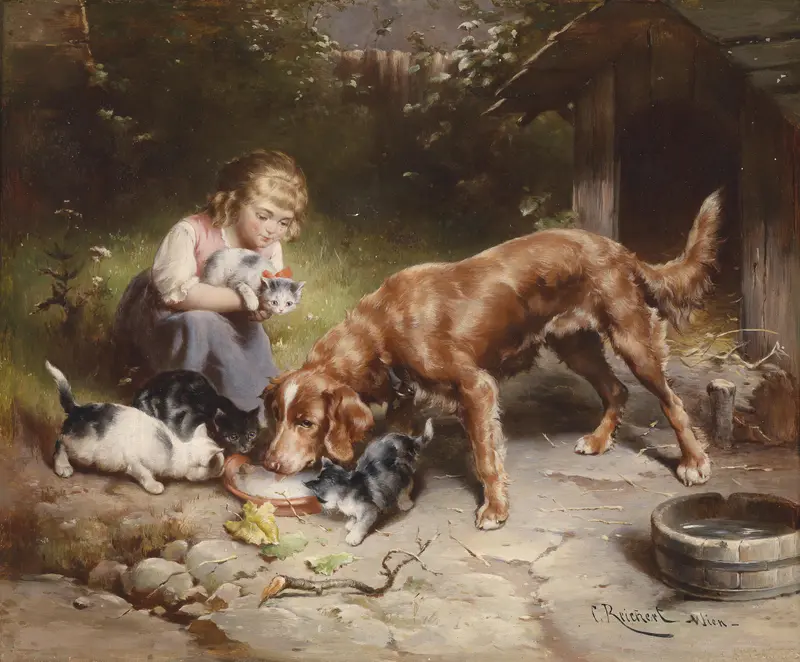
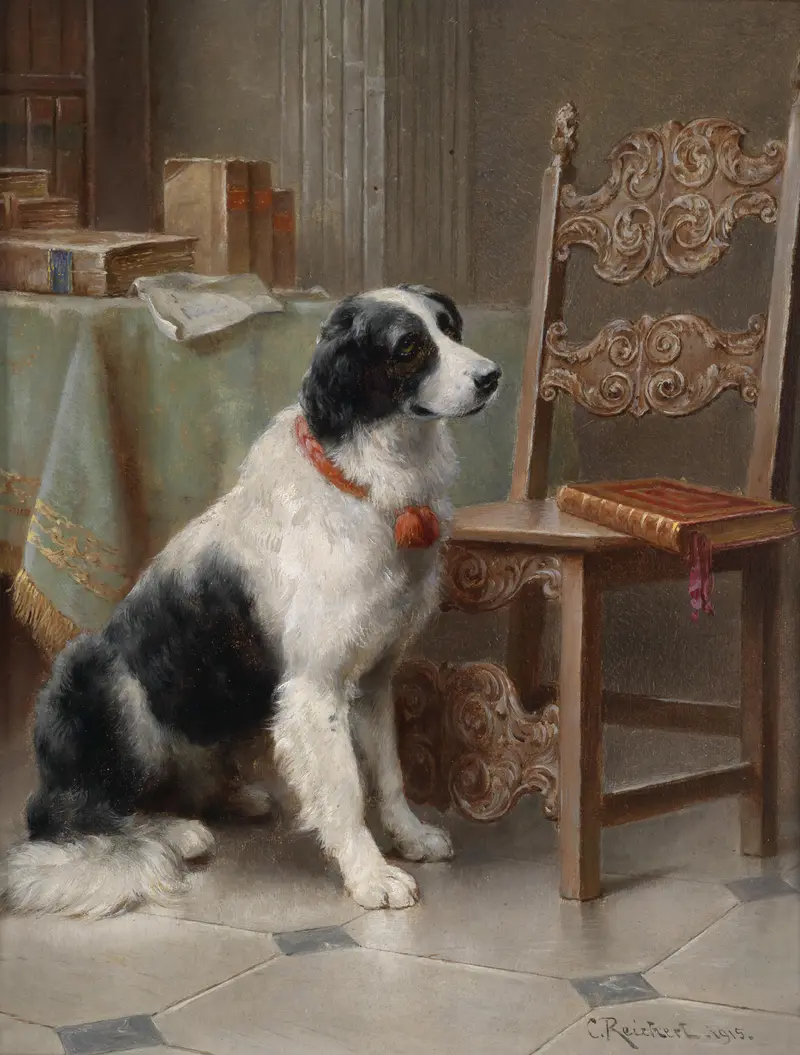
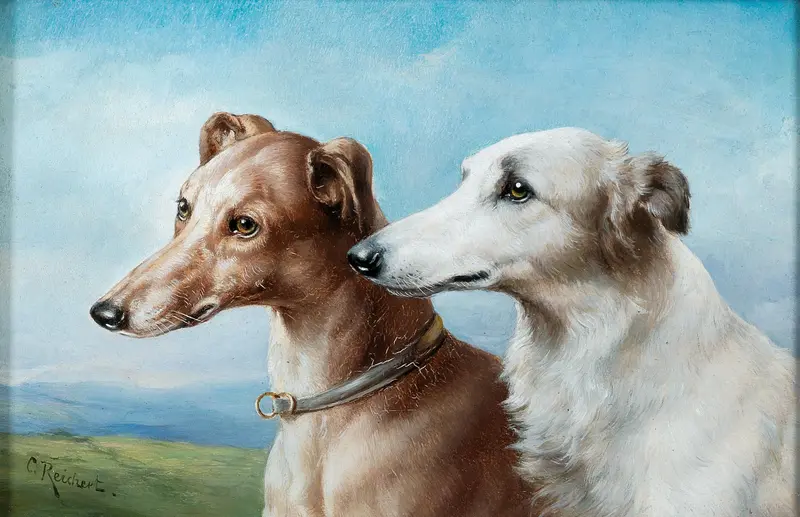
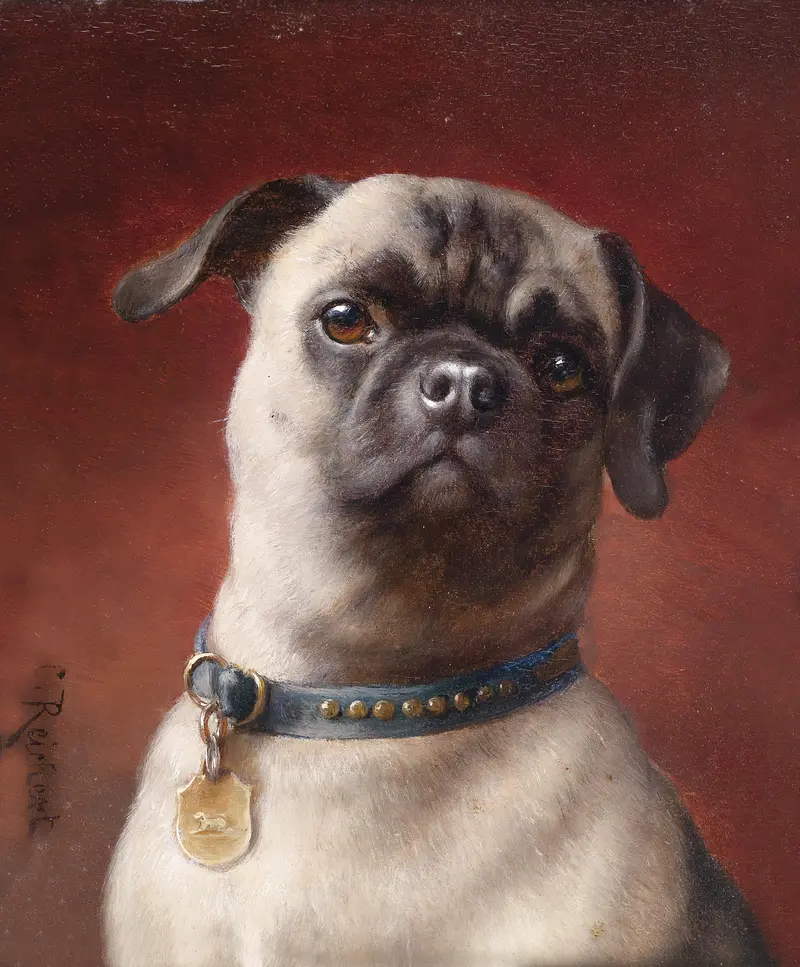
The light falls from the left, catching the moist shine of the dog’s nose and the subtle blue in the duck’s wing, suggesting a cool, open air just beyond the frame. There is no background to distract—only sky—so that all attention is fixed on this moment of return, the silent communication between hunter and companion. Painted by Carl Reichert by 1918, this work stands in the tradition of late nineteenth- and early twentieth-century animal portraiture, a genre prized by sportsmen and collectors for its celebration of loyalty, skill, and the rituals of the hunt. Such paintings were often commissioned to commemorate a favored dog or a memorable day in the field, and artists like Reichert—known for his almost photographic attention to animal character—brought both technical skill and emotional insight to these subjects.
The world that produced this image valued not only the trophies of the hunt, but the partnership between human and animal, a theme that Reichert’s contemporaries also explored in varying degrees of sentiment and realism. Today, the painting’s presence in a collection of nineteenth-century works at Dorotheum invites us to linger on the details: the softness of the fur, the glint in the dog’s eye, the quiet story of trust and achievement told in a single, unforgettable glance.