
Grey day. Kozlovka — History & Facts
What draws the eye first in Grey day. Kozlovka is not a dramatic sky or a bustling scene, but the quiet, workaday dignity of a rural outbuilding—its low, brick form hugged by a thatched roof, set against a wall that seems to both divide and connect the world of human labor with the wild tangle of green beyond. The palette is all gentle contrasts: the earthy reds and ochres of brick and mud, the soft, almost silvery green of grass and foliage, the pale, diffused light that flattens shadows and mutes the scene.
A single cart, its wheel askew, rests as if abandoned, while a narrow track leads the gaze through a break in the wall, inviting the viewer to imagine the life that moves between field and farm. The artist’s brushwork is brisk but attentive, capturing the lushness of summer growth and the sense of a day suspended between chores. Painted in 1891, this work belongs to a moment in Russian art when painters like Apollinari Mikhailovich Vasnetsov turned their attention to the landscapes and rhythms of the countryside, often celebrating the ordinary and overlooked. Such scenes were rarely grand commissions; rather, they were studies of place and memory, sometimes painted en plein air, meant to capture the changing face of rural Russia as the old world gave way to new realities.
Today, the painting is preserved in a Russian collection, as documented by its listing in the state catalogue, but history has kept few traces of its journey or reception. What remains is the invitation to linger in the hush of this ordinary day, to notice the way the land and sky meet quietly above the red-brick wall.
More Artworks by Apollinari Mikhailovich Vasnetsov

Landscape With Lake
Apollinari Mikhailovich Vasnetsov
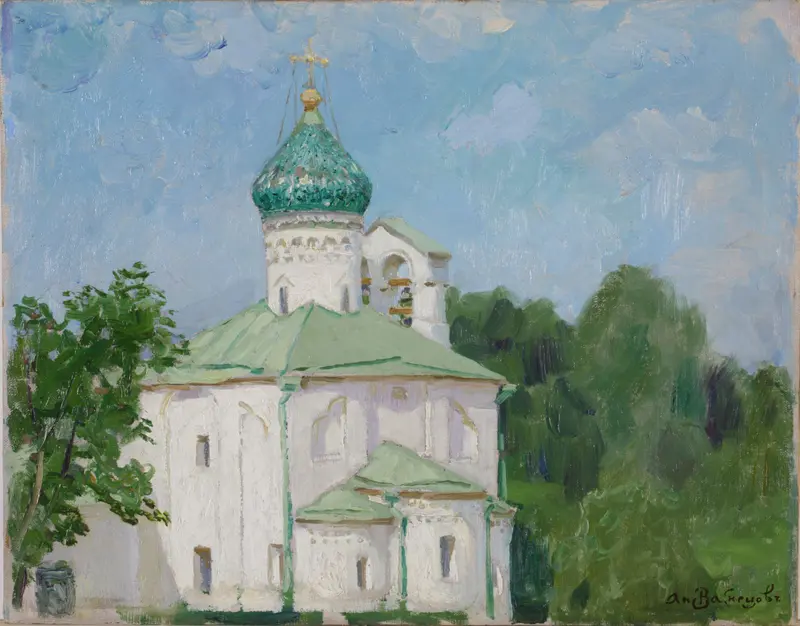
Sergius Luzhki
Apollinari Mikhailovich Vasnetsov
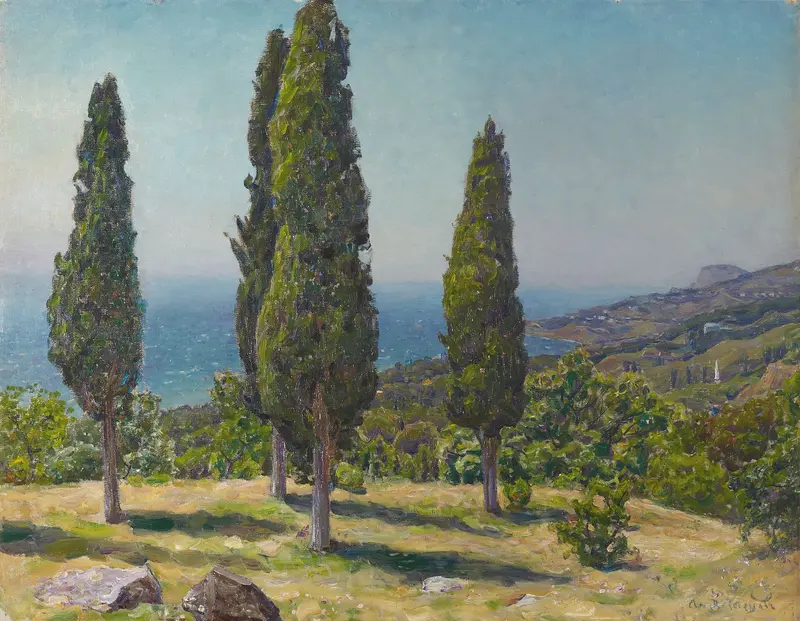
cypresses. Crimea
Apollinari Mikhailovich Vasnetsov
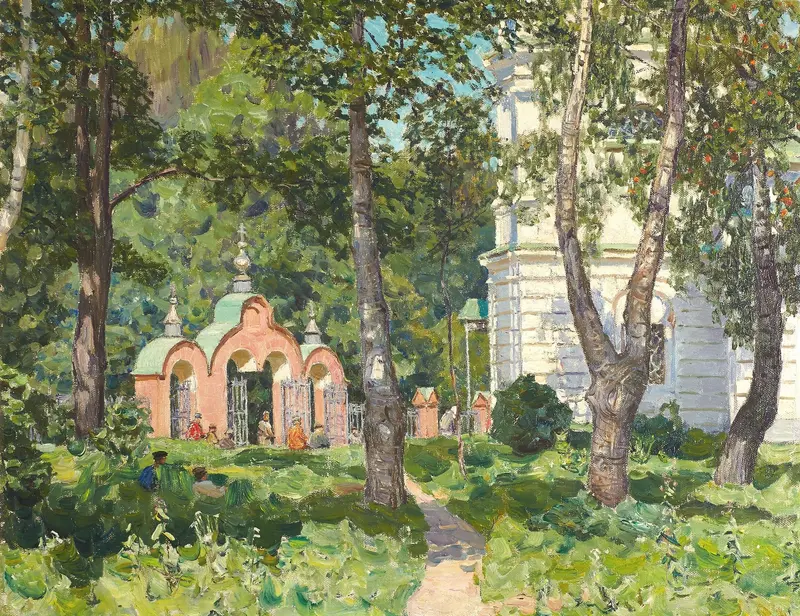
Demyanovo. At the churchyard
Apollinari Mikhailovich Vasnetsov
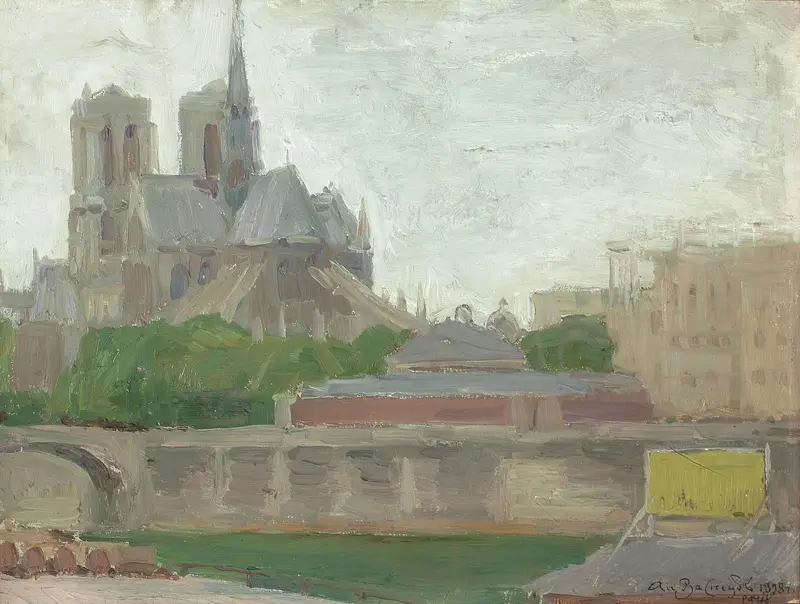
Notre Dame de Paris
Apollinari Mikhailovich Vasnetsov
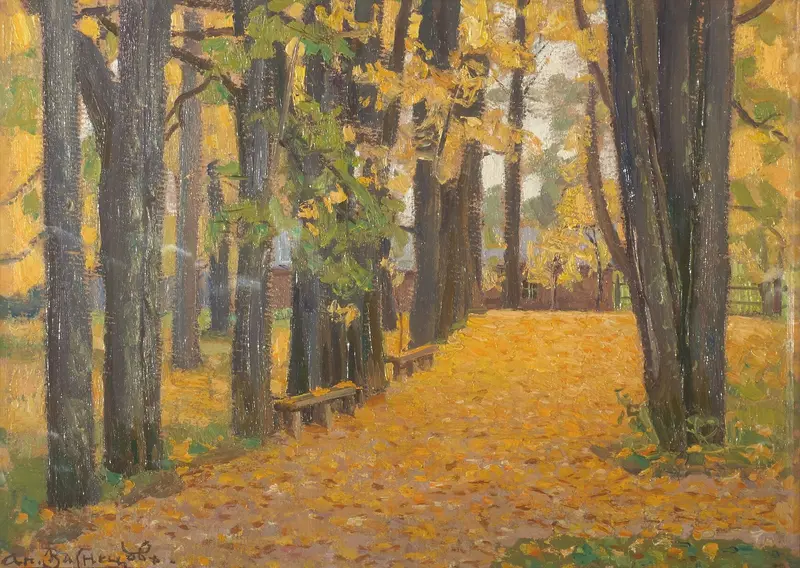
Autumn park
Apollinari Mikhailovich Vasnetsov
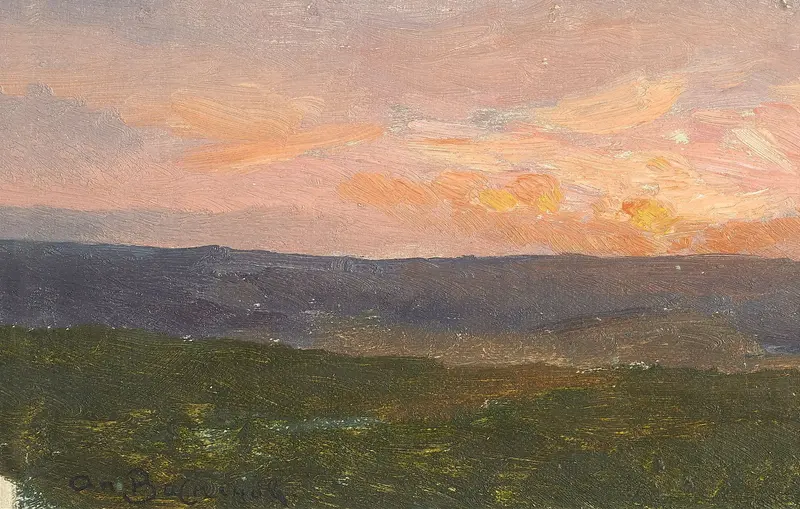
Sunset. Shurma
Apollinari Mikhailovich Vasnetsov

Via delle Tombe Pompeii
Apollinari Mikhailovich Vasnetsov
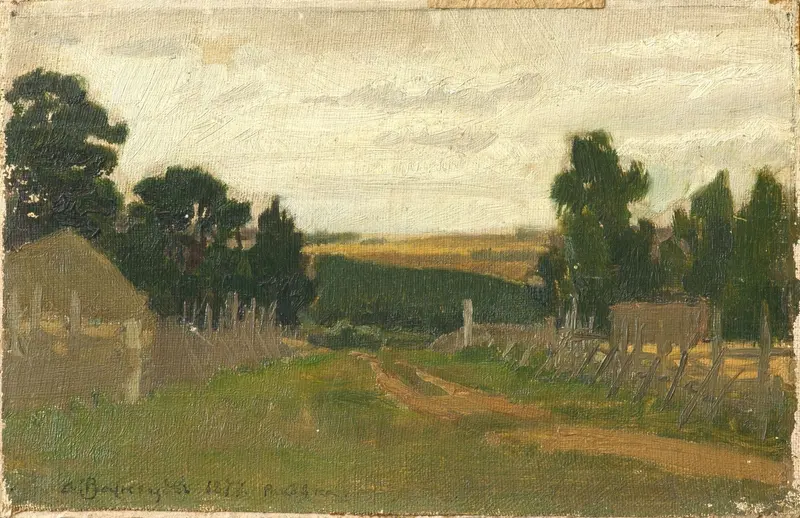
Rakovka
Apollinari Mikhailovich Vasnetsov
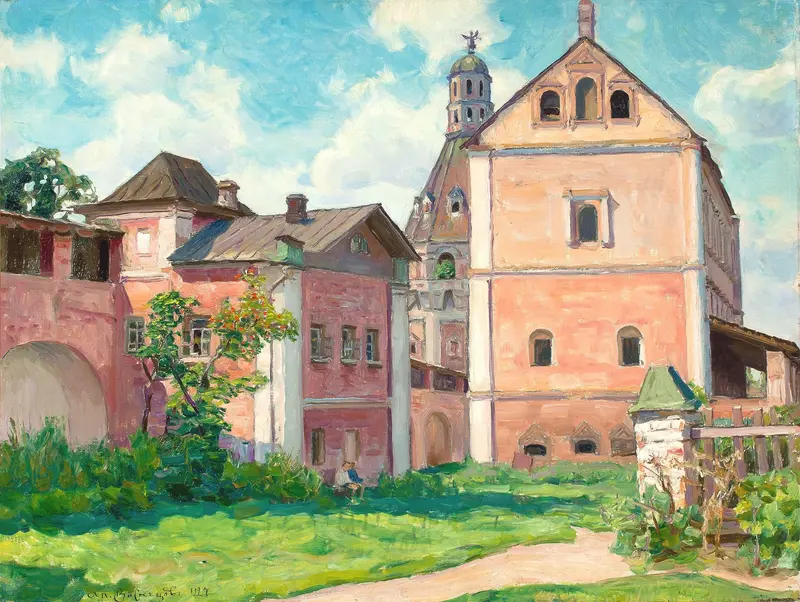
Simonov tower
Apollinari Mikhailovich Vasnetsov
More Landscape Art

The Starry Night
Vincent van Gogh

View of Delft
Johannes Vermeer

Water Lilies
Claude Monet

The Grand Canal, Venice, looking north-west from the Ca' Corner to the Ca' Contarini degli Scrigni, with the campanile of Santa Maria della Carità
Canaletto

Windsor Castle
Canaletto

The Grand Canal looking North-East from the Palazzo Dolfin-Manin to the Rialto Bridge
Canaletto