
Grey Seascape — History & Facts
In the stillness of James Ensor's work, the truth of a grey seascape unfolds with every brushstroke, revealing layers of existence that go beyond mere representation. Look to the center, where the horizon blurs into a gentle embrace of grey tones, melding sea and sky into a seamless veil. The muted palette whispers of solitude and introspection. Each stroke feels deliberate, yet spontaneous, inviting the viewer to contemplate the infinite depths between the water and the heavens.
Notice the subtle variations in the texture, where the waves murmur softly against the shore, and how the light, or lack thereof, accentuates the somber mood of the scene. Delving deeper, a sense of longing permeates the canvas; the emptiness is palpable. The absence of figures invites reflection on humanity's relationship with nature—how we are both part of it and isolated by it. The juxtaposition of light and dark mirrors inner turmoil, hinting at truths we often shy away from.
This seascape, while stark, evokes a profound emotional tension that many find resonant. It speaks to the universal experience of searching for meaning in a world that often feels overwhelmingly grey. In 1880, Ensor was grappling with his emerging identity as an artist in Belgium, a time marked by artistic innovation yet profound existential questioning. As he painted Grey Seascape, he was influenced by both Impressionism and Symbolism, navigating a personal and cultural landscape rich with conflict and change.
It was a moment when the boundaries of art were expanding, prompting a new exploration of truth and perception, which would resonate through his later works.
More Artworks by James Ensor
Browse all →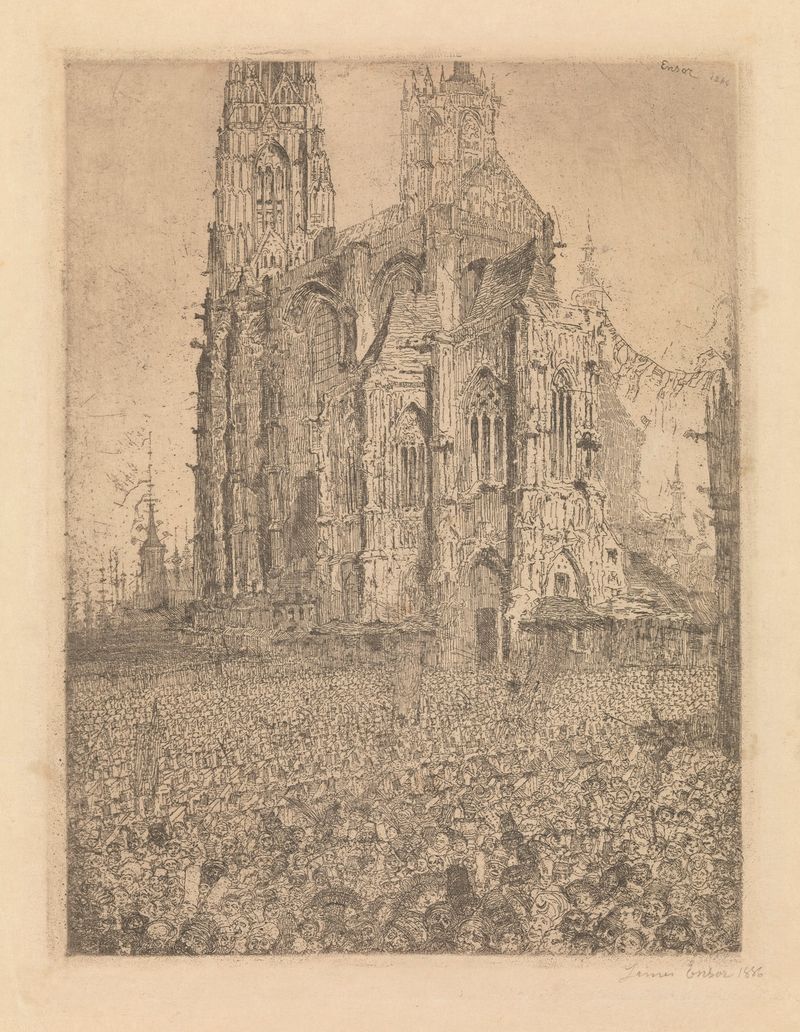
The Cathedral
James Ensor
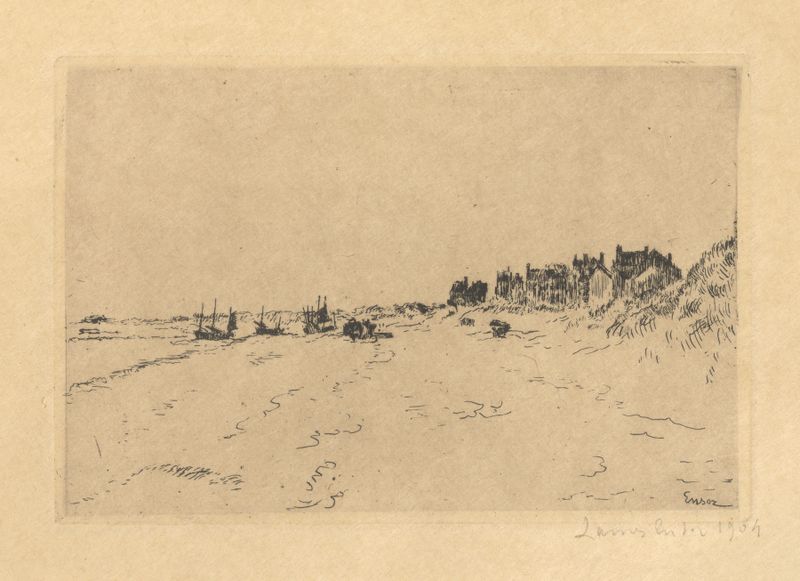
Het strand van De Panne
James Ensor
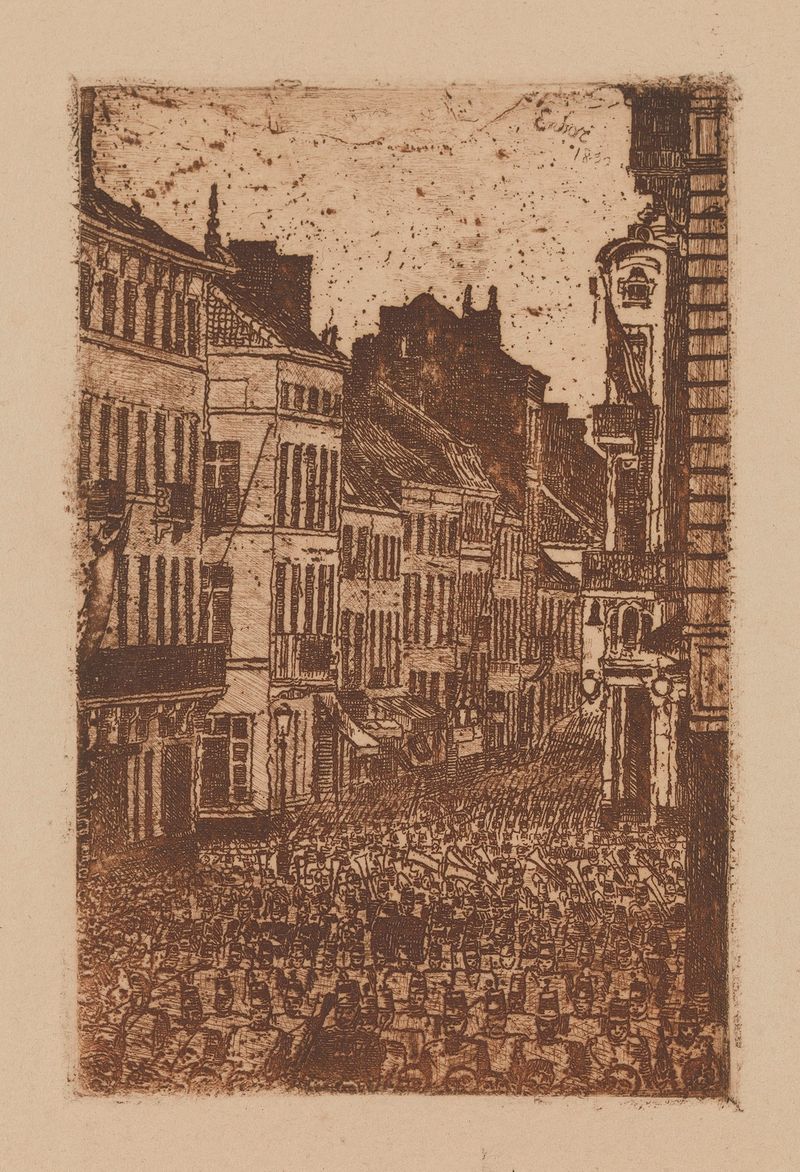
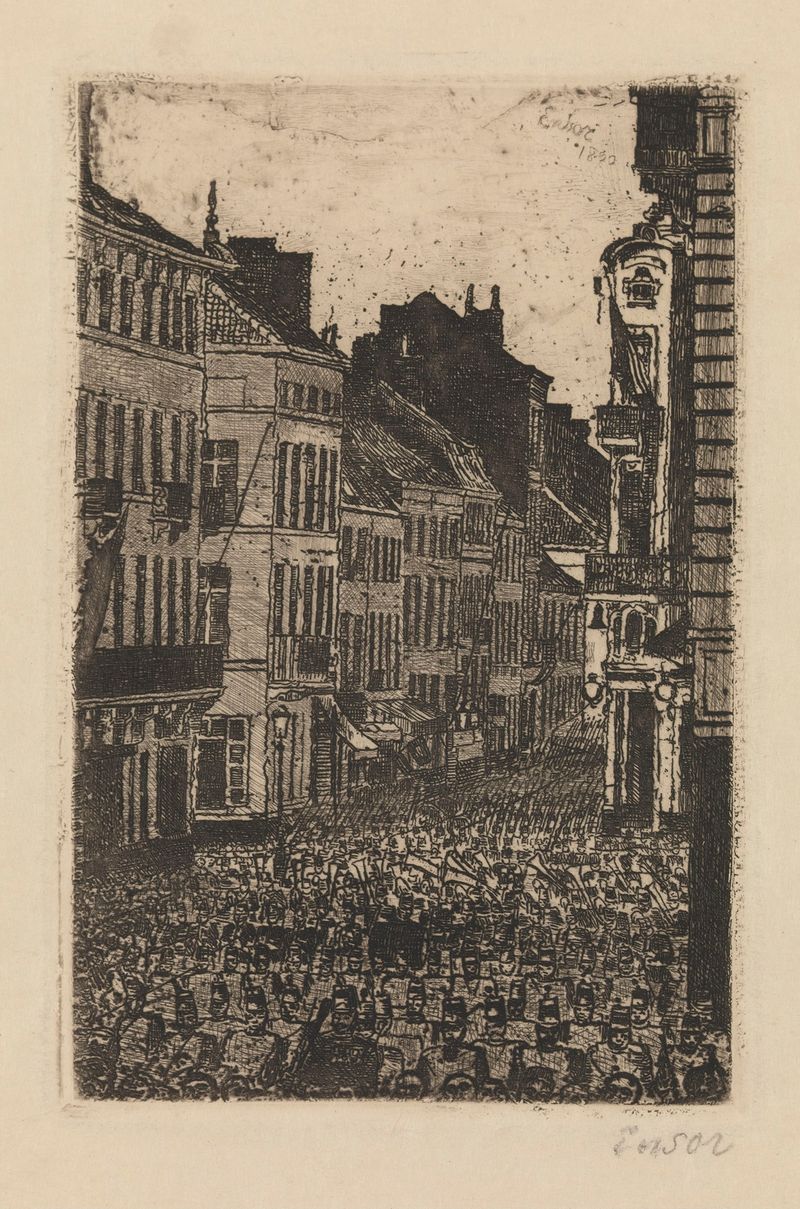
The Music in the rue de Flandre, Ostend
James Ensor
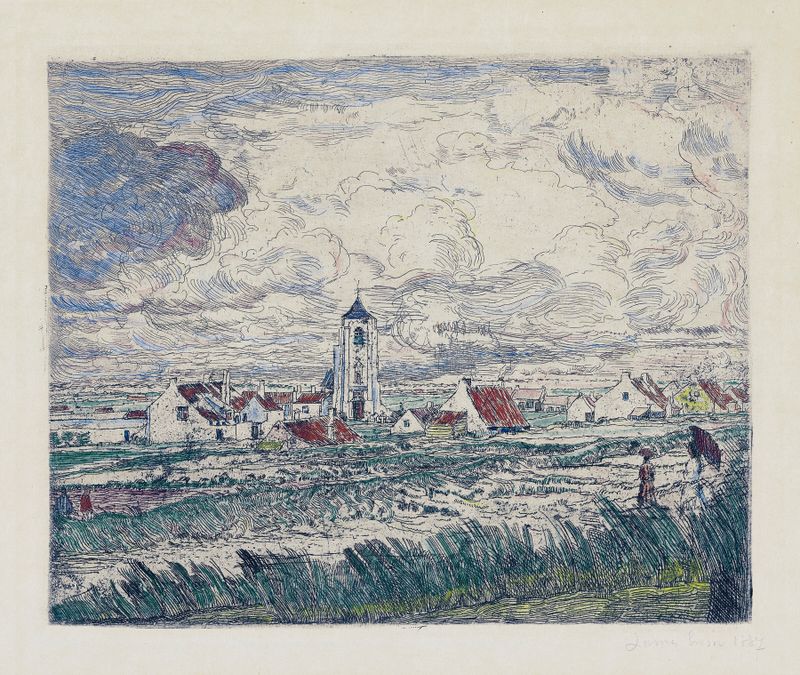
Grande vue de Mariakerke
James Ensor
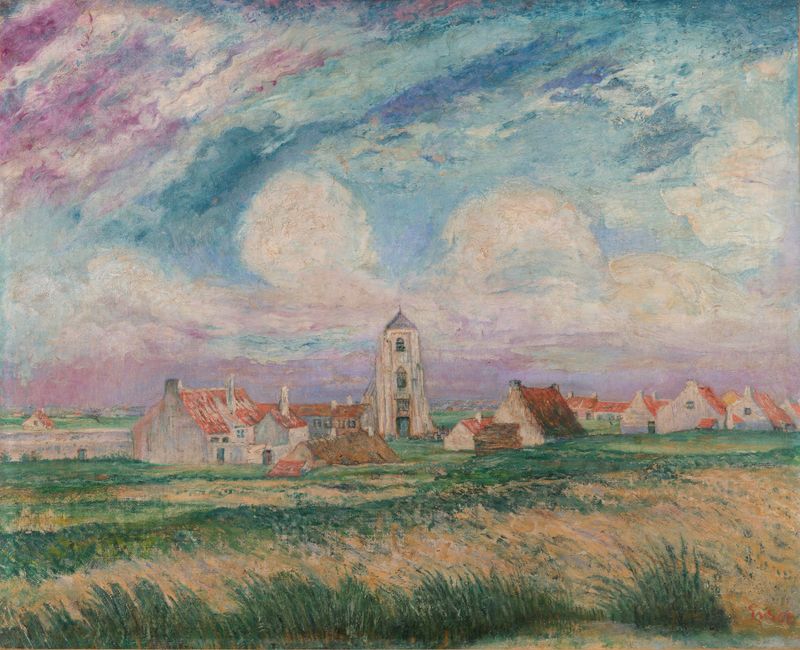
View of Mariakerke
James Ensor
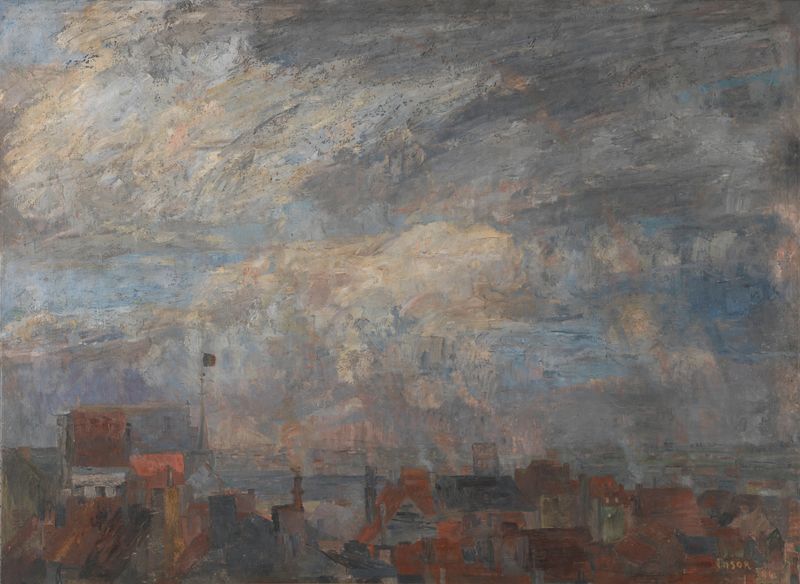
The Rooftops of Ostend
James Ensor
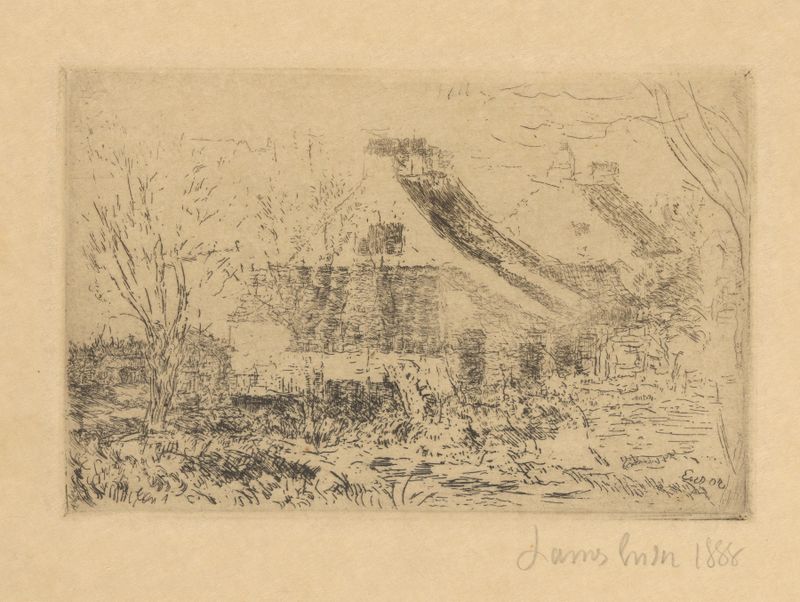
Huisjes in Mariakerke
James Ensor
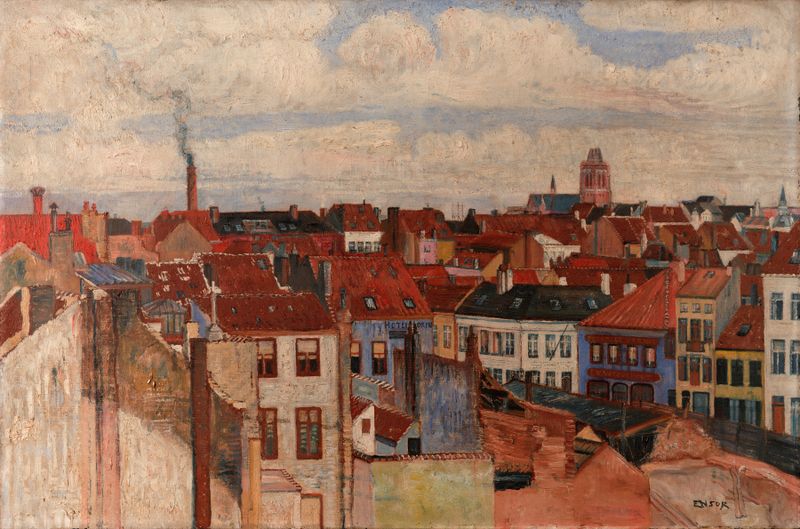
The rooftops of Ostend
James Ensor
The Music in the rue de Flandre, Ostend
James Ensor
Verovering van een vreemde stad
James Ensor





