
Grotto of Tiberius at Sperlonga — History & Facts
Could beauty survive in a century of chaos? The question lingers, echoing through the vibrant yet melancholic landscape captured in this exquisite piece. Look to the left, where the rocky formations rise dramatically against a calm azure sea. The artist’s brushstrokes deftly convey texture, rendering the craggy cliffs with a sense of weight and presence. Notice how the warm sunlight bathes the grotto’s entrance, inviting but also hinting at the isolation within.
The harmonious palette of blues and earthy browns captures both the serenity and the underlying solitude of this coastal scene. Delve deeper into the nuances of the composition. The juxtaposition of light and shadow reflects the duality of nature’s splendor and the loneliness that can accompany it. A solitary figure, nearly lost within the grandeur of the setting, evokes a sense of introspection, suggesting that even in beauty, one can feel profoundly alone.
The interplay of scale—where towering cliffs loom over a diminutive human presence—heightens this emotional tension, reminding us of our fragile place amid nature’s vastness. In the late 18th to early 19th century, the artist created this work while exploring themes of beauty and solitude amidst the backdrop of a shifting artistic landscape. Labruzzi was immersed in the neoclassical movement, which celebrated the grandeur of ancient history. His time in Italy, surrounded by the ruins of antiquity, allowed him to reflect on both the splendor and the loneliness inherent in such historical echoes, making his interpretation of the grotto deeply resonant.
More Artworks by Carlo Labruzzi
Browse all →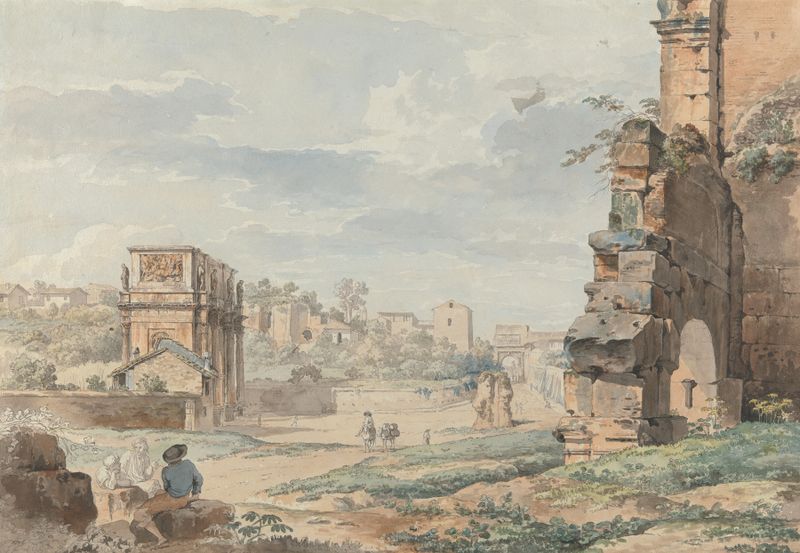
Part of the Colosseum with the Arch of Constantine and Arch of Titus in the Distance, Rome
Carlo Labruzzi
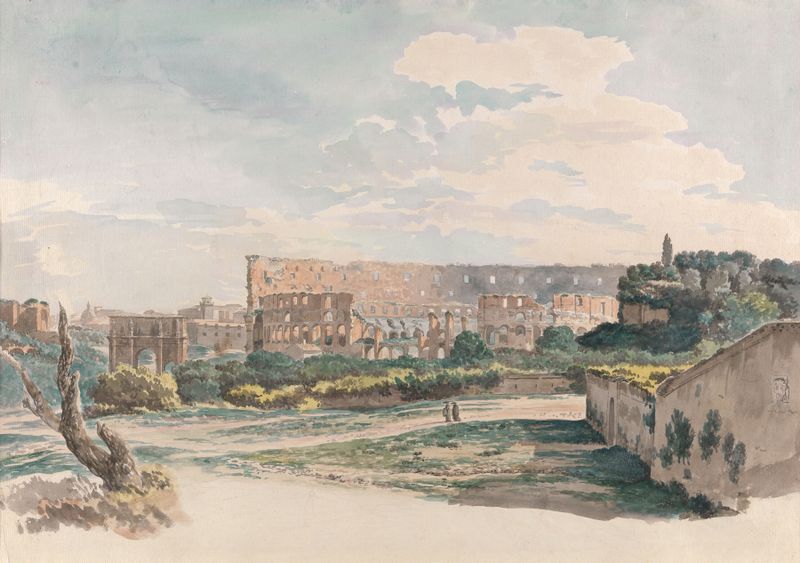
The Colosseum from the Caelian Mount, with the Arch of Constantine and a View of the Forum, Rome.
Carlo Labruzzi
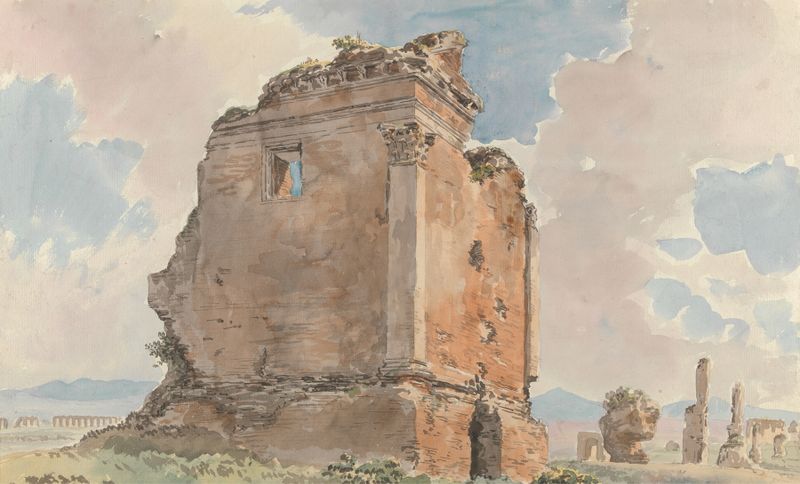
Sepulchre on the Via Nomentana in the Roman Campagna
Carlo Labruzzi
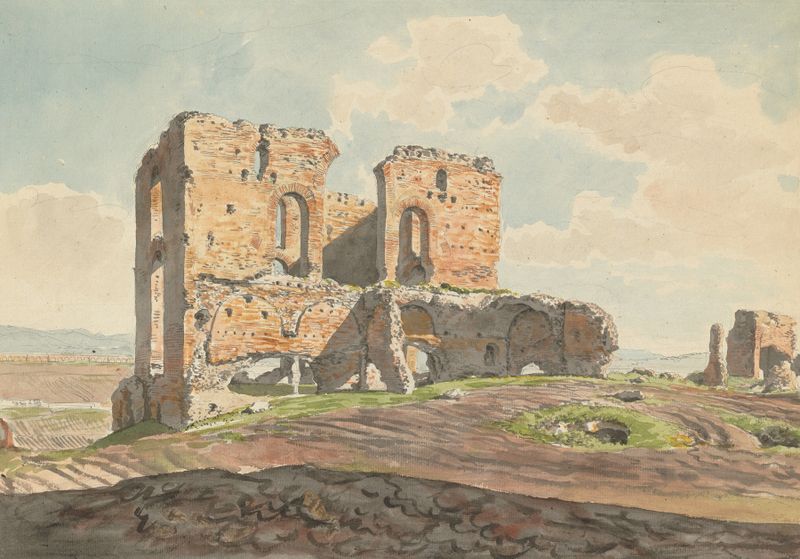
The Great Villa of the Quintilii on the Appian Way
Carlo Labruzzi
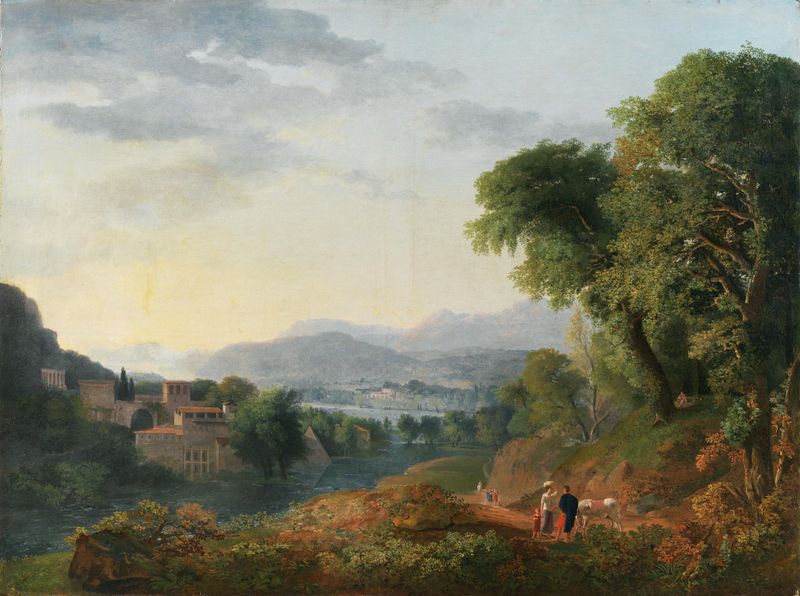
An Italianate landscape
Carlo Labruzzi
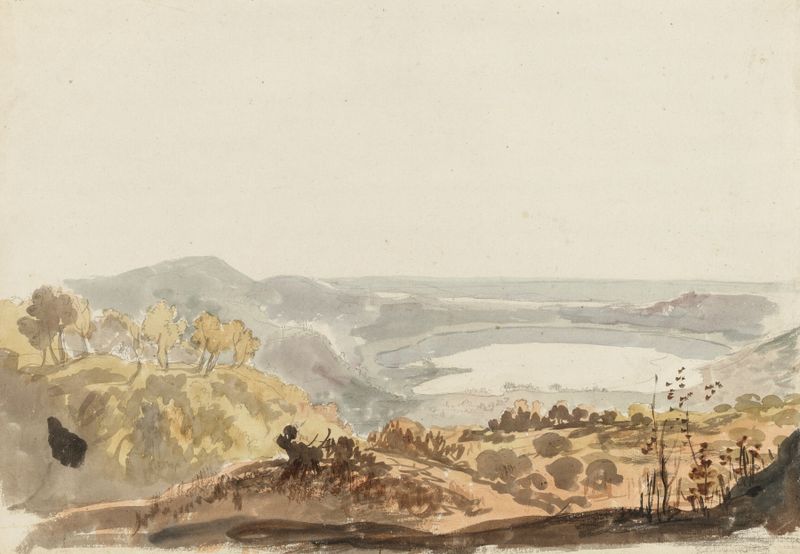
View of Lake Nemi looking towards Rome
Carlo Labruzzi
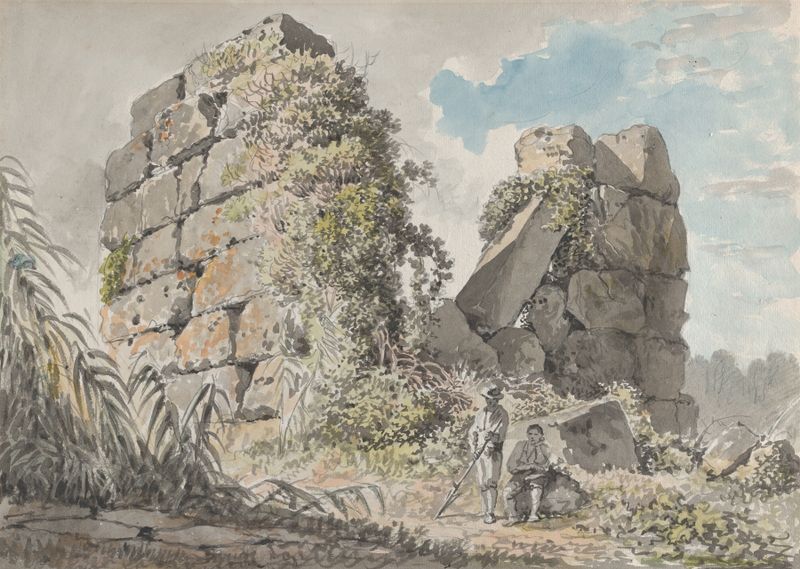
Ruins on the Right of the Via Appia
Carlo Labruzzi
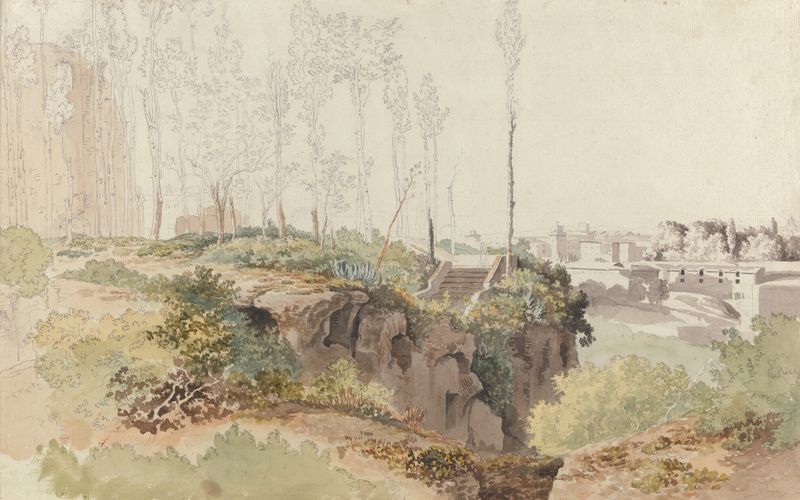
The Baths of Caracalla, Rome
Carlo Labruzzi
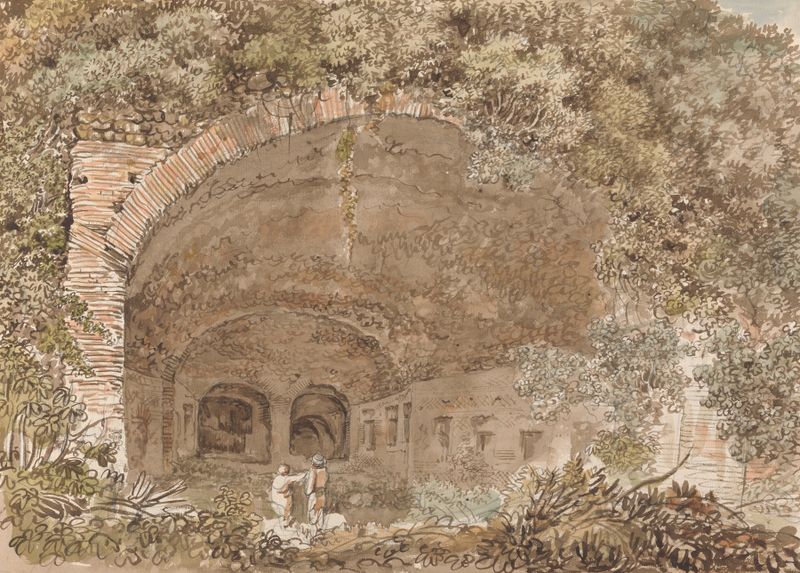
On the Appian Way
Carlo Labruzzi
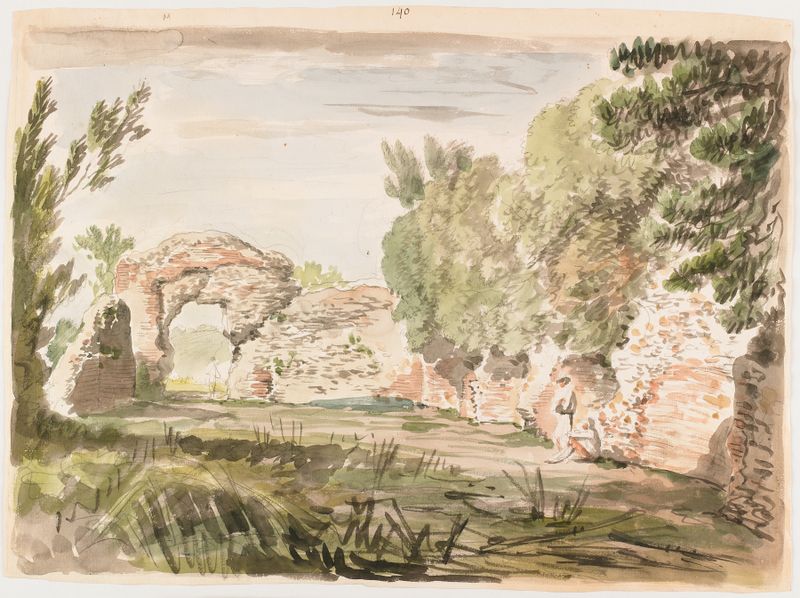
Landscape with Trees, Ruin and Three Figures
Carlo Labruzzi





