
Ruins on the Right of the Via Appia — History & Facts
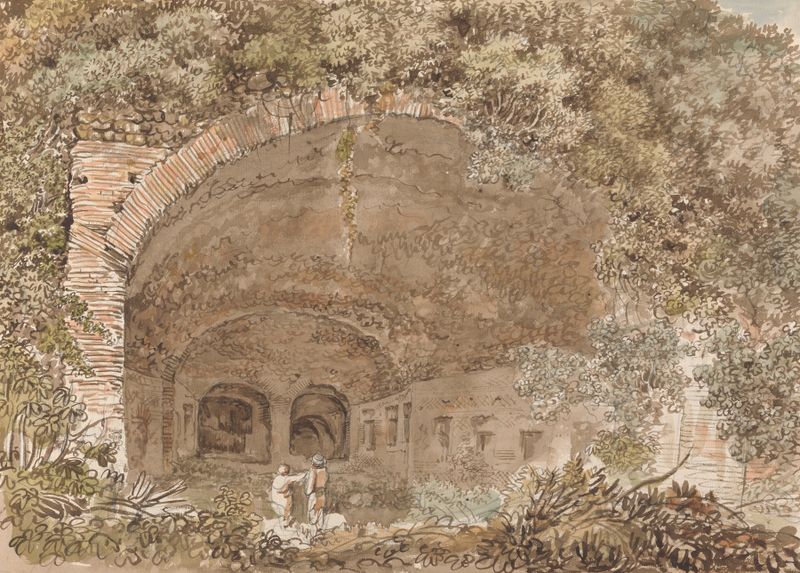
Can paint confess what words never could? Through the brushstrokes of an artist, forgotten histories whisper and lost stories reveal themselves in a fleeting moment. Look to the left where the ancient ruins rise, crumbling and proud against a cerulean sky. The light bathes the stone in warm golden hues, illuminating the textures of time etched into each surface. Notice how the intricate details of the vegetation wrap around the structures, a tender embrace of nature reclaiming what humanity once built.
The composition leads the eye across the canvas, inviting reflection on the passage of time and the weight of history. In the shadows cast by the ruins, a tension emerges between permanence and decay, embodying the relentless march of time. The juxtaposition of vibrant greenery against the weathered stone speaks of resilience, yet hints at an inevitable decline, leaving the viewer to ponder the transitory nature of civilization itself. Each element of the painting resonates with a deeper truth; it is a meditation on existence, revealing reverence for what has been lost while celebrating the beauty of survival. In 1789, Labruzzi was immersed in the Neoclassical movement, which embraced classical themes and forms.
He painted this piece in Rome, a city steeped in the remnants of ancient grandeur, capturing the spirit of a society both enamored by and reflective of its past. At this time, Europe was on the brink of profound change—a revolution that would challenge old ideas, making his portrayal of ruins all the more poignant against the backdrop of transformation.
More Artworks by Carlo Labruzzi
Browse all →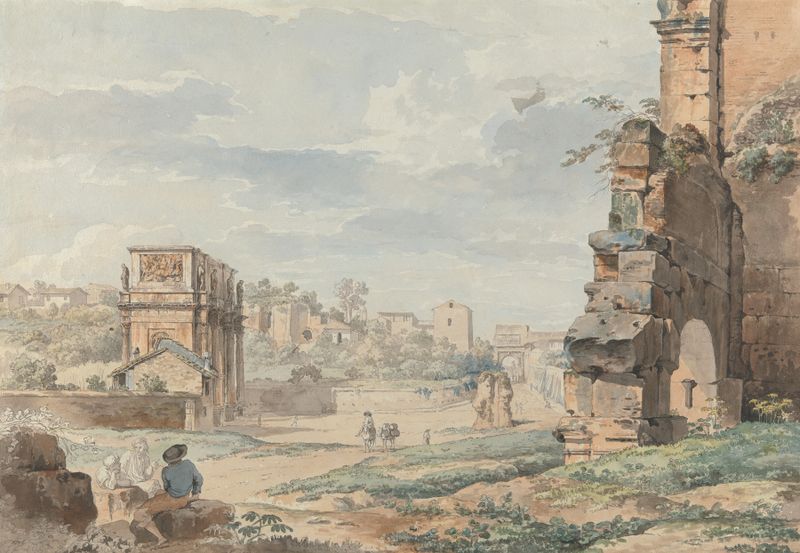
Part of the Colosseum with the Arch of Constantine and Arch of Titus in the Distance, Rome
Carlo Labruzzi
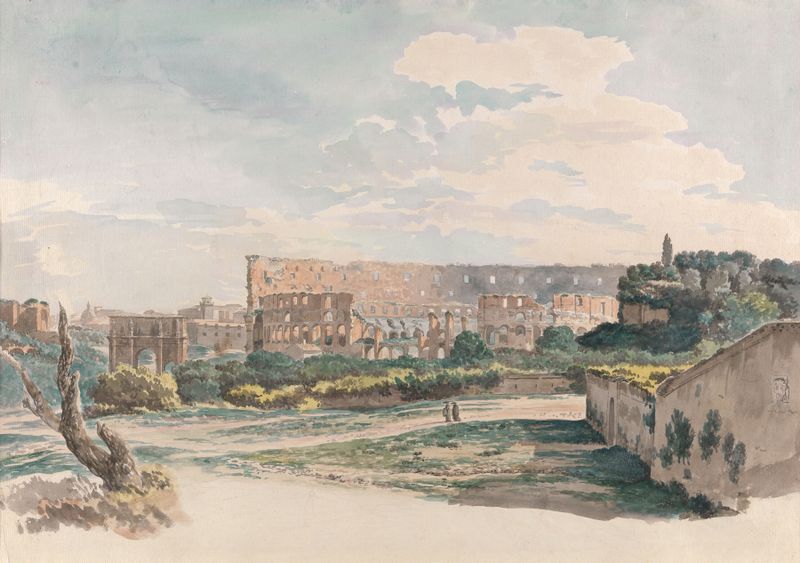
The Colosseum from the Caelian Mount, with the Arch of Constantine and a View of the Forum, Rome.
Carlo Labruzzi
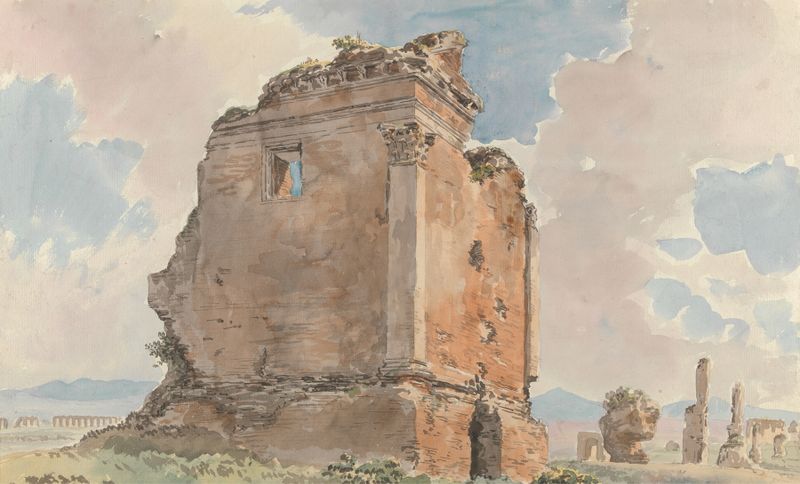
Sepulchre on the Via Nomentana in the Roman Campagna
Carlo Labruzzi
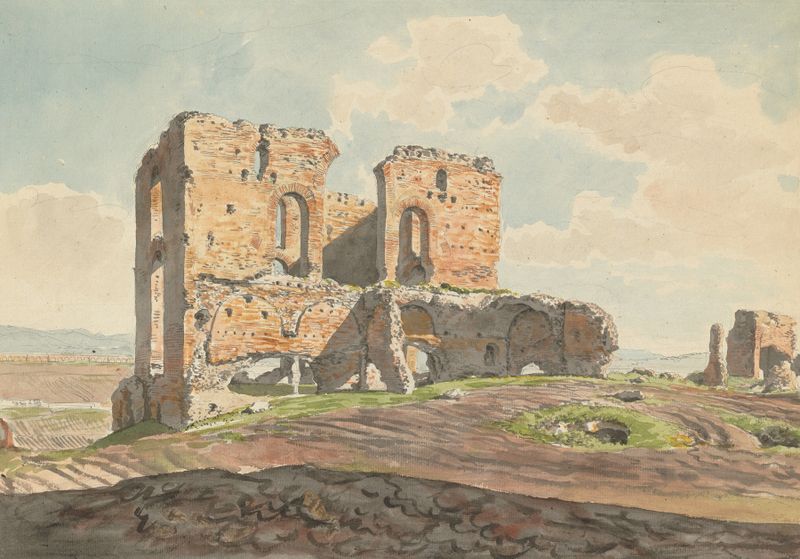
The Great Villa of the Quintilii on the Appian Way
Carlo Labruzzi
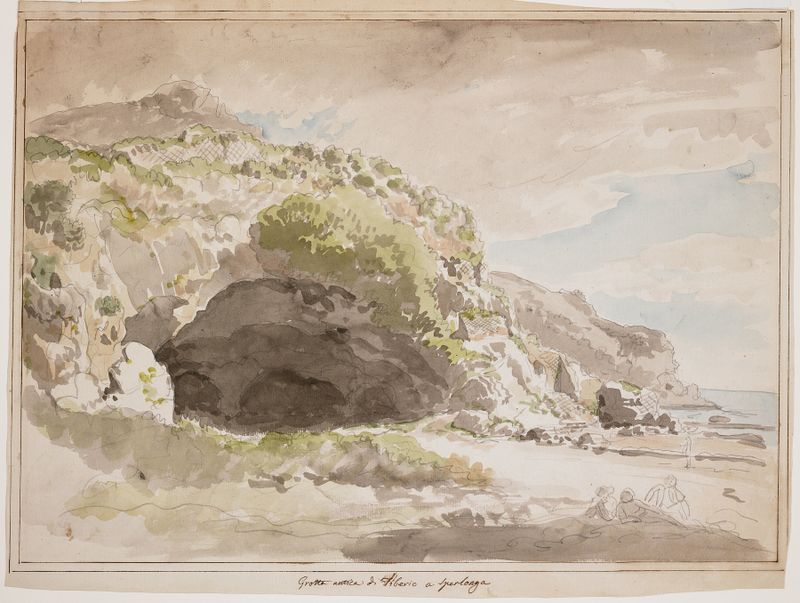
Grotto of Tiberius at Sperlonga
Carlo Labruzzi
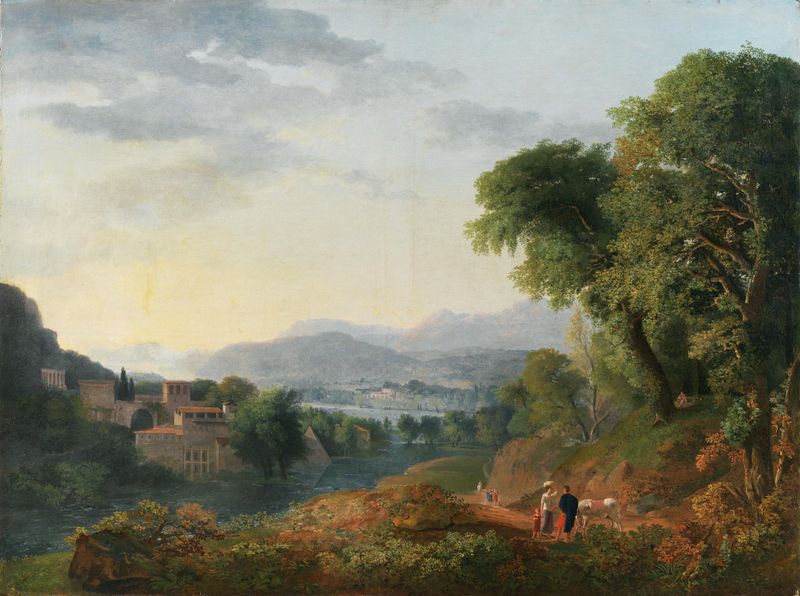
An Italianate landscape
Carlo Labruzzi
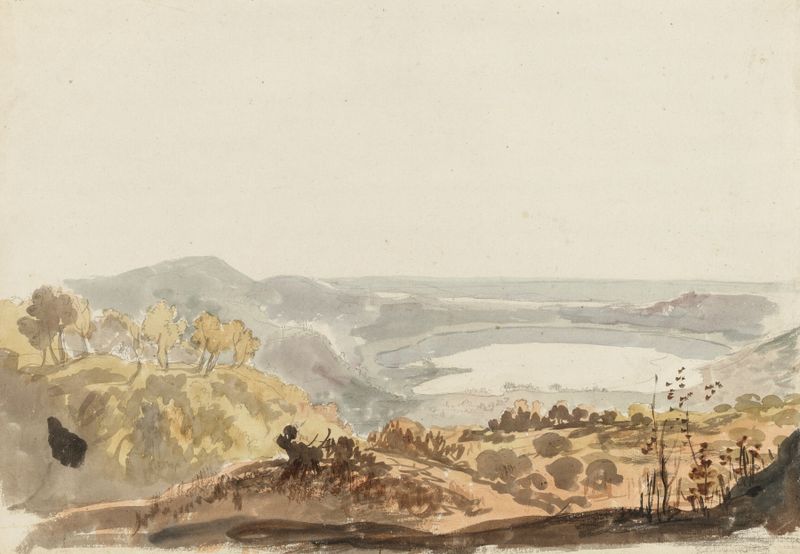
View of Lake Nemi looking towards Rome
Carlo Labruzzi
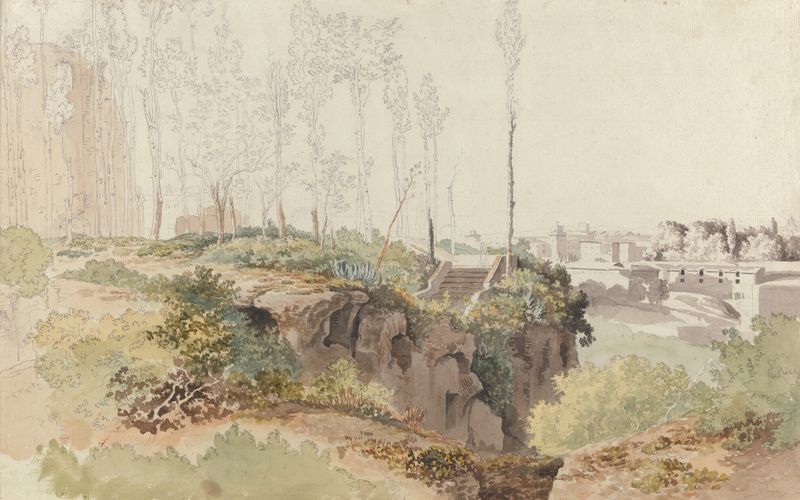
The Baths of Caracalla, Rome
Carlo Labruzzi
On the Appian Way
Carlo Labruzzi
Landscape with Trees, Ruin and Three Figures
Carlo Labruzzi





