
On the Appian Way — History & Facts
Where does light end, and longing begin? In the delicate interplay of hues within this painting, a dialogue unfolds between the warmth of the sun and the shadows of memory. Focus on the luminous sky, where soft blues and golden yellows blend harmoniously, drawing your gaze toward the horizon. Notice how the gentle light illuminates the ancient stones of the Appian Way, each one imbued with a history that whispers of travelers long past. The meticulously painted foliage frames the path, while the distant hills invite a sense of journey, evoking both serenity and nostalgia. Beneath the surface, the contrasting elements of light and shadow suggest a deeper emotional landscape.
The vibrant illumination may symbolize hope or renewal, while the shaded areas signal the weight of history and the passage of time. Each detail—the crumbling stones, the verdant vegetation—serves as a reminder of the connection between nature and human experience, evoking a bittersweet longing for what once was and what remains. During the late 18th century in Italy, Carlo Labruzzi painted this work against a backdrop of artistic revival, wherein neoclassicism began merging with romantic ideals. The artist, known for his landscapes that romanticize the ruins of antiquity, found inspiration in the enduring beauty of the Italian countryside.
As Europe grappled with the aftermath of political upheaval, Labruzzi’s serene depictions offered a refuge in the majestic remnants of the past, capturing the spirit of an era that revered nature’s timelessness.
More Artworks by Carlo Labruzzi
Browse all →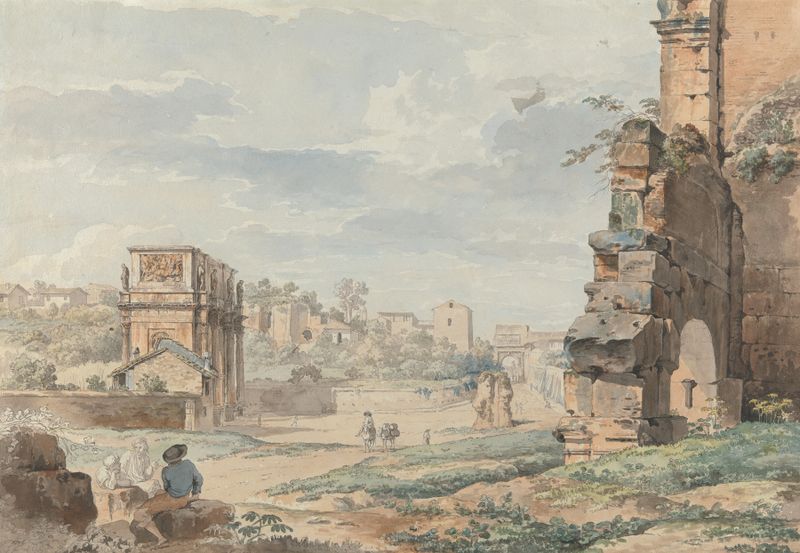
Part of the Colosseum with the Arch of Constantine and Arch of Titus in the Distance, Rome
Carlo Labruzzi
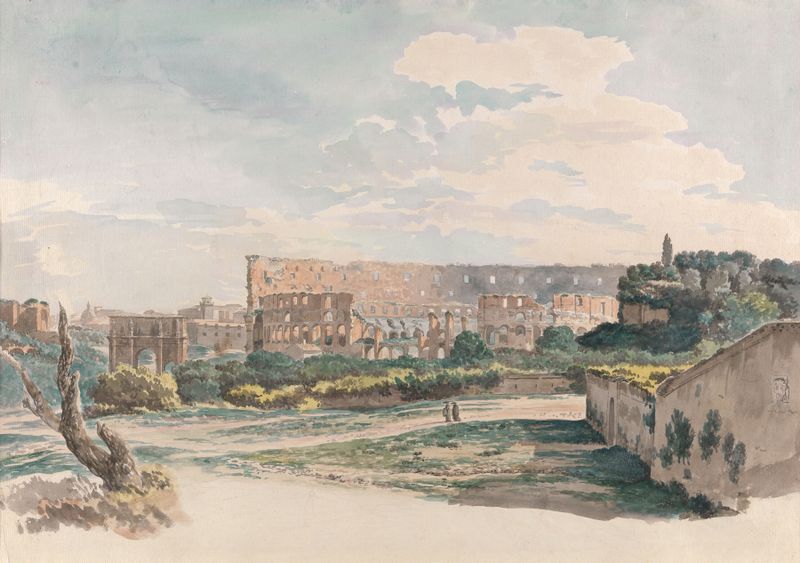
The Colosseum from the Caelian Mount, with the Arch of Constantine and a View of the Forum, Rome.
Carlo Labruzzi
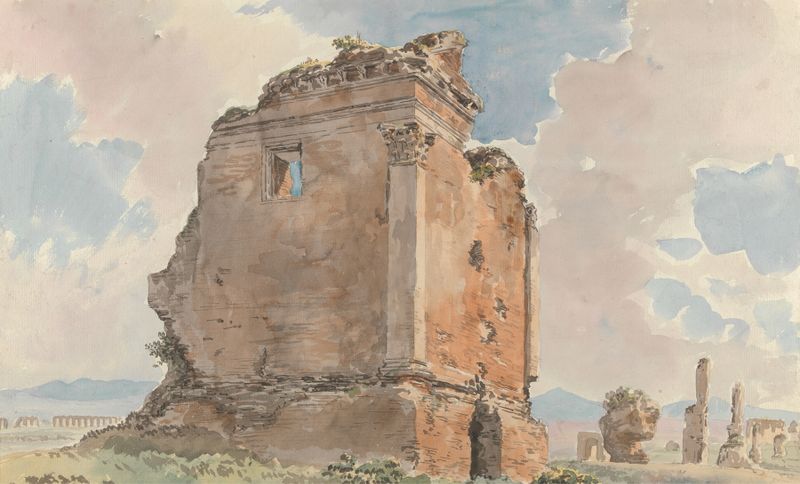
Sepulchre on the Via Nomentana in the Roman Campagna
Carlo Labruzzi
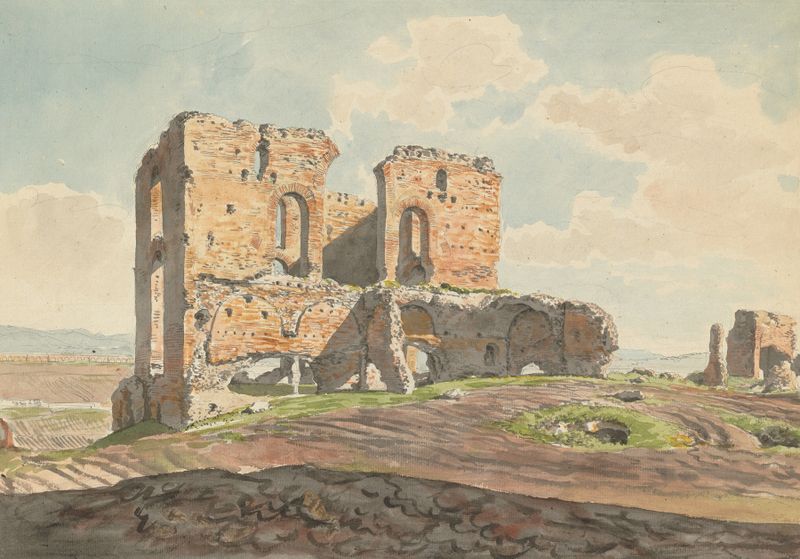
The Great Villa of the Quintilii on the Appian Way
Carlo Labruzzi
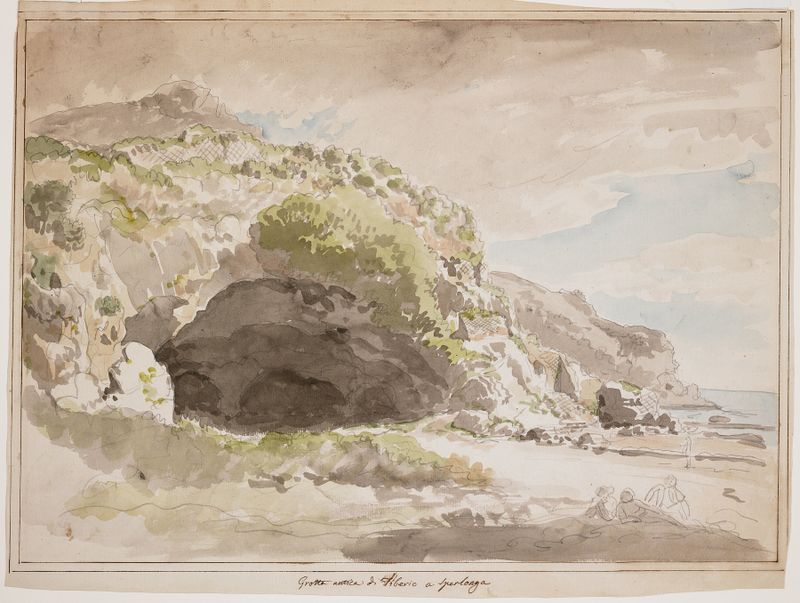
Grotto of Tiberius at Sperlonga
Carlo Labruzzi
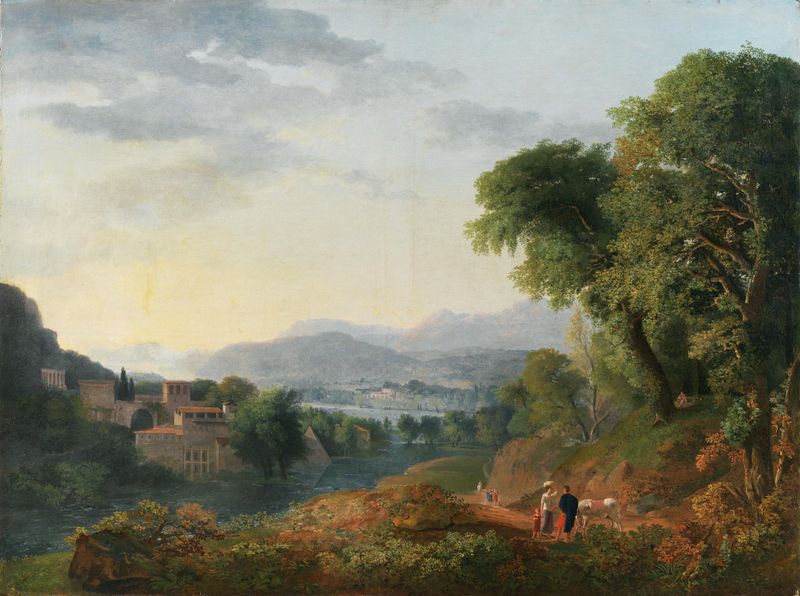
An Italianate landscape
Carlo Labruzzi
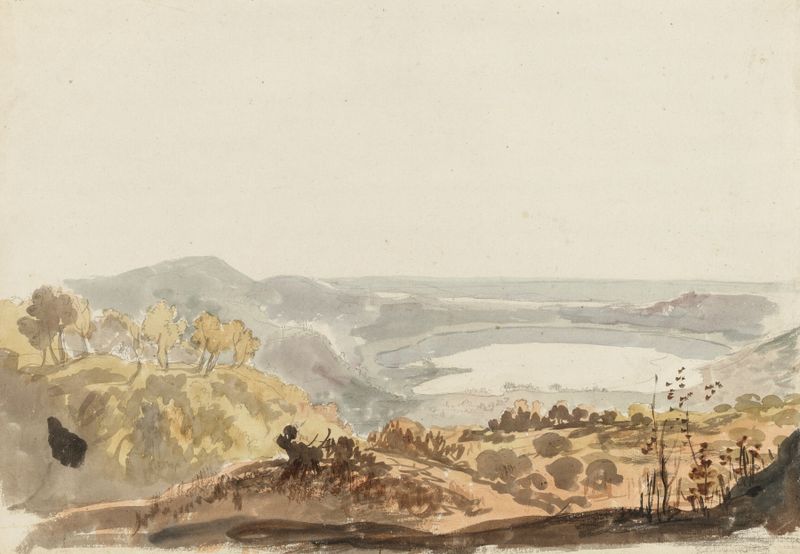
View of Lake Nemi looking towards Rome
Carlo Labruzzi
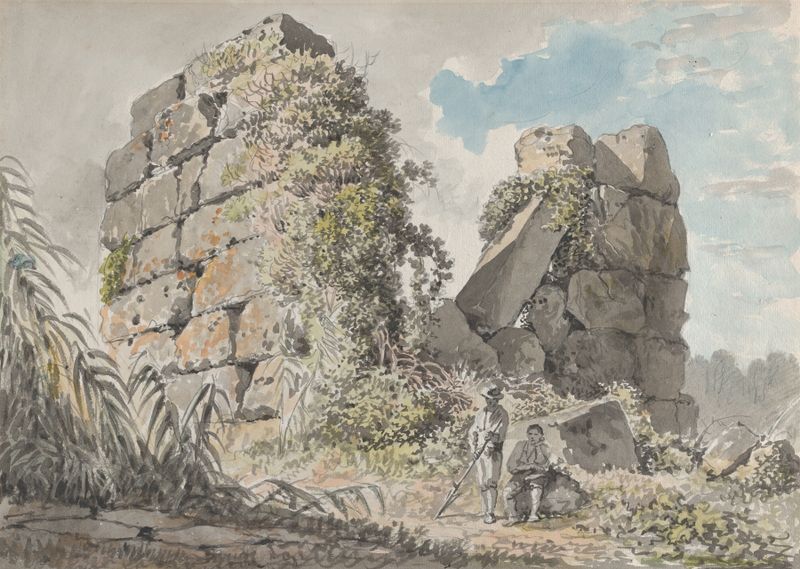
Ruins on the Right of the Via Appia
Carlo Labruzzi
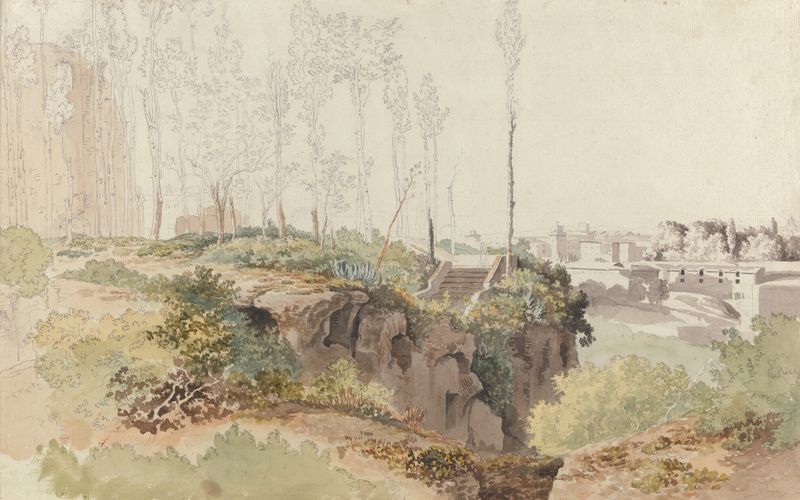
The Baths of Caracalla, Rome
Carlo Labruzzi
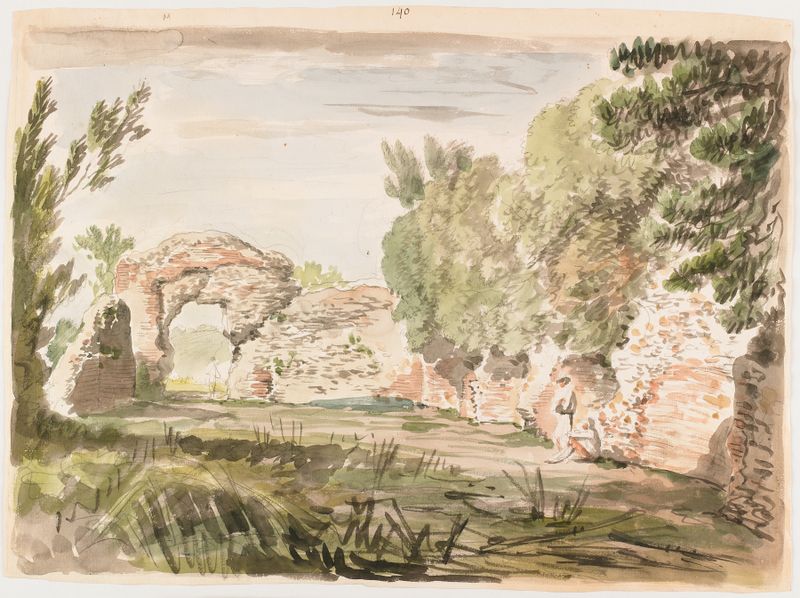
Landscape with Trees, Ruin and Three Figures
Carlo Labruzzi





