
Haller Madonna — History & Facts
What first catches the eye in Haller Madonna is the striking contrast between the Madonna’s deep blue mantle and the vivid red curtain behind her—a calculated act of stagecraft that draws all attention to her solemn, almost sculptural presence. The Christ Child, perched on her lap, twists energetically away from her embrace, his gaze and gesture breaking the formality with a flash of restless life. The Madonna’s hand, large and protective, anchors the child, her fingers splayed in a gesture that is both gentle and commanding.
The green cushion beneath them, edged in red, seems almost to billow, adding a note of softness and domesticity to the scene. In the marble-like wall and distant, castle-crowned landscape, the painter opens a window to another world, one that is both real and idealized. This painting belongs to the late fifteenth century, a period when artists in northern Europe were exploring new ways to combine spiritual subjects with the textures and spaces of daily life. Such images of the Madonna and Child were often commissioned for private devotion, intended to bring the sacred into the intimacy of the home.
The presence of heraldic shields in the corners hints at a donor’s pride and personal connection, though history has kept few traces of their identity. Created circa 1496/1499 and now in the National Gallery of Art, Washington, D. C., this work stands as a testament to the era’s fascination with both the human and the divine.
The longer you look, the more the painting reveals its quiet drama—inviting you to linger in its carefully constructed world.
More Artworks by Albrecht Dürer

Melancholia
Albrecht Dürer

St. George and the dragon.
Albrecht Dürer
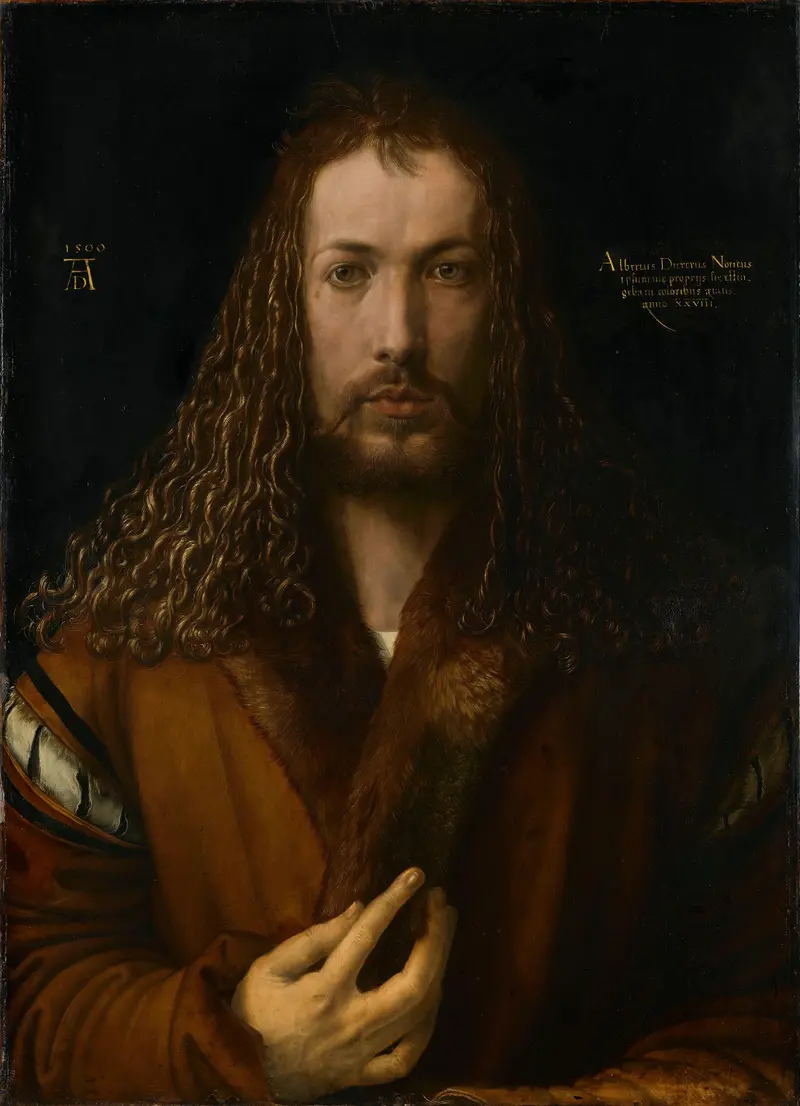
Self-Portrait with Fur-Trimmed Robe
Albrecht Dürer

Wing of a European Roller
Albrecht Dürer

Iris
Albrecht Dürer

The Great Piece of Turf
Albrecht Dürer
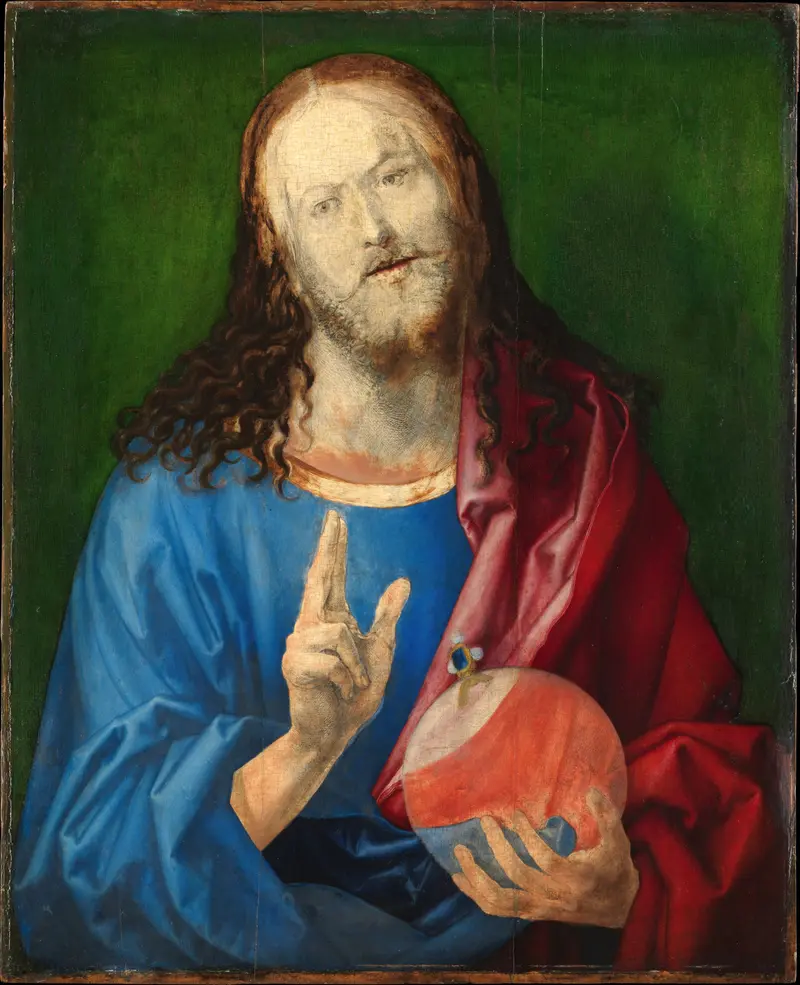
Salvator Mundi
Albrecht Dürer
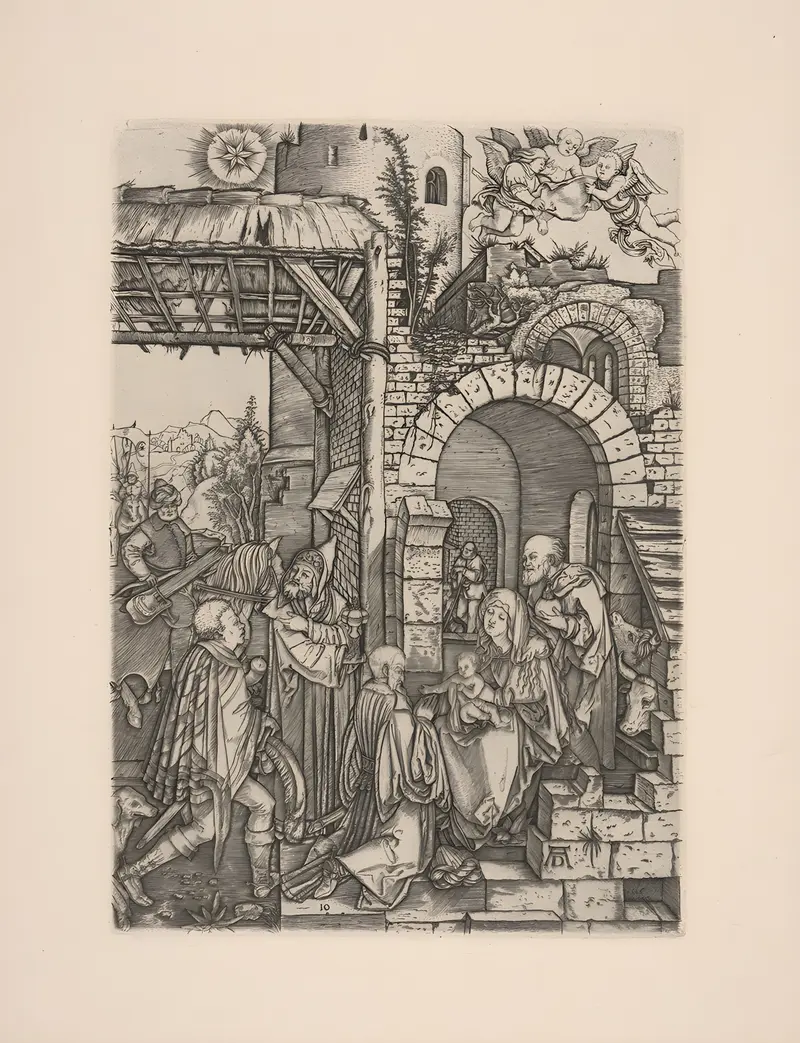
The Adoration of the Magi
Albrecht Dürer
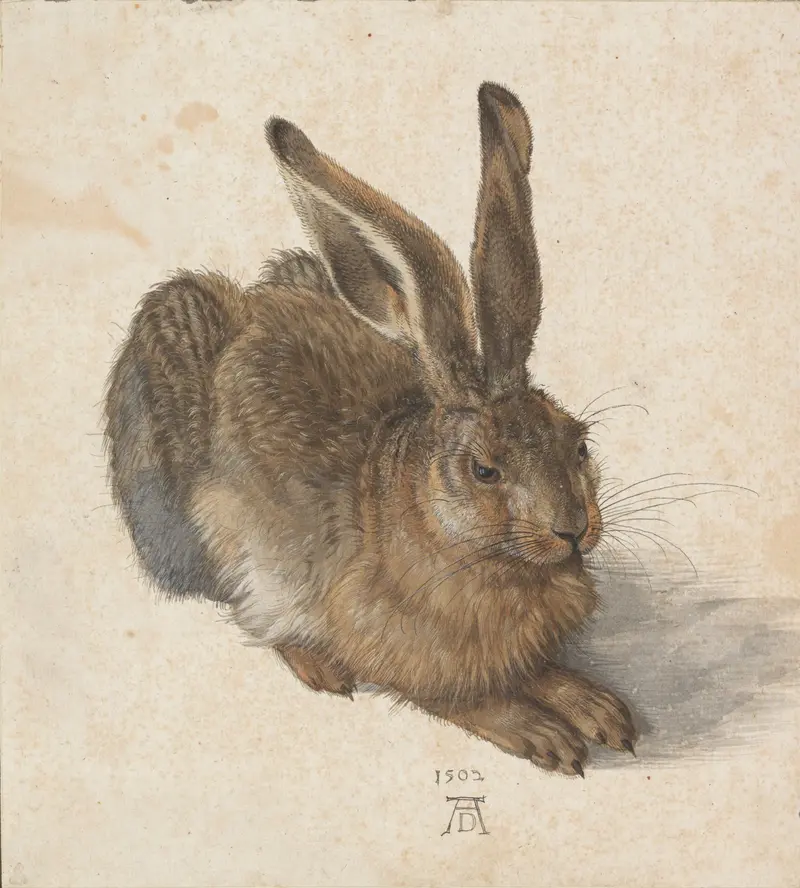
Young Hare
Albrecht Dürer
Self-portrait
Albrecht Dürer





