
Halte de cavaliers — History & Facts
A cluster of riders, their hats wide-brimmed and cloaks draped, pauses at the edge of a sun-dappled forest, the hush of anticipation hanging in the air. The eye is drawn first to the lively group of horsemen gathered near a rustic house, their gestures animated in conversation or command. One figure in a vivid red sash points decisively, while others lean in, their horses shifting restlessly beneath them.
The play of light and shadow, with golden sunlight filtering through thick foliage, creates a stage-like effect—inviting the viewer to imagine what news or orders ripple through this moment of pause. Beyond, the landscape opens to a distant blue horizon, dotted with more figures and horses, suggesting a world in motion just beyond the stillness of this halt. Painted around 1660, Halte de cavaliers belongs to the world of the Northern Baroque, when scenes of military life and travel were both familiar and fashionable. Artists like Adam Frans van der Meulen specialized in such subjects, catering to patrons fascinated by the spectacle of war, the dignity of officers, and the romance of the open road.
These works were often destined for the homes of the wealthy or for royal collections, their detailed landscapes and lively figures serving both as decoration and as subtle celebrations of power and order. While the specific journey of this painting is little recorded, its survival in a modern collection—documented in 2017—reminds us how images of movement and assembly, painted centuries ago, still invite us to linger and imagine the stories that unfold just beyond the frame.
More Artworks by Adam Frans van der Meulen
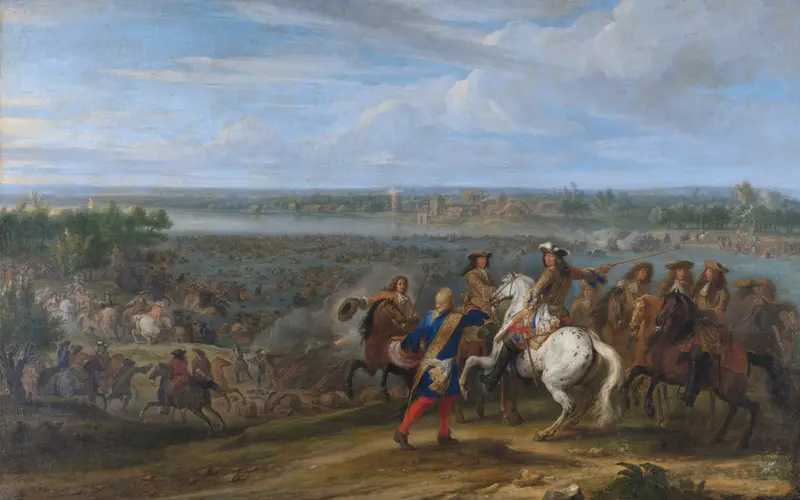
Louis XIV Crossing into the Netherlands at Lobith
Adam Frans van der Meulen
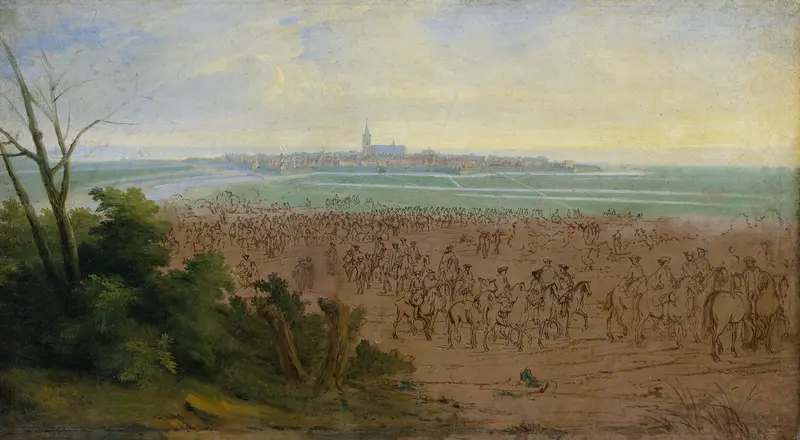
The Troops of Louis XIV before Naarden, 20 July 1672
Adam Frans van der Meulen
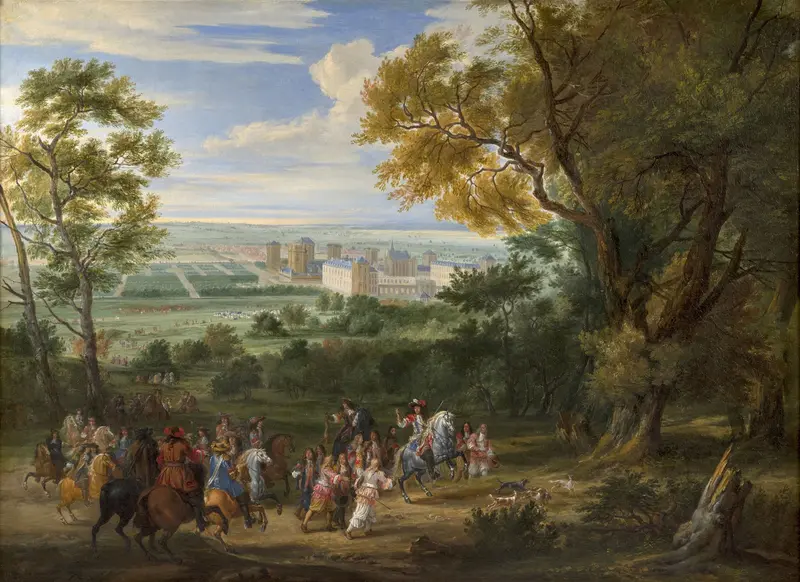
View of the château de Vincennes or The Departure of Louis XIV for the hunt
Adam Frans van der Meulen

A battle scene
Adam Frans van der Meulen
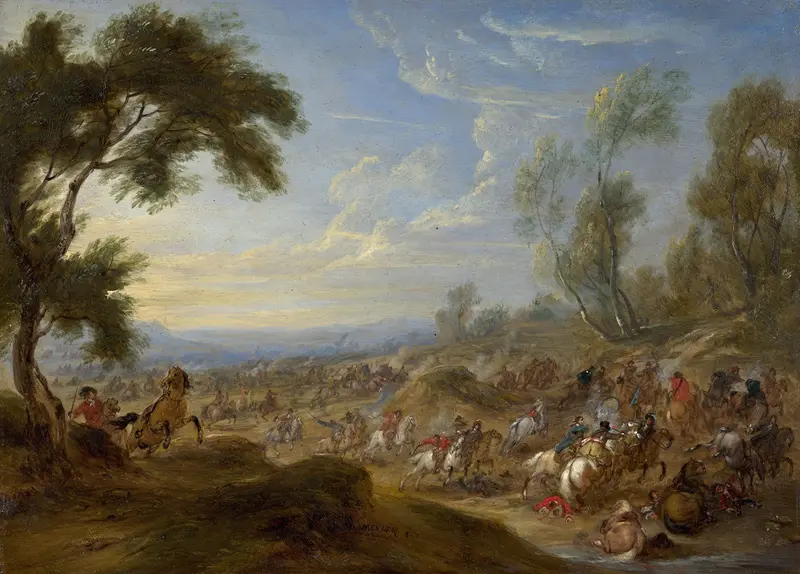
A cavalry charge
Adam Frans van der Meulen
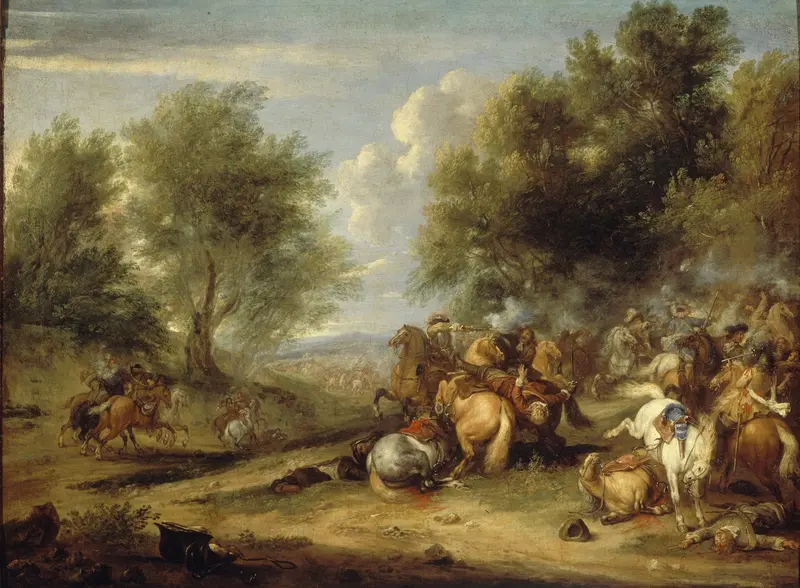
Choc de cavalerie ou Combat de cavalerie
Adam Frans van der Meulen
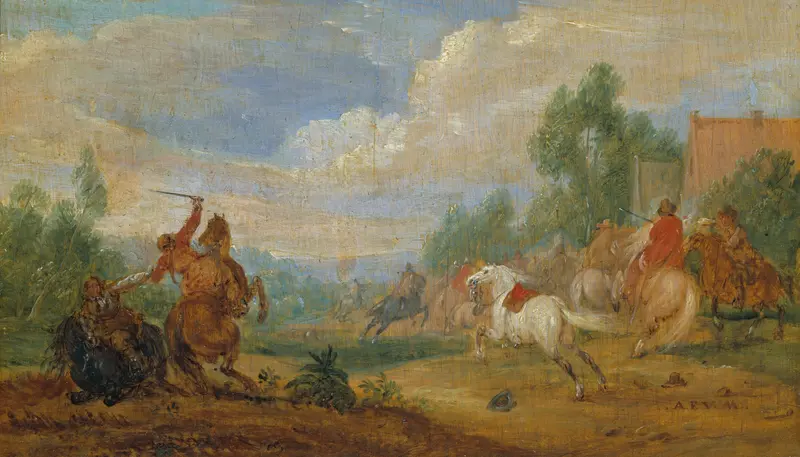
Cavalry Skirmish
Adam Frans van der Meulen
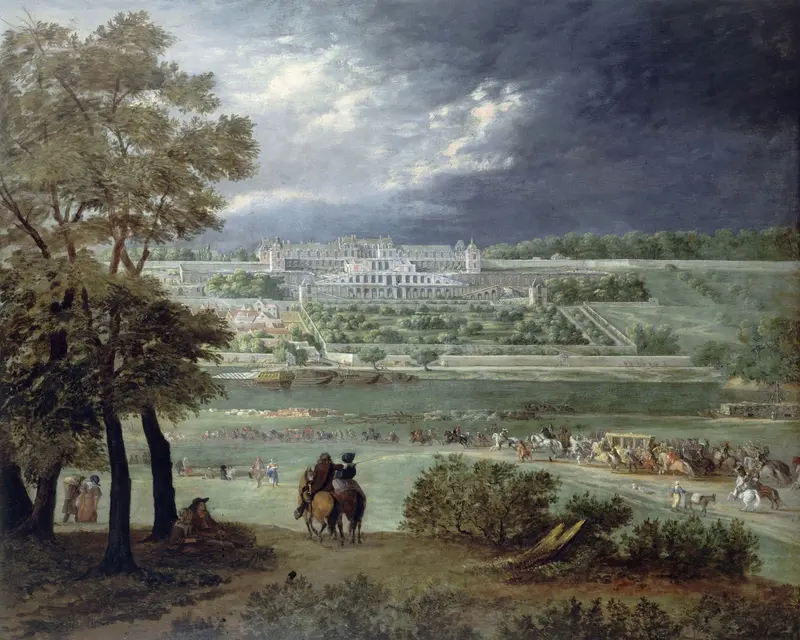
Le Château Neuf de Saint-Germain-en-Laye et les jardins, vus de la rive droite de la Seine
Adam Frans van der Meulen
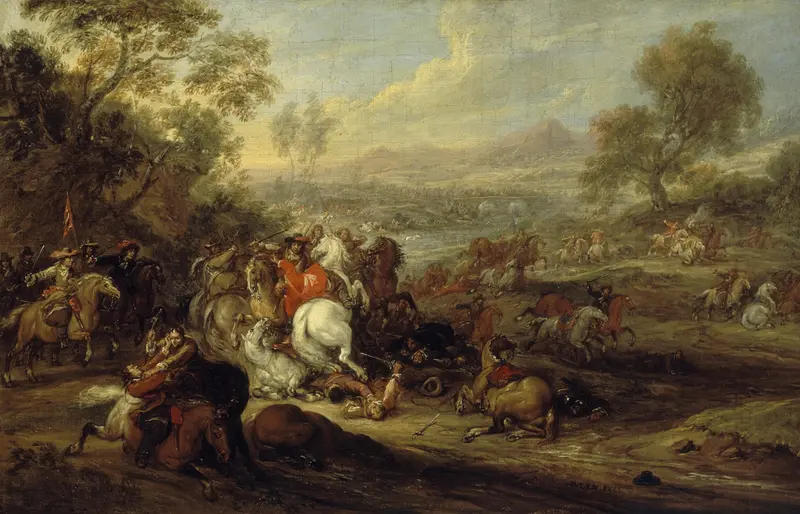
Choc de cavalerie ou Combat de cavalerie
Adam Frans van der Meulen
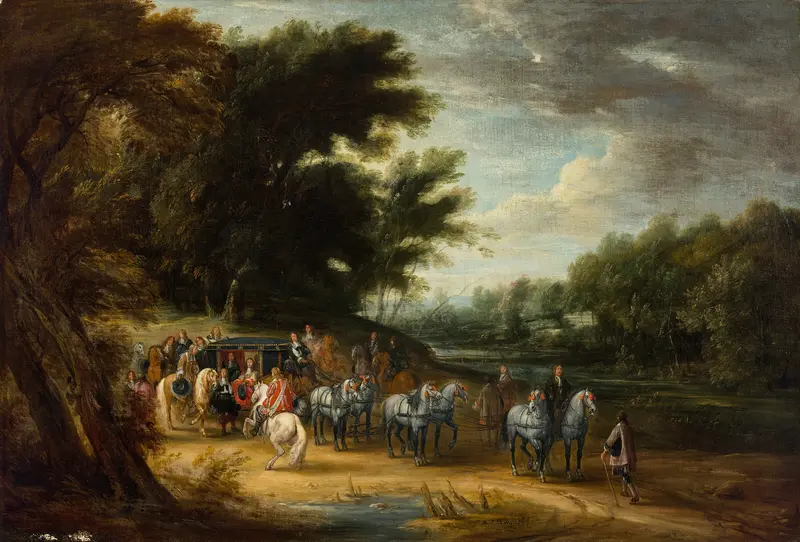
A nobleman in a state coach at rest escorted by his men and horses, with a gentleman on a white horse approaching and landscape beyond
Adam Frans van der Meulen
More Genre Scene Art

Banquet of the Officers of the St George Civic Guard
Frans Hals

Rembrandt and Saskia in the Scene of the Prodigal Son
Rembrandt van Rijn

Bal du moulin de la Galette
Pierre-Auguste Renoir

Quadrille at the Moulin Rouge
Henri de Toulouse-Lautrec

A Burial at Ornans
Gustave Courbet

When Will You Marry?
Paul Gauguin