
Hanham Lock on the Avon — History & Facts
What if silence could speak through light? In the stillness of a landscape, the weight of unvoiced emotions lingers palpably, drawing the viewer into a realm where nature mirrors our inner turmoil. Look to the left at the gentle curve of the river, where its reflective surface captures the soft hues of a waning day. The muted palette of blues and grays contrasts with the vibrant greens of the foliage, creating a delicate balance between tranquility and unease. Notice how the light approaches from the horizon, illuminating the water's surface while casting long shadows that hint at something deeper — an unfulfilled longing that entwines with the serenity of the scene. Within this landscape lies a tension between the natural beauty and an undercurrent of grief.
The barren trees, stripped of their leaves, echo a sense of loss, while the calm waters suggest a moment frozen in time. Each element imparts a story of absence; the quiet ripples in the river whisper tales of what was and what could have been. The contrasts between light and shadow encapsulate the duality of hope and despair, inviting the viewer to reflect on their own experiences of longing and sorrow. In the mid-19th century, William James Müller was deeply engaged in capturing the essence of landscapes, particularly those steeped in atmosphere and emotion.
He painted Hanham Lock on the Avon during a period of personal loss, likely influenced by the changing art scene and the Romantic movement's focus on emotional depth. His work reflects a critical moment in British landscape painting, bridging the gap between emotional expression and topographical accuracy, as he sought to convey the profound resonance of nature amidst personal and societal upheaval.
More Artworks by William James Müller
Browse all →
Cleeve, Somerset, with Bridgewater Bay in the Distance
William James Müller

The Bridge at Llangollen
William James Müller

Cairo Bazaar
William James Müller
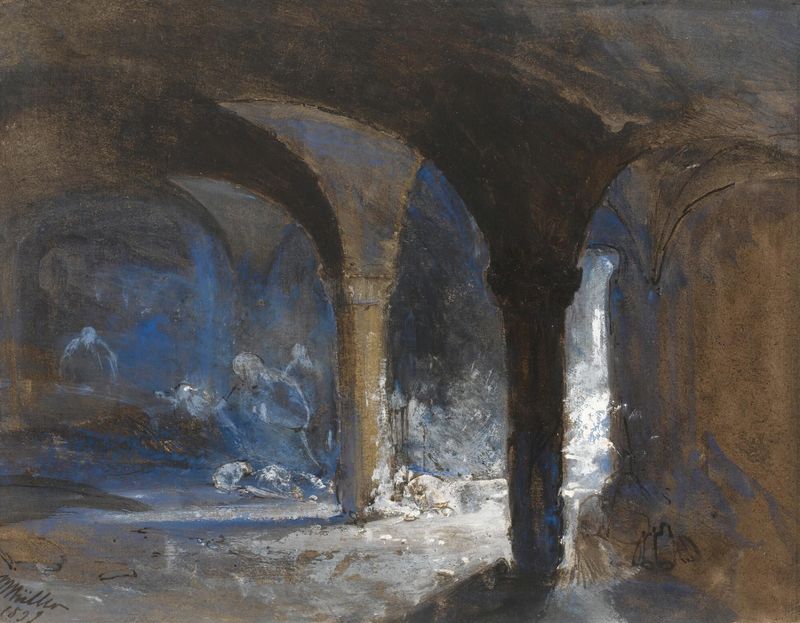
Crypt of the bishop’s palace during the Bristol riots
William James Müller

Near the Caravan Bridge, Smyrna
William James Müller
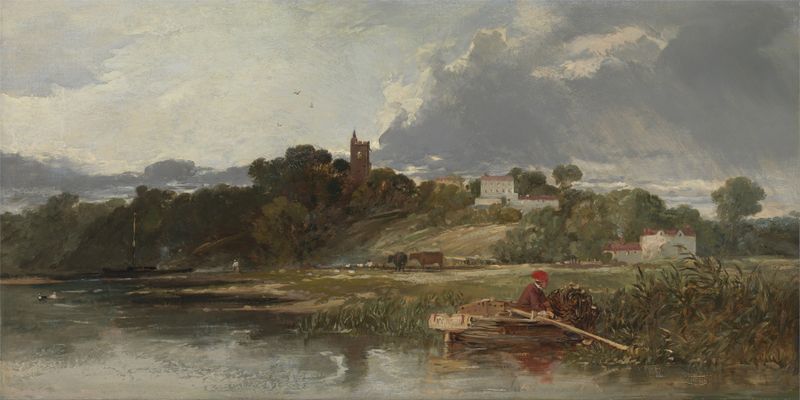
Gillingham on the Medway
William James Müller

The Church of the Holy Sepulchre
William James Müller

A View of Eton and the Fellows Eyot
William James Müller

Tripoli
William James Müller

A Mountain Torrent
William James Müller





