
Harbor of a Thousand Masts — History & Facts
What secret hides in the quiet of the canvas? With every brushstroke, the artist weaves a narrative of longing and betrayal, inviting us to unravel the layers of emotion that lie beneath the surface. Look to the center of the composition, where a myriad of masts reaches skyward like skeletal hands grasping for the light. Notice how the gentle ripples of water reflect the delicate interplay of muted blues and grays, hinting at both tranquility and unease. The horizon is softened by the diffused glow of a fading sun, casting long shadows that elongate the vessels, suggesting a lingering tension between hope and despair. Delve deeper into the interplay of forms, where each mast stands as a silent sentinel, bearing witness to stories untold.
The contrasting colors—a burst of warm light against the coolness of the sea—evoke a duality that mirrors the artist's own experiences of wartime upheaval. This harbor, a bustling crossroads of commerce and connection, also carries an undercurrent of isolation, as if the ships, while seemingly together, are adrift in their solitude. Painted in 1919, this work emerged as Childe Hassam grappled with the social and cultural shifts following World War I. Living in a nation reshaped by conflict, he infused his landscapes with emotional weight, using the harbor as a metaphor for the fragility of human relationships in a world changed by betrayal and loss.
This piece stands not only as a reflection of the external world but also as an internal reckoning with a changing America.
More Artworks by Childe Hassam
Browse all →
Beach at Newport
Childe Hassam

Washington Arch, Spring
Childe Hassam

Thaxter’s Garden
Childe Hassam

New England Headlands
Childe Hassam

Rocks At Appledore, Morning
Childe Hassam
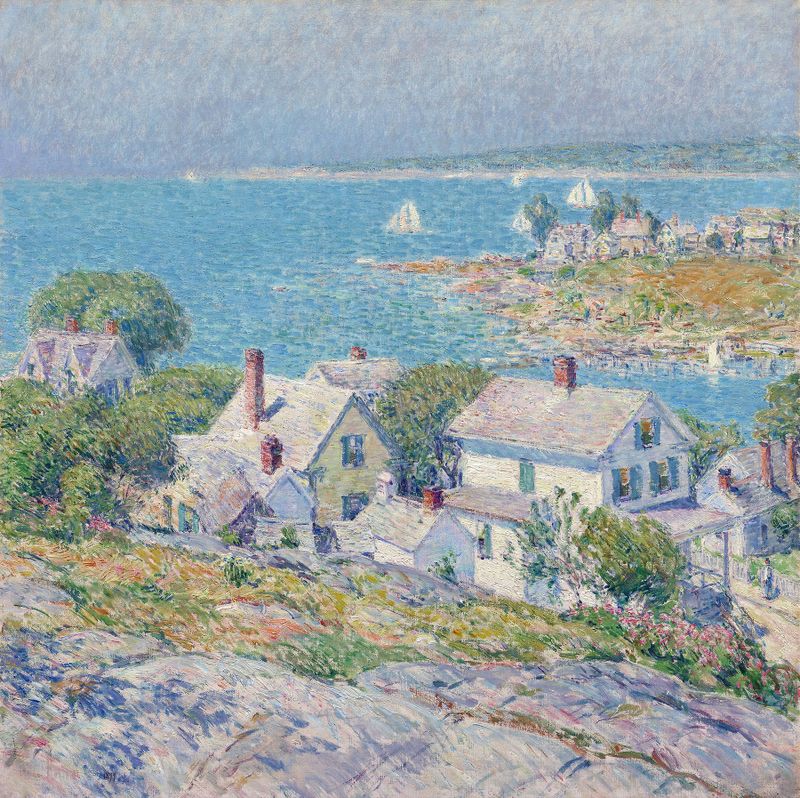
New England Headlands
Childe Hassam
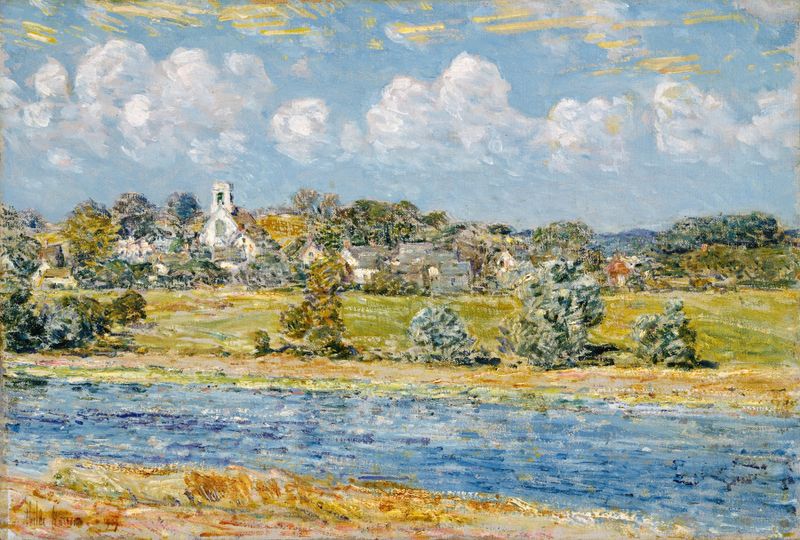
Landscape at Newfields, New Hampshire
Childe Hassam

Piazza di Spagna, Rome
Childe Hassam

The Harbor
Childe Hassam

Late Afternoon, New York, Winter
Childe Hassam





