
Haven van Honfleur — History & Facts
Did the painter know this moment would outlive them? In Haven van Honfleur, a fleeting yet profound depiction of innocence is captured, inviting viewers to ponder the ephemeral nature of life and art. Look to the left at the gentle curve of the shoreline, where delicate boats bob in the lapping tide. The subtle blues and greens of the water contrast with the warm ochres of the buildings, reflecting the soft glow of the setting sun. Notice how the clouds, brushed with pastels, seem to cradle the horizon, creating an ethereal backdrop that envelops the entire scene in tranquility.
Jongkind’s deft use of light enhances the sense of calmness, inviting you to linger on every detail. Upon closer inspection, the interplay of stillness and movement reveals deeper layers of emotion. The serene harbor holds a tranquil charm, yet the distant figures suggest a world bustling with life just beyond the canvas's edge. The fleeting moment of twilight juxtaposes the innocence of the scene with the inevitability of change, hinting at the transition from day to night, youth to age.
Each brushstroke conveys a yearning for permanence in an ever-changing landscape. In 1863, Jongkind was firmly rooted in the burgeoning Impressionist movement while living in Paris. This period marked a shift toward capturing modern life and nature through spontaneous, light-filled scenes. The artist, known for his lyrical approach to landscape painting, created this work amidst a vibrant artistic community, yet the innocence captured in this harbor remains timeless, embodying a moment that transcends the passage of time.
More Artworks by Johan Barthold Jongkind
Browse all →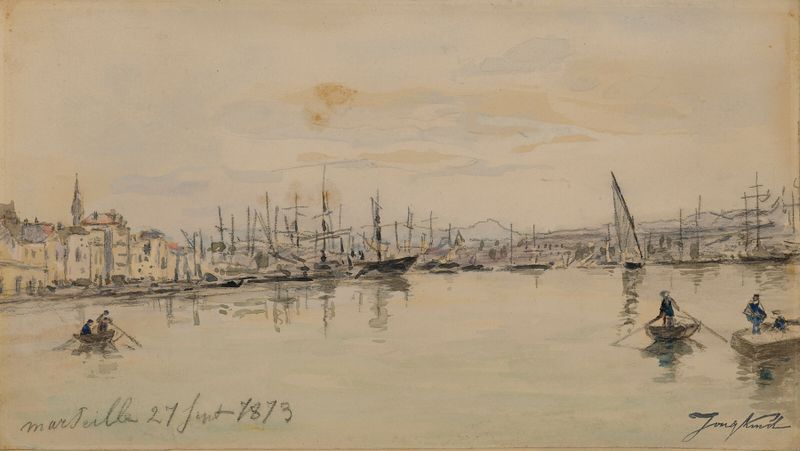
Le Port de Marseille
Johan Barthold Jongkind

Canal Saint-Martin
Johan Barthold Jongkind

Countryside near Brezins, between Grenoble and Vienne
Johan Barthold Jongkind

Notre-Dame vue du quai de la Tournelle
Johan Barthold Jongkind

Environs de Grenoble
Johan Barthold Jongkind

Clair de lune à Overschie (environs de Rotterdam)
Johan Barthold Jongkind

Port de Honfleur
Johan Barthold Jongkind
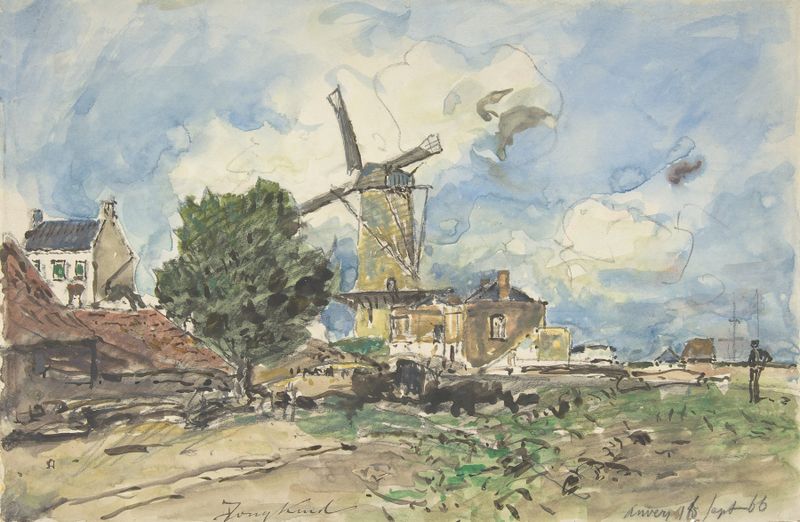
Wind Mill at Antwerp
Johan Barthold Jongkind

Le Havre
Johan Barthold Jongkind

The Church of Overschie
Johan Barthold Jongkind





