
Havengezicht — History & Facts
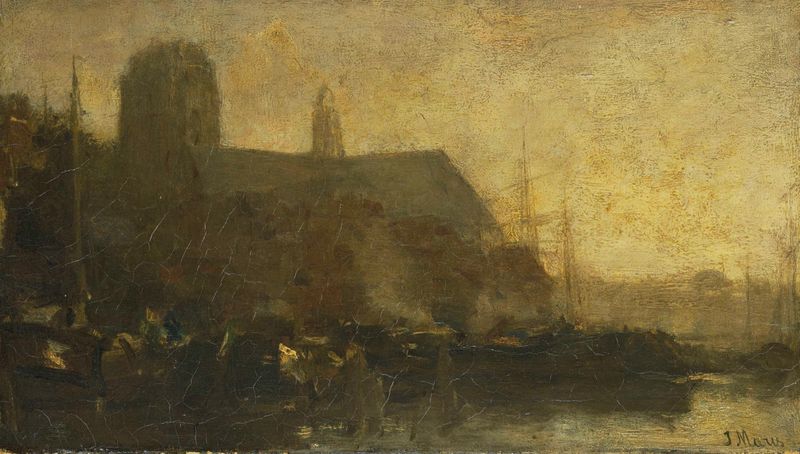
Can beauty exist without sorrow? The delicate balance of joy and ache hangs in the air, much like the fragile brushstrokes of a masterful artist. Look to the foreground, where serene waters embrace the shoreline, each ripple reflecting shades of twilight. The soft hues of gray and blue create a misty atmosphere, inviting viewers to linger. Notice how the light dances along the surface, illuminating the distant boats, their sails barely visible against the fading day.
The composition exudes a sense of stillness, yet the subtle movement of the waves brings life to the scene, evoking an emotional pulse beneath the calm exterior. Within this tranquil vista lies a world of conflicting emotions. The tranquil waters suggest peace, yet the encroaching darkness hints at the inevitability of change. The gentle curve of the horizon serves as a reminder of the fragility of beauty—a fleeting moment destined to shift.
In this interplay of light and shadow, Maris captures the tension between serenity and the underlying sadness that often accompanies it. Jacob Maris created Havengezicht during a period of significant artistic evolution in late 19th-century Netherlands. By this time, he had established himself as a prominent figure in the Hague School, a movement characterized by its focus on the natural world and its atmospheric effects. As he painted this piece, he was embracing both the artistic innovations of his contemporaries and the emotional depths of human experience, ultimately intertwining beauty with a sense of longing.
More Artworks by Jacob Maris
Browse all →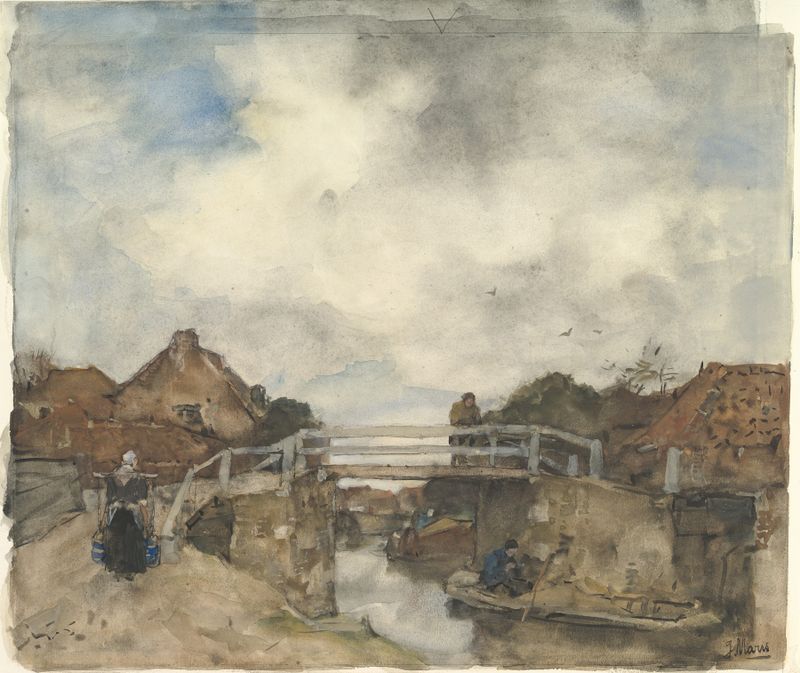
Dutch Canal, Rijswijk
Jacob Maris
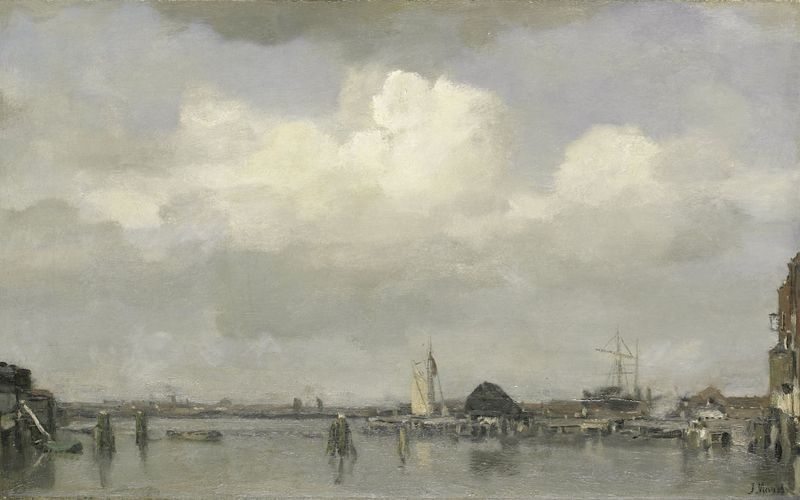
Havengezicht
Jacob Maris
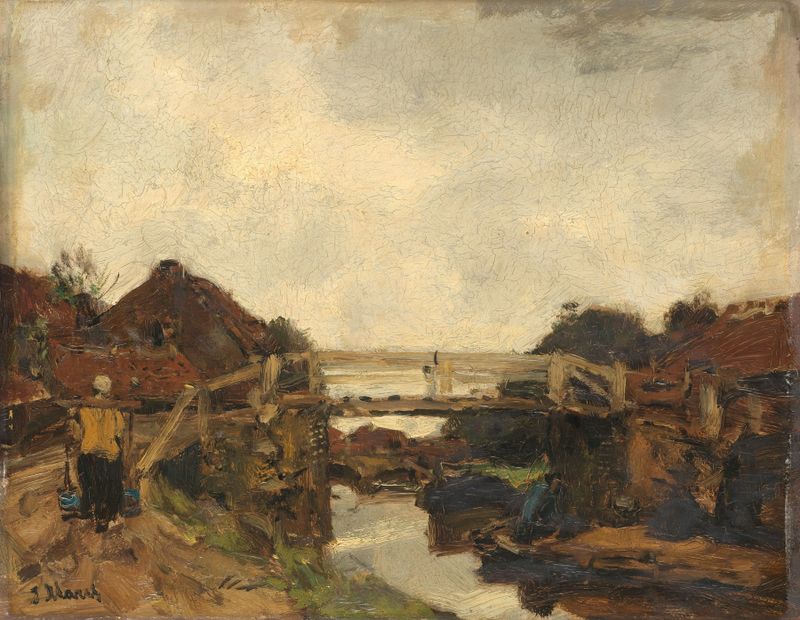
Wooden Bridge across a Canal at Rijswijk
Jacob Maris
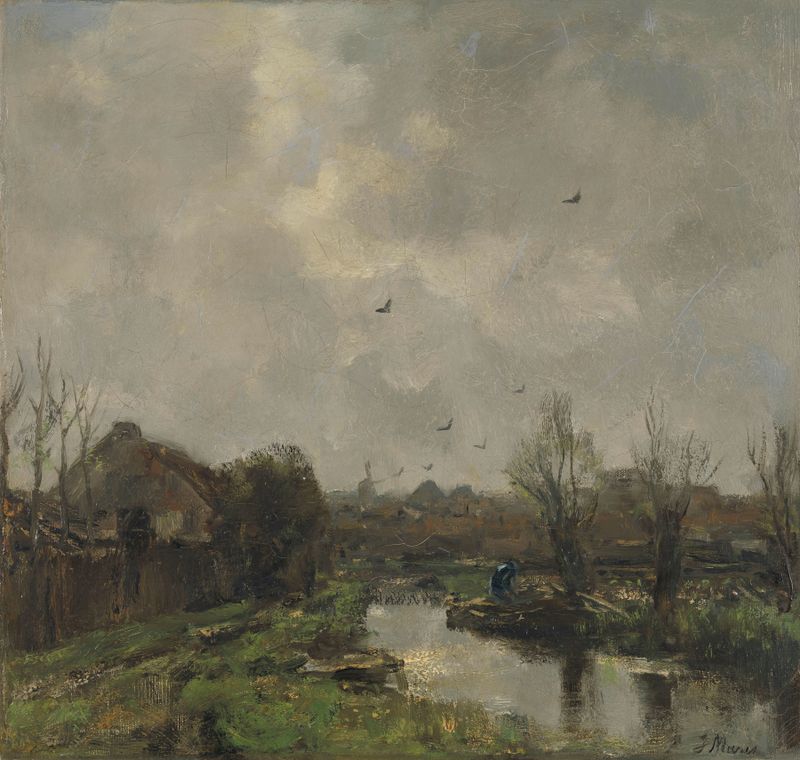
Landschap in de omgeving van Den Haag
Jacob Maris
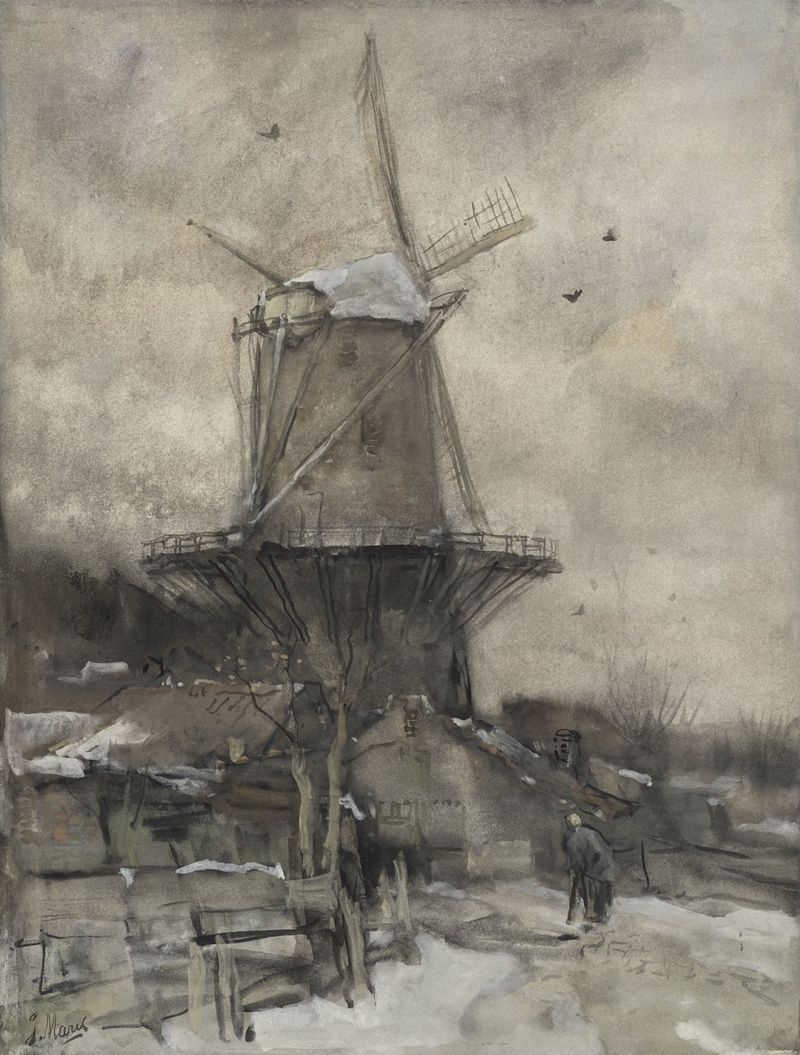
Een molen in de winter
Jacob Maris
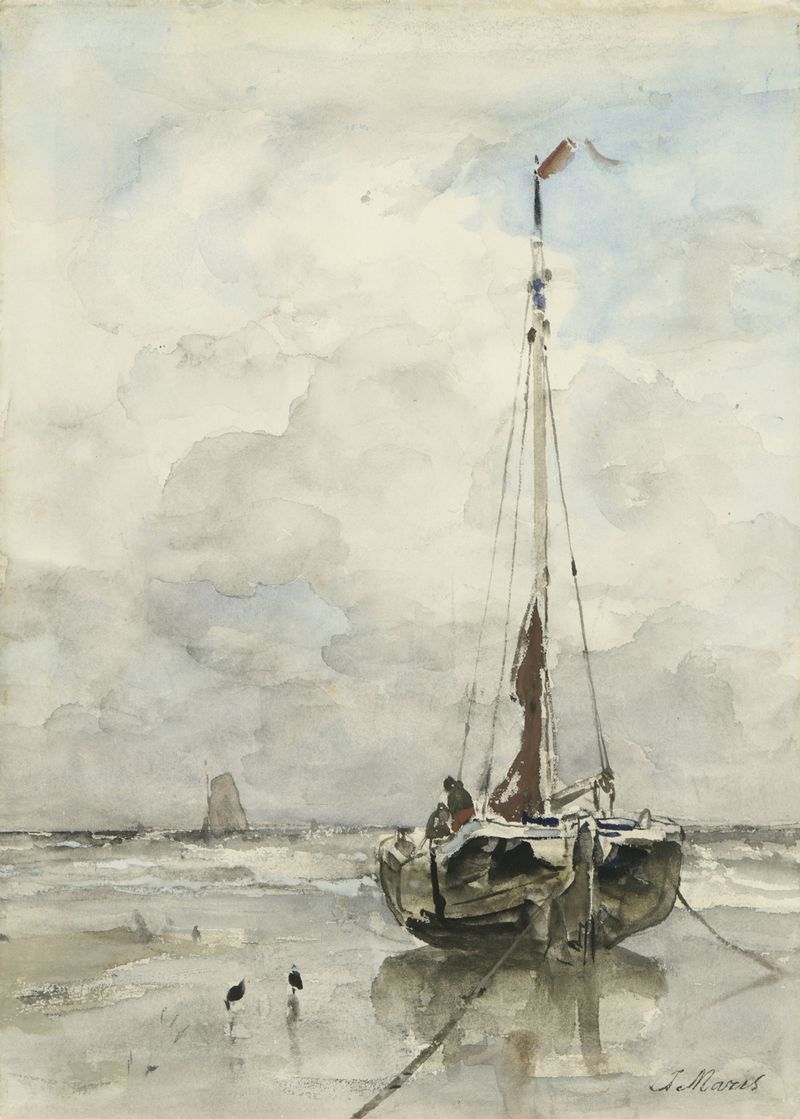
Visserspink aan het strand
Jacob Maris
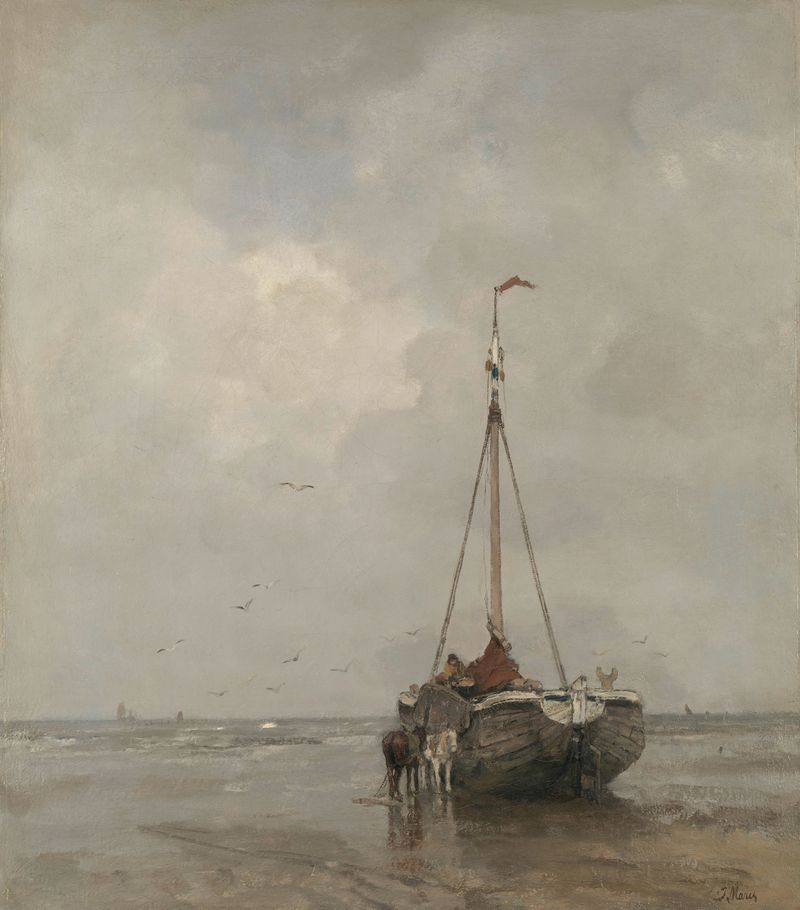
Bluff-bowed Fishing Boat on the Beach at Scheveningen
Jacob Maris
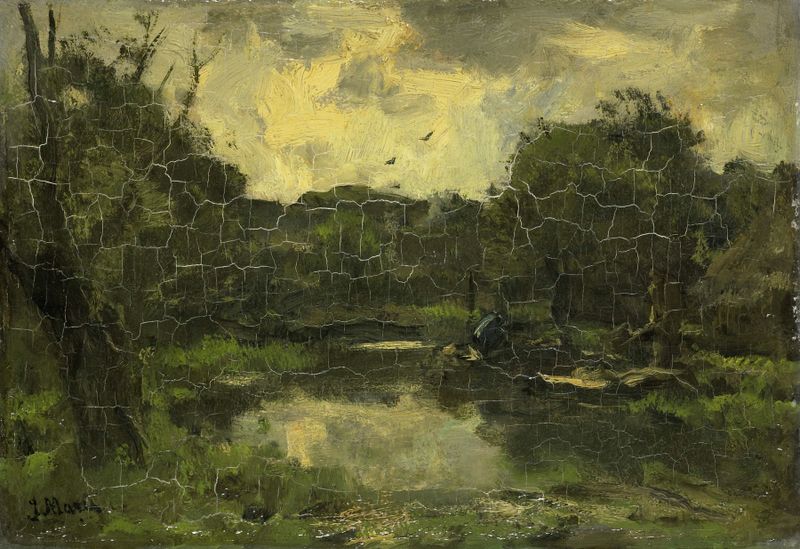
Landschap met schuit
Jacob Maris
Schepen in de haven van Dordrecht
Jacob Maris
Landschap met molen bij maanlicht
Jacob Maris





