
Landschap met schuit — History & Facts
Where does light end, and longing begin? This question lingers in the air, much like the soft glow illuminating the landscape, inviting viewers to contemplate their own emotional landscape through the hues and shapes. Look to the horizon, where the gentle curves of rolling hills meet a sky awash with pastel blues and whites. The painter's brush captures the tranquil movement of water, reflecting the light in a dance that draws the eye deeper into the scene. Notice how the solitary boat, with its understated presence, becomes a vessel of exploration amidst the vastness, a quiet testament to human persistence against nature's quiet majesty.
The palette, dominated by serene greens and shimmering reflections, creates a harmonious balance, evoking a sense of calm yet stirring an underlying yearning. This painting encapsulates the tension between solitude and connection. The boat, seemingly adrift, symbolizes the quest for belonging in an expansive world, while the soft light evokes nostalgia, whispering the stories of those who have come before. Each brushstroke elicits a sharp contrast between the vibrancy of life and the stillness of the water, reminding us of the transience of existence.
The landscape stands as a legacy, inviting reflection on the passage of time and the pursuit of meaning amid nature's unwavering beauty. Jacob Maris painted this work around 1886, a period marked by the rise of the Hague School, where artists sought to capture the Dutch landscape with a focus on natural light and color. While he was deeply influenced by his environment and contemporaries, Maris' personal struggles with health and identity shaped his artistic choices, culminating in a piece that resonates with both personal and universal themes. This was a time when art began to reflect more intimately the artist’s psyche, bridging the past's influences with the future's promise.
More Artworks by Jacob Maris
Browse all →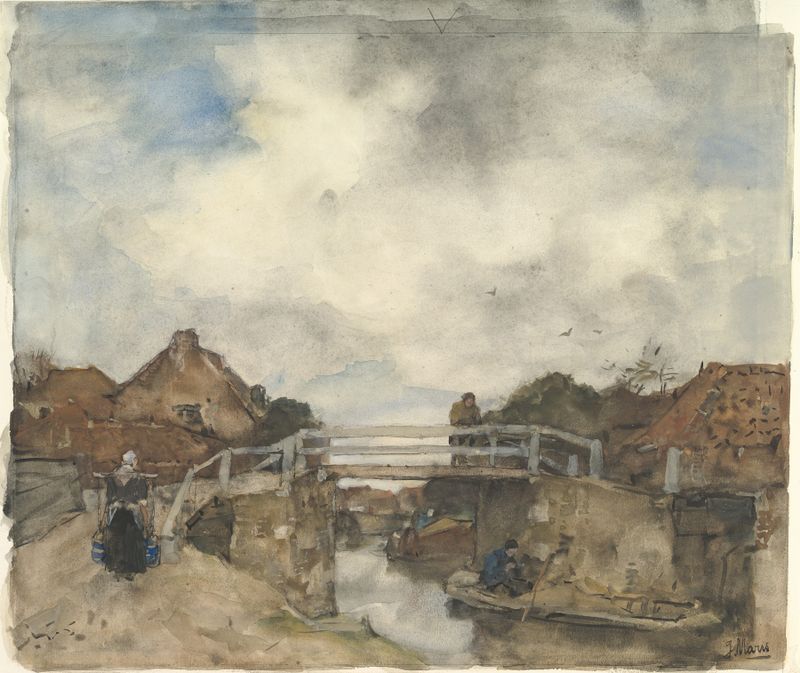
Dutch Canal, Rijswijk
Jacob Maris
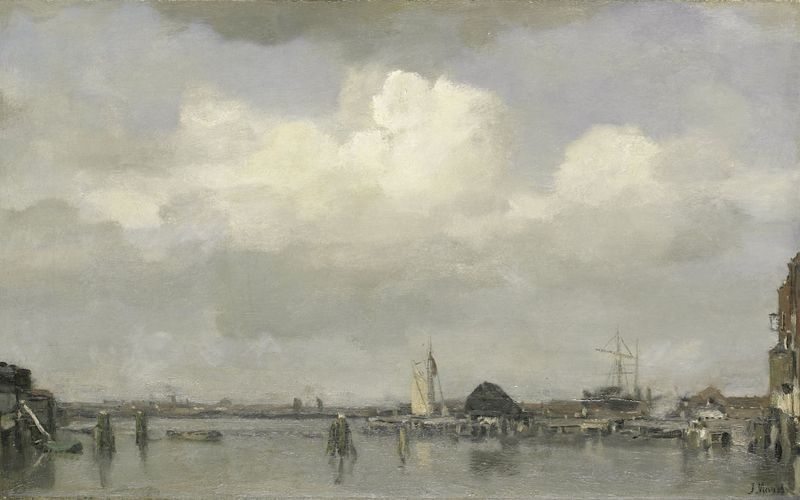
Havengezicht
Jacob Maris
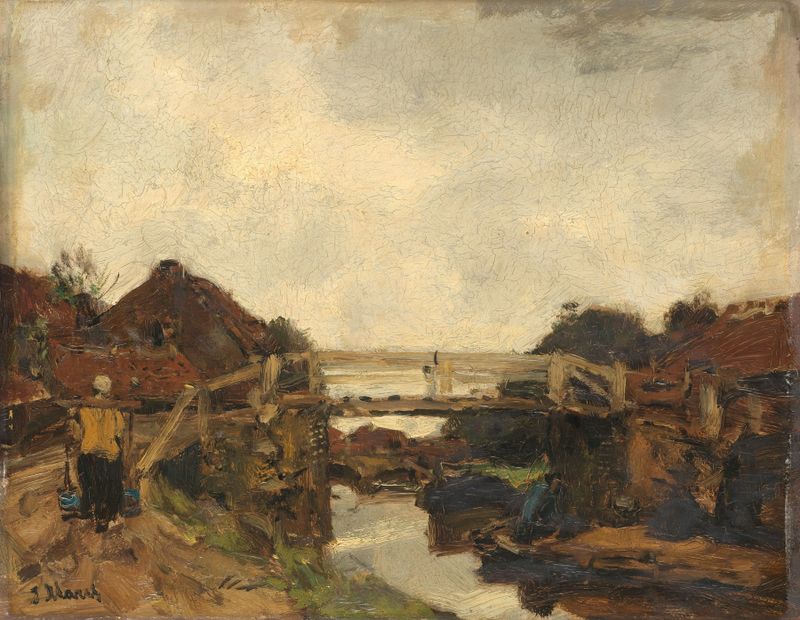
Wooden Bridge across a Canal at Rijswijk
Jacob Maris
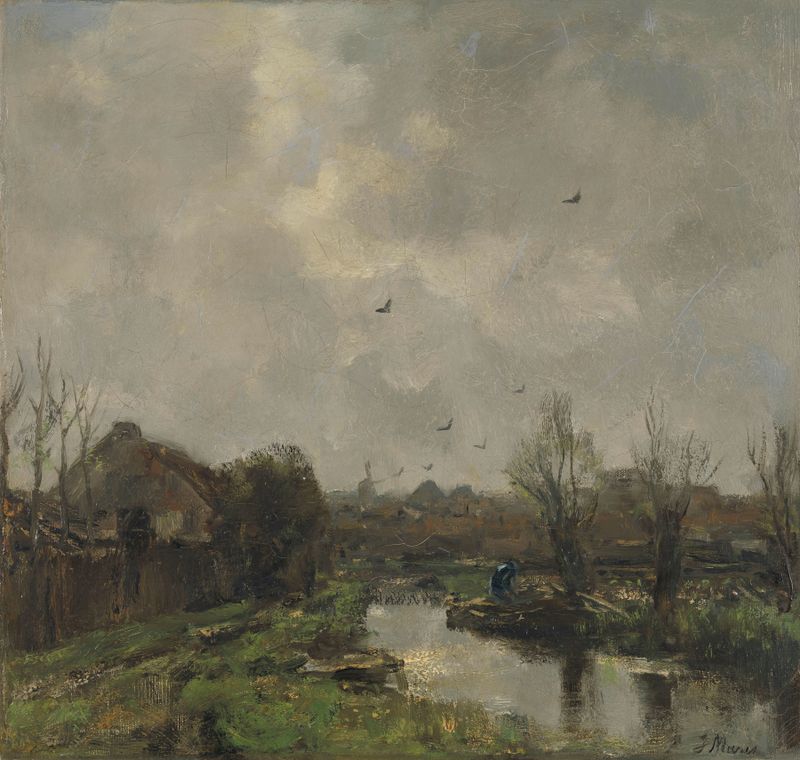
Landschap in de omgeving van Den Haag
Jacob Maris
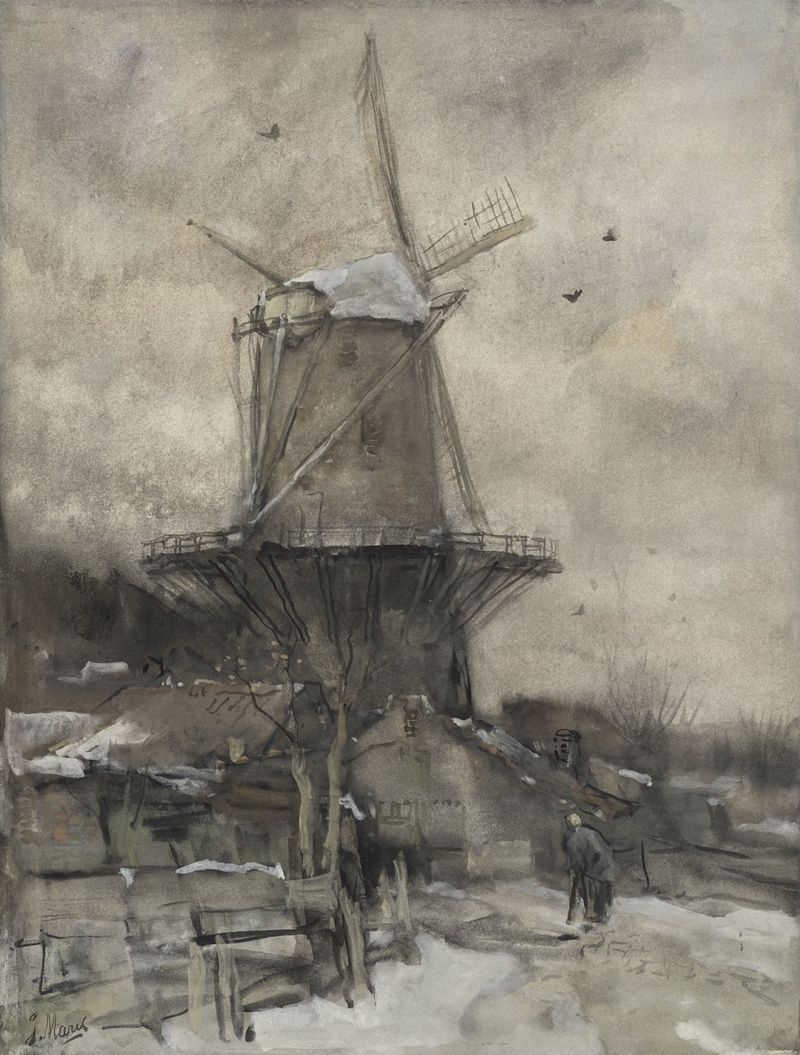
Een molen in de winter
Jacob Maris
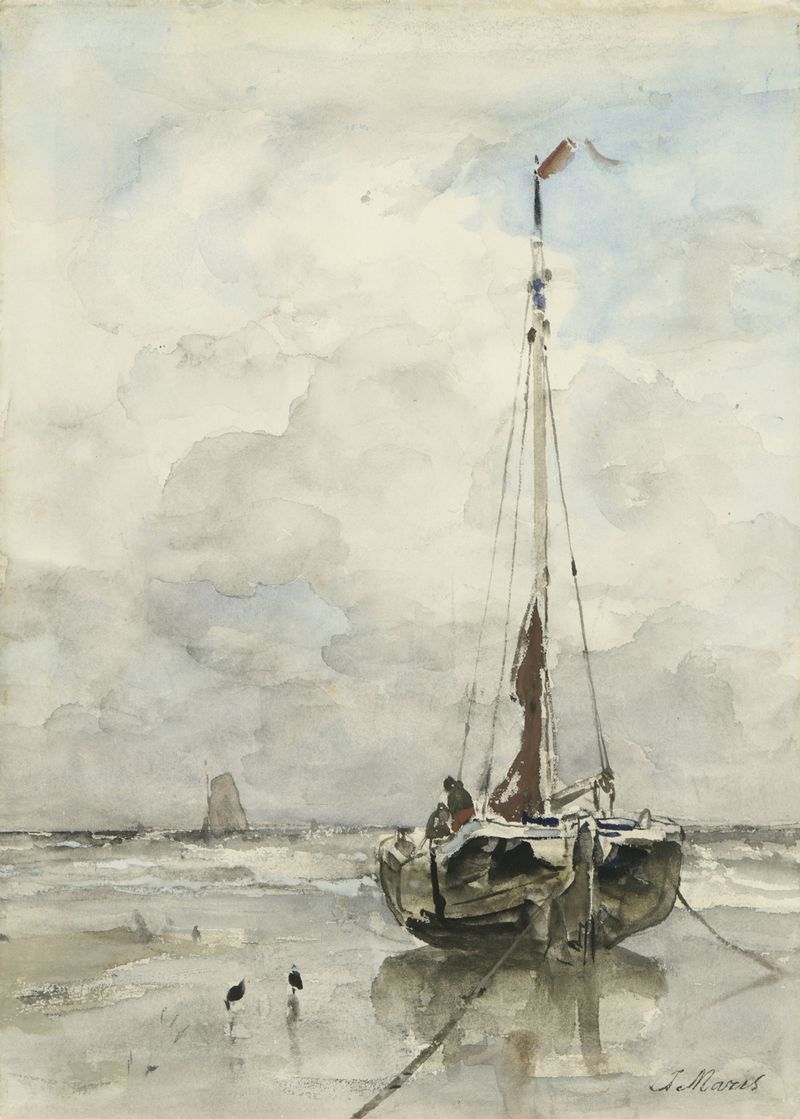
Visserspink aan het strand
Jacob Maris
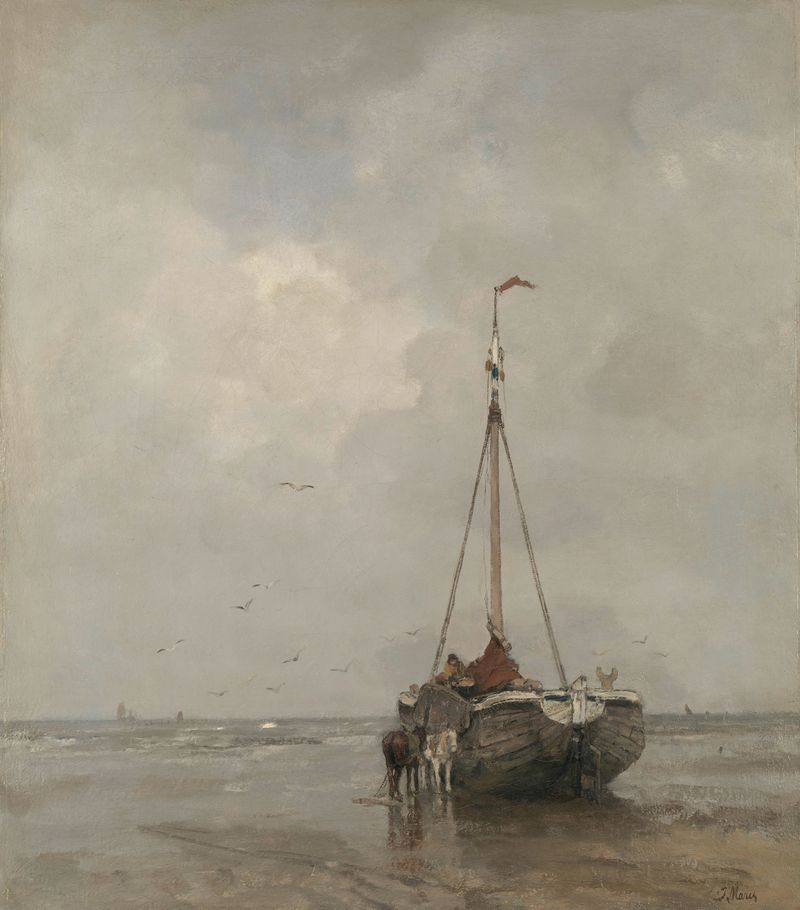
Bluff-bowed Fishing Boat on the Beach at Scheveningen
Jacob Maris
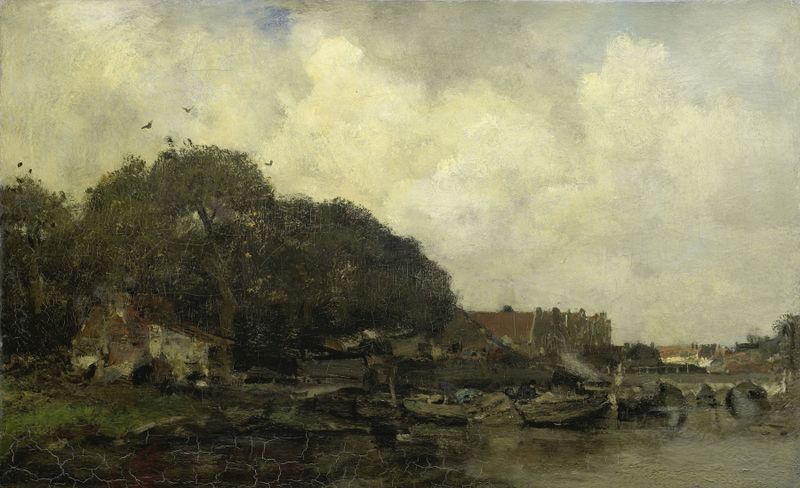
Havengezicht
Jacob Maris
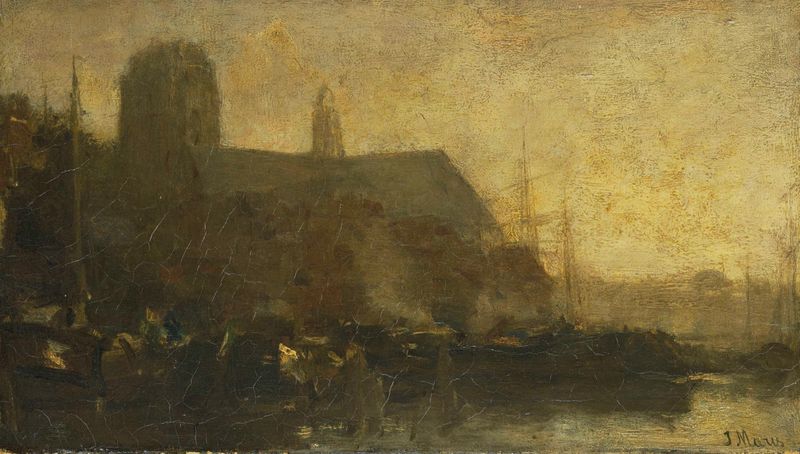
Schepen in de haven van Dordrecht
Jacob Maris
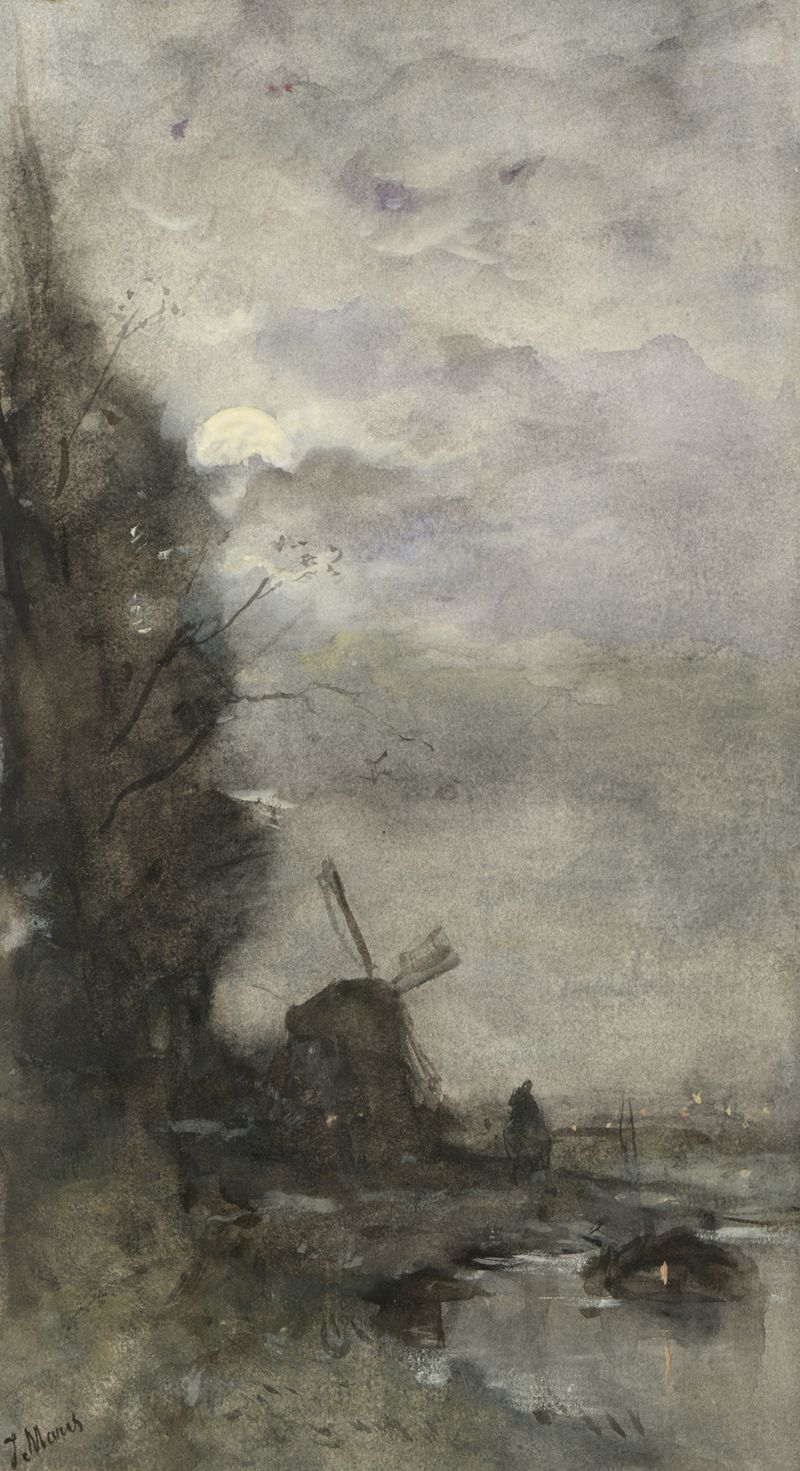
Landschap met molen bij maanlicht
Jacob Maris





