
Head of a Woman — History & Facts
What first catches the eye in Head of a Woman is the electric charge of color and line, as if the artist has captured a fleeting spark of personality rather than a fixed likeness. The woman's face seems to hover between a mask and a living presence, her features outlined in urgent, almost childlike strokes of yellow, blue, and orange. Her lips are parted in a knowing, ambiguous smile, while her eyes—one half-lidded, the other wide—suggest both weariness and wit.
The background, a riot of red and blue, frames her head like a burst of energy or a pair of wings, refusing to let her settle quietly into the page. The green lines around her jaw and the floral motif at her neck hint at both adornment and the artist’s restless search for structure amid chaos. Created around 1909, this work belongs to the early years of Ernst Ludwig Kirchner, a leading figure of German Expressionism. In this period, artists like Kirchner sought to break away from academic tradition, using color and gesture to convey emotion rather than realism.
Such portraits were rarely formal commissions; instead, they were acts of artistic rebellion, often made among friends or in bohemian circles, capturing the spirit of a rapidly changing world. The Solomon R. Guggenheim Foundation now holds this piece, a testament to the era’s hunger for new ways of seeing.
The raw immediacy of the drawing invites viewers to linger, searching for the story behind those vivid, searching eyes.
More Artworks by Ernst Ludwig Kirchner
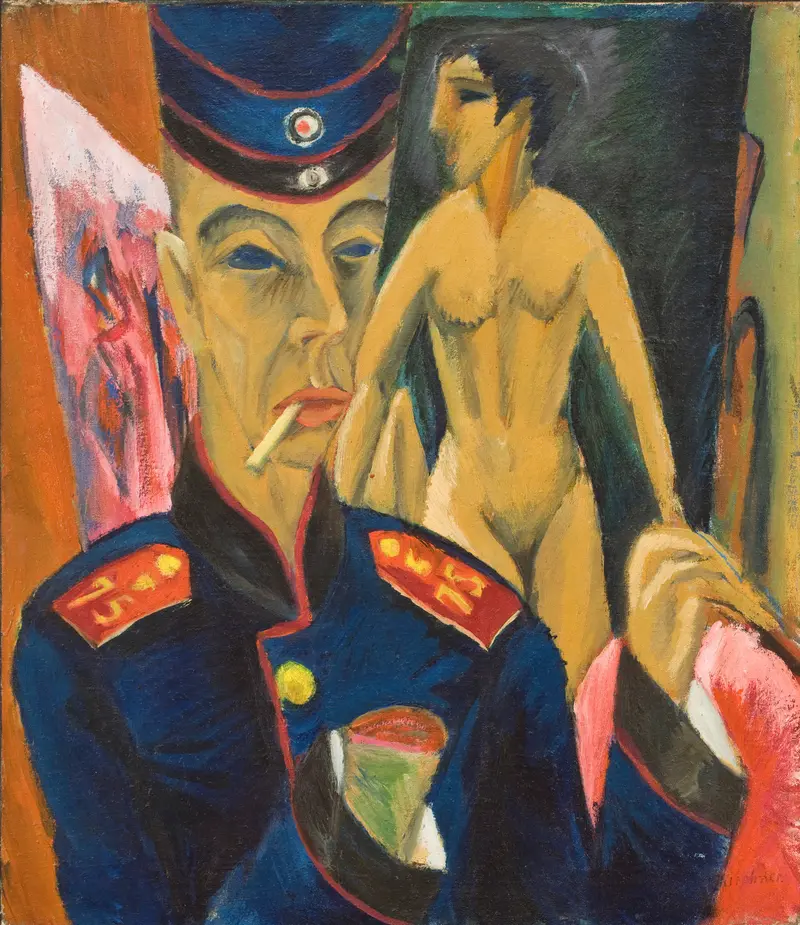
Self-Portrait as a Soldier
Ernst Ludwig Kirchner
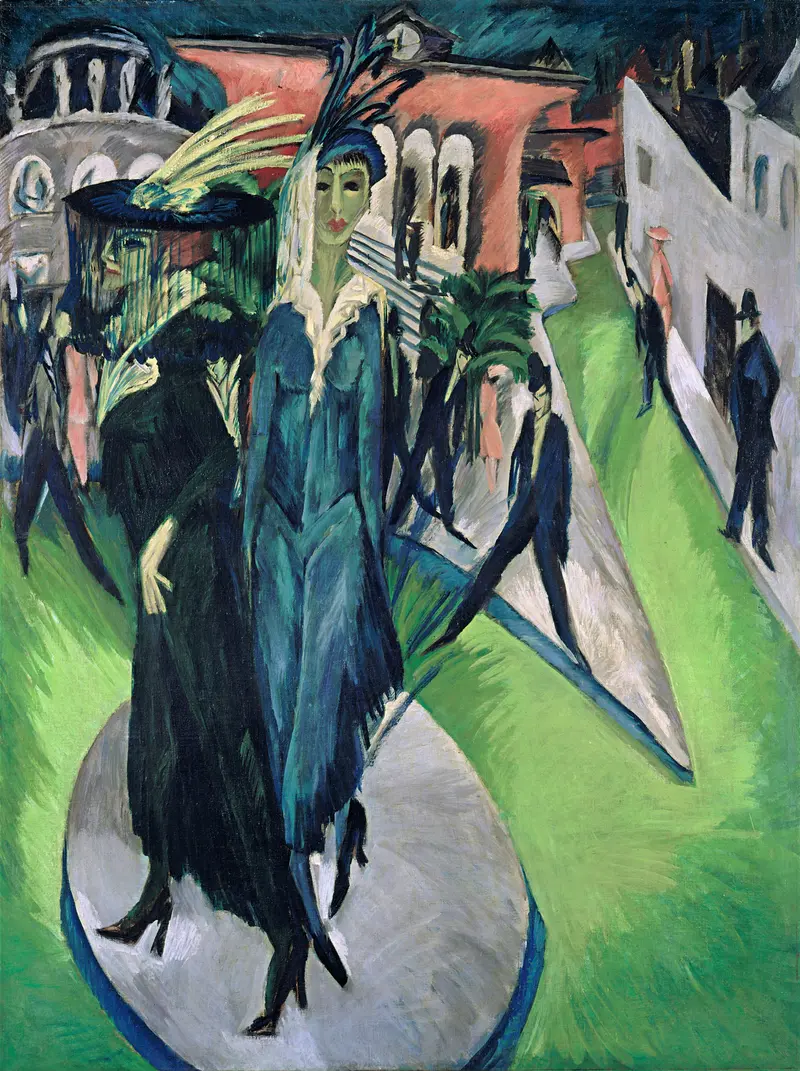
Potsdamer Platz
Ernst Ludwig Kirchner

Alphütten und Tinzenhorn
Ernst Ludwig Kirchner
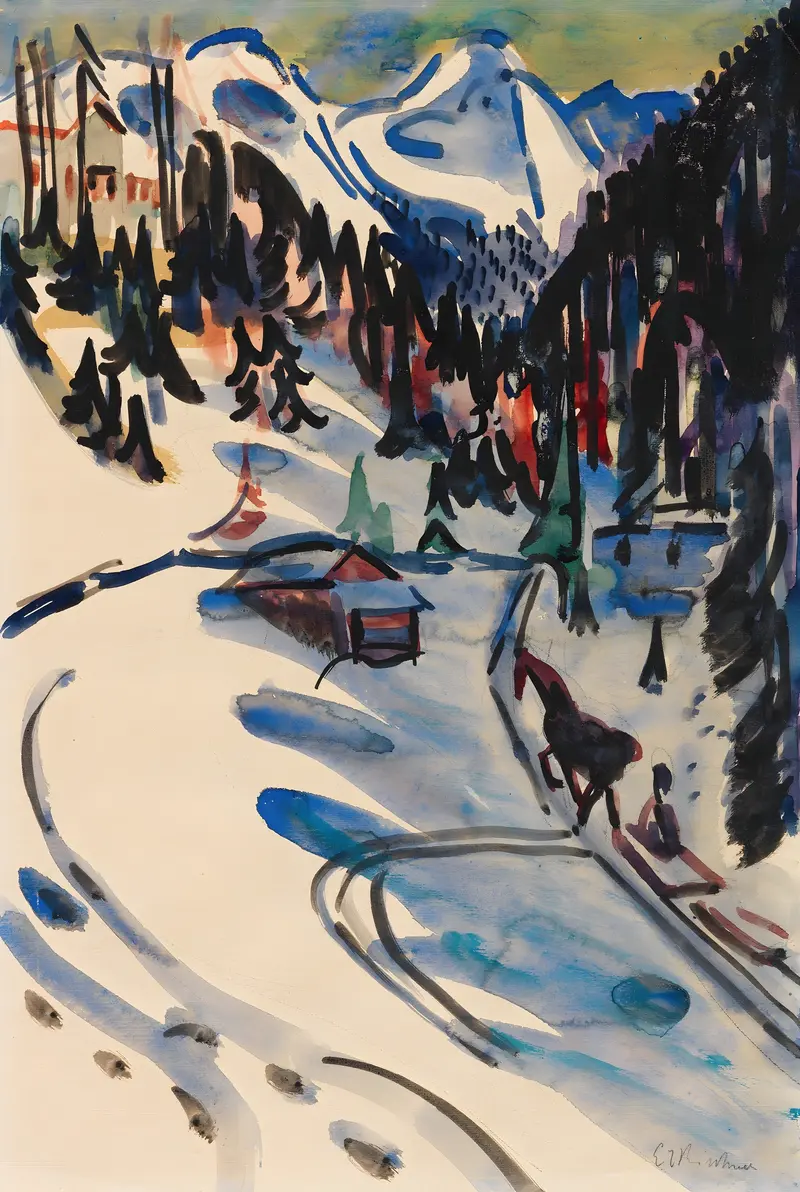
Sertigtal im Winter
Ernst Ludwig Kirchner
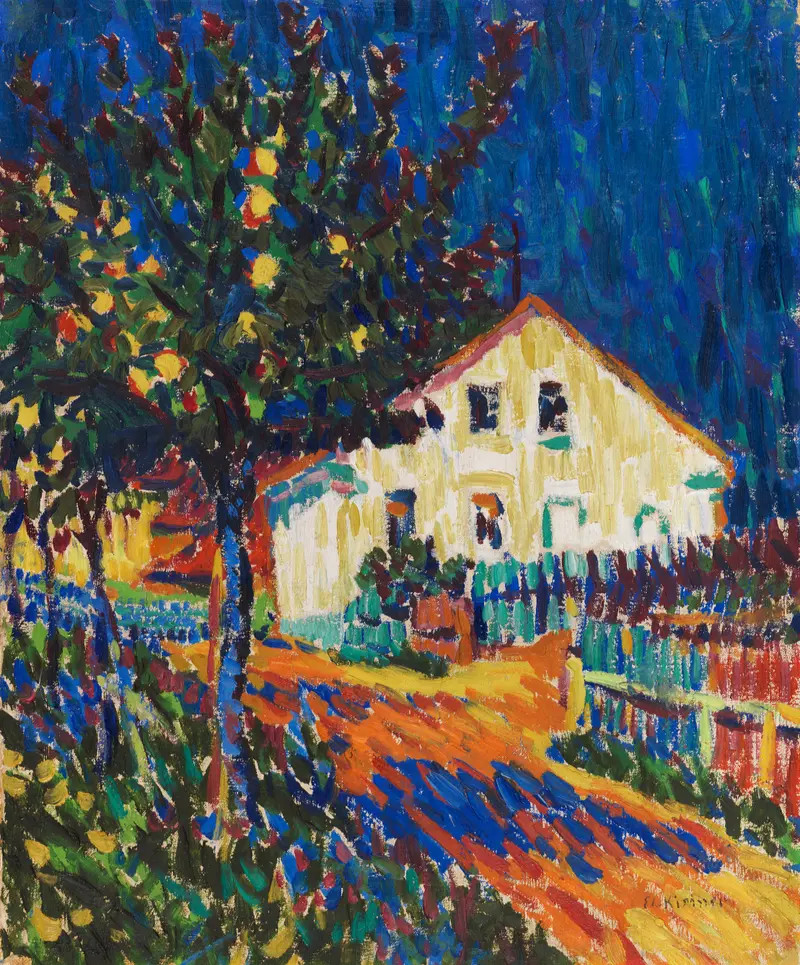
Dorfstraße mit Apfelbäumen
Ernst Ludwig Kirchner
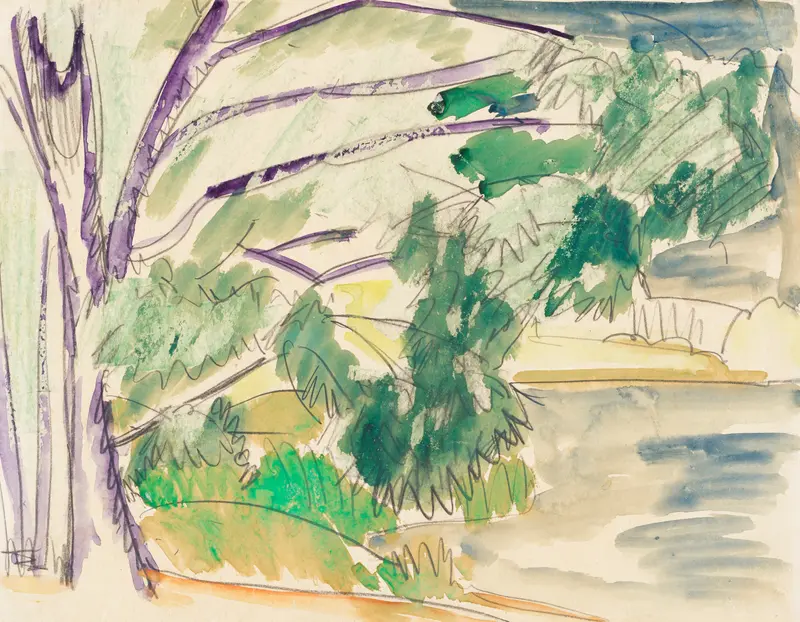
Unter Bäumen am See
Ernst Ludwig Kirchner
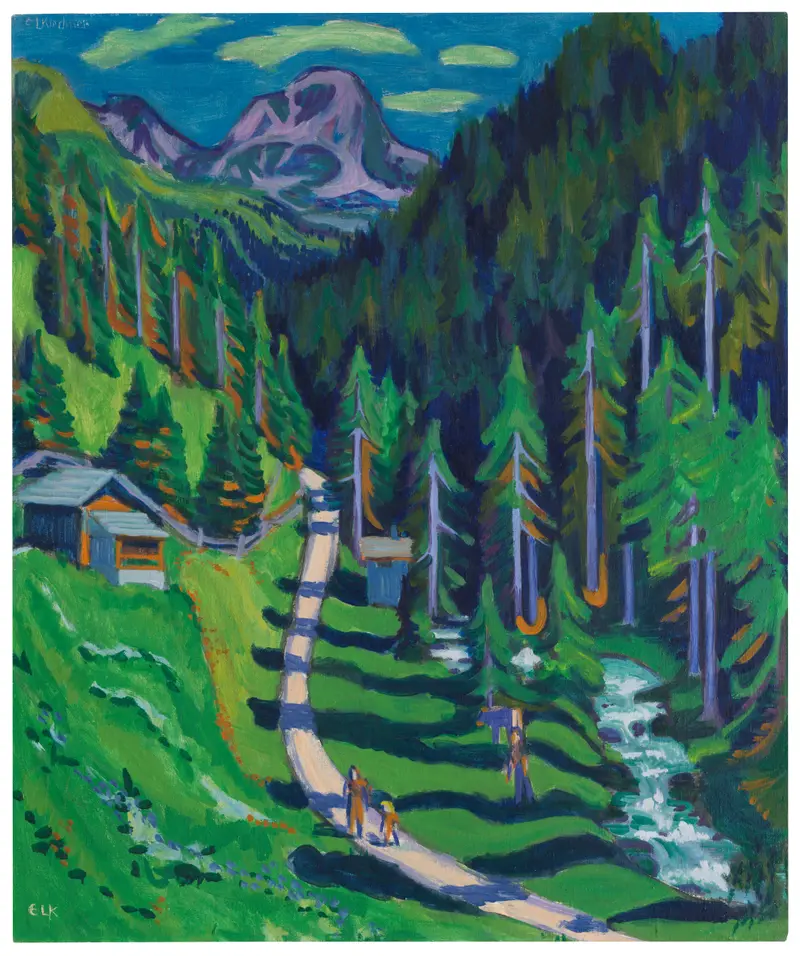
Sertigweg
Ernst Ludwig Kirchner
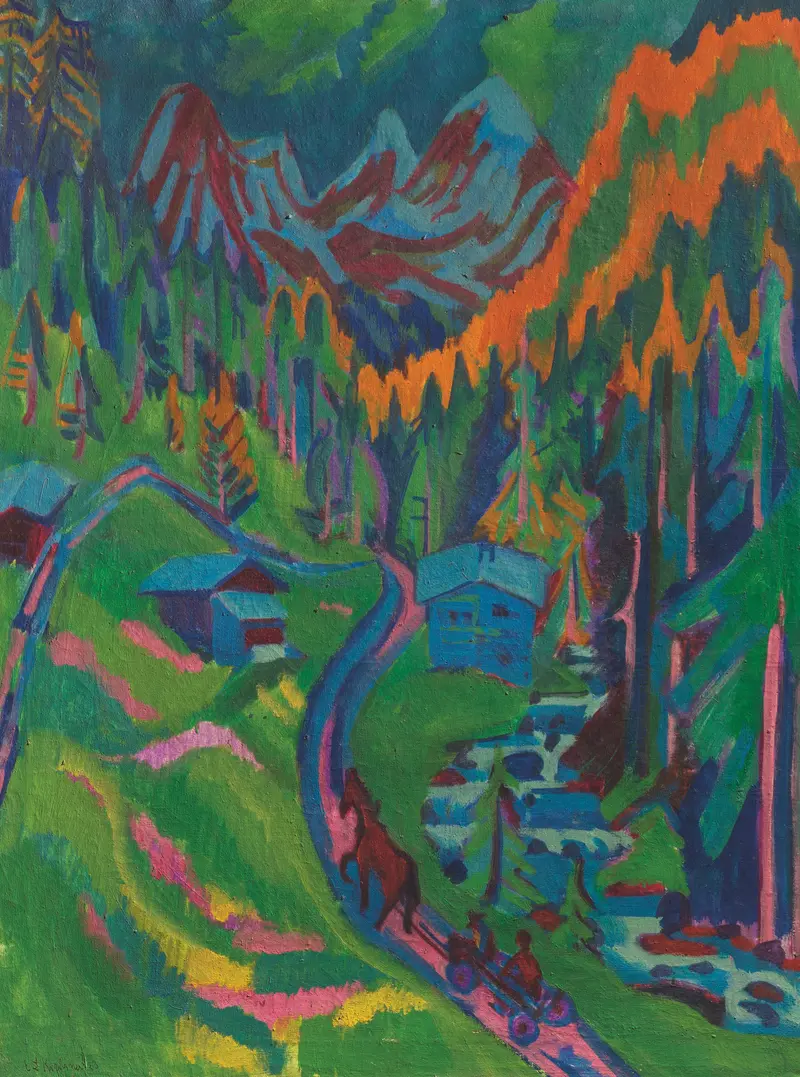
Sertigweg im Sommer
Ernst Ludwig Kirchner
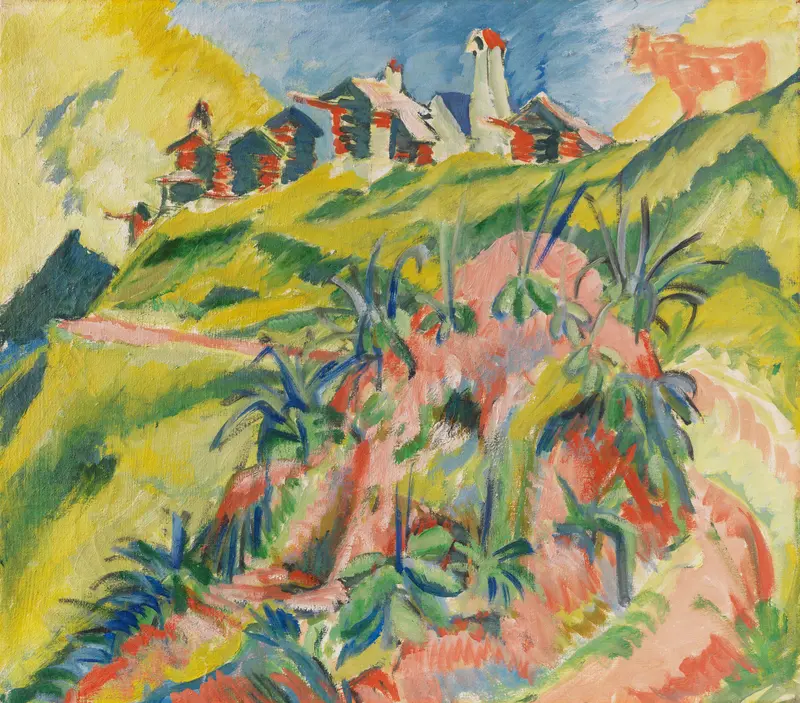
Bergdorf mit rosa Kuh
Ernst Ludwig Kirchner
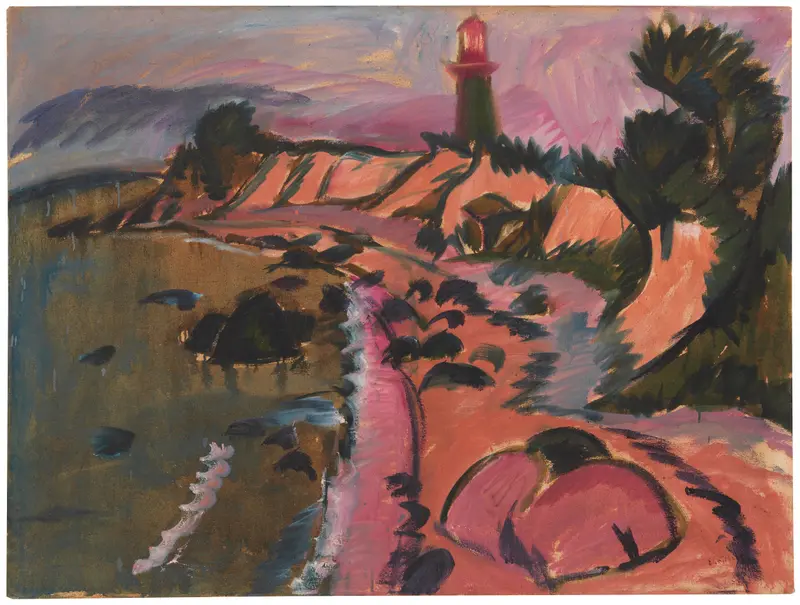
Fehmarnküste mit Leuchtturm
Ernst Ludwig Kirchner





