
Heijo no haru, Botandai Fusekiro (Spring at Pubyong Pavilion, Modan Viewpoint, Pyongyang) — History & Facts
Did the painter know this moment would outlive them? In a world increasingly overshadowed by chaos, the quiet beauty captured within this scene resonates with an unspoken grief, holding its breath amidst the fleeting nature of time. Focus on the delicate interplay of light and shadow in the foreground, where blossoms burst forth in soft pinks and whites against the backdrop of a vibrant blue sky. Note the gentle curves of the pavilion’s roof as they arch gracefully toward the heavens. The artist’s technique reveals a masterful blend of woodblock printing and watercolors, creating a serene yet dynamic composition that invites the viewer’s gaze to wander among the cherry blossoms and graceful architecture. Beyond the surface, the work reflects a tension between permanence and transience.
The cherry blossoms, symbols of beauty and the ephemeral nature of life, contrast with the steadfast silhouette of the pavilion, suggesting a fleeting moment anchored in time. Each petal falling from the branches carries whispers of loss—reminders that even in beauty, grief resides. The stillness of the scene becomes a cathartic embrace, where joy and melancholy intertwine. In 1939, Kawase Hasui painted this piece during a time of significant political turmoil in Japan.
The world was on the brink of war, and the artist found solace in depicting nature's serenity amid uncertainty. This work exemplifies the shin-hanga movement, which sought to harmonize traditional Japanese aesthetics with Western influences, a reflection of Hasui's own life as he navigated this complex artistic landscape.
More Artworks by Kawase Hasui
Browse all →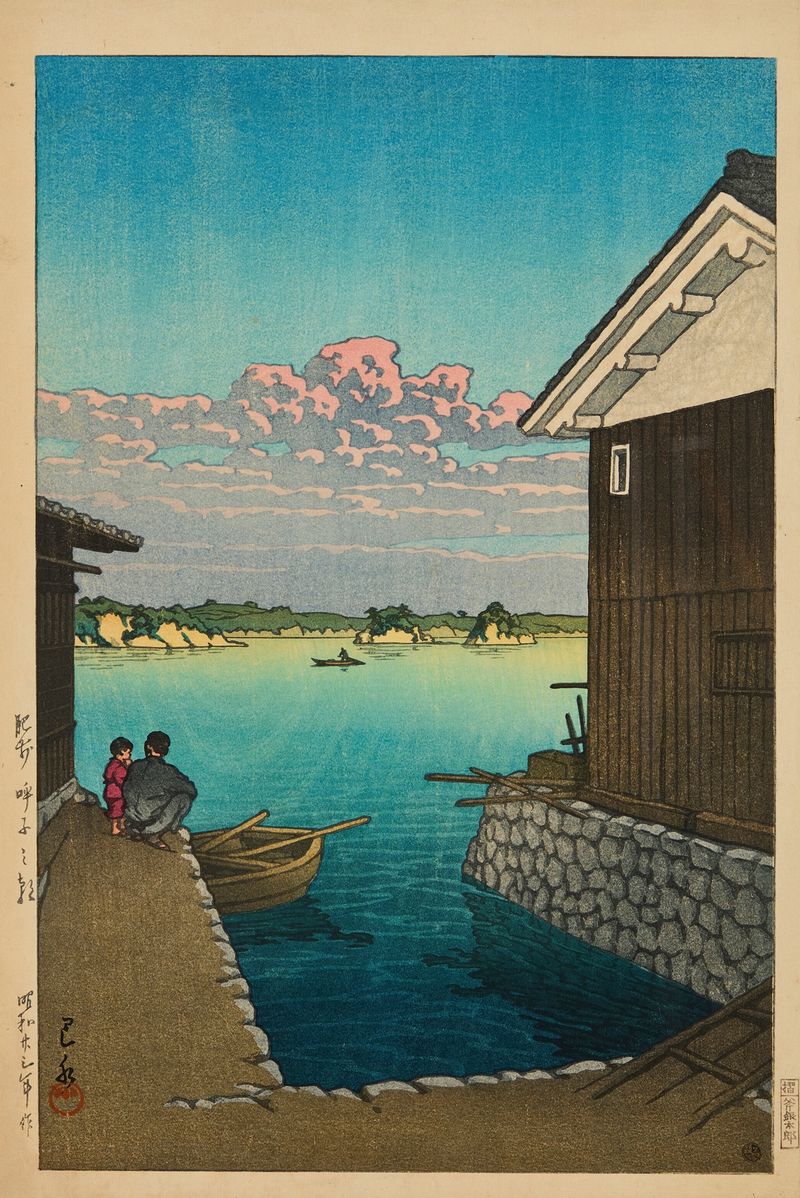
Hizen Yobuko no asa (Morning in Yobuko, Hizen)
Kawase Hasui
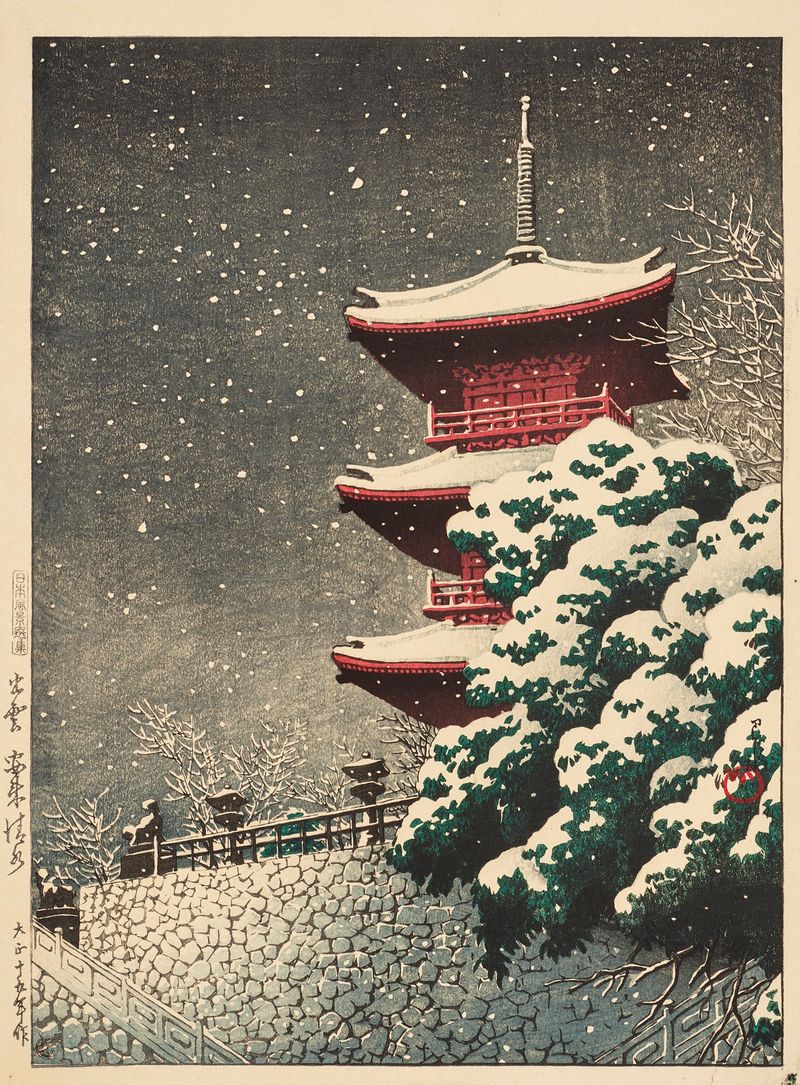
Izumo, Yasugi Kiyomizu (Yasugi Kiyomizu Temple at Izumo)
Kawase Hasui
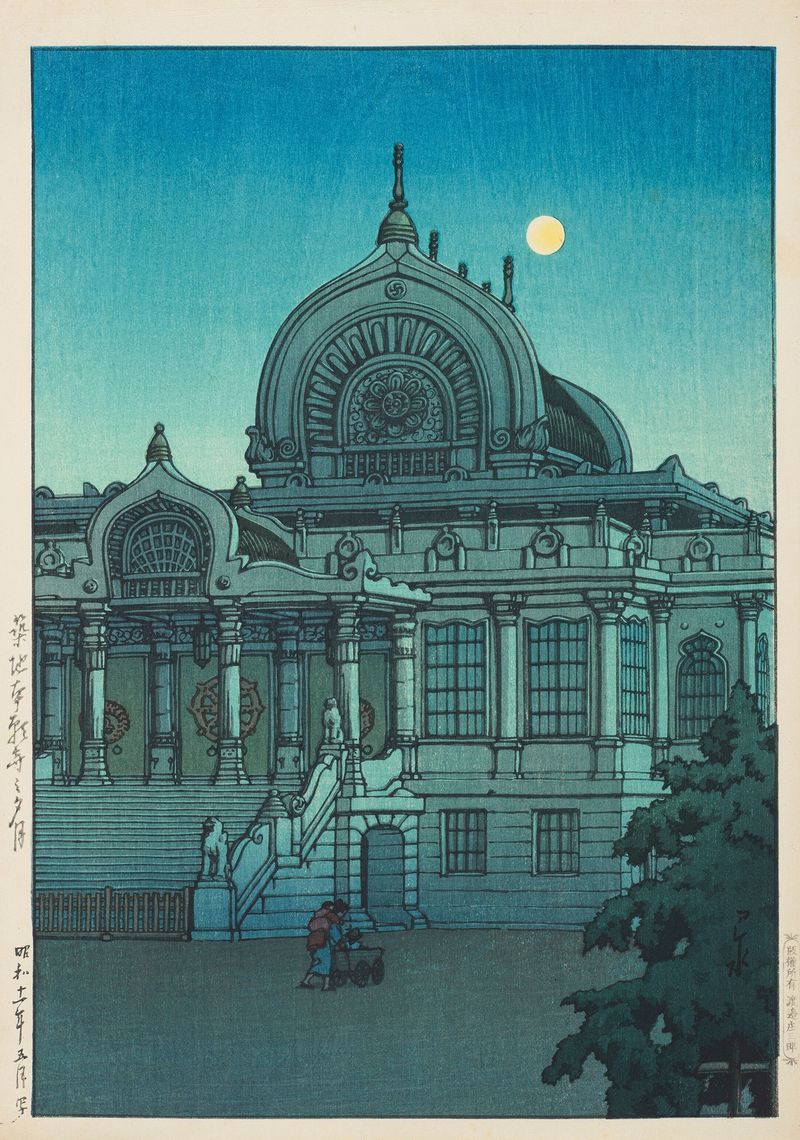
Tsukiji Honganji no yuzuki (Evening moon at Honganji Temple in Tsukiji)
Kawase Hasui
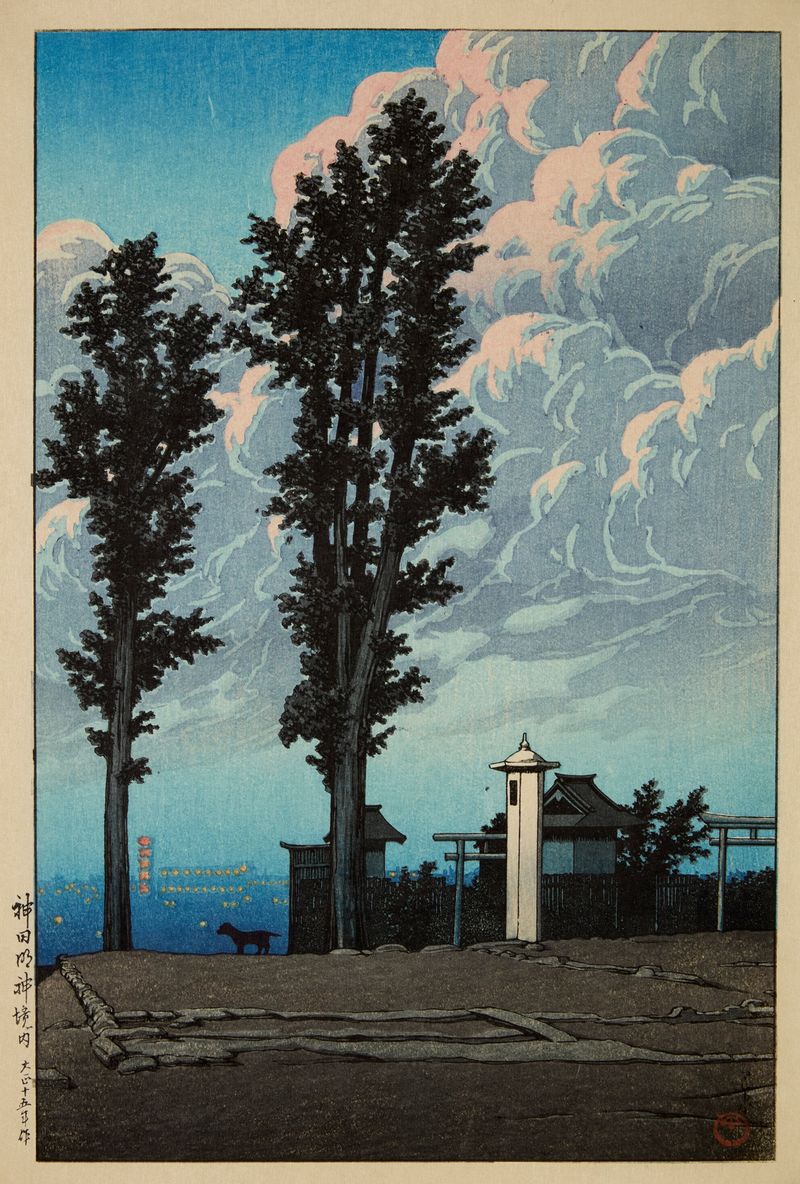
Kanda Myojin keidai (Kanda Myojin Shrine precent)
Kawase Hasui
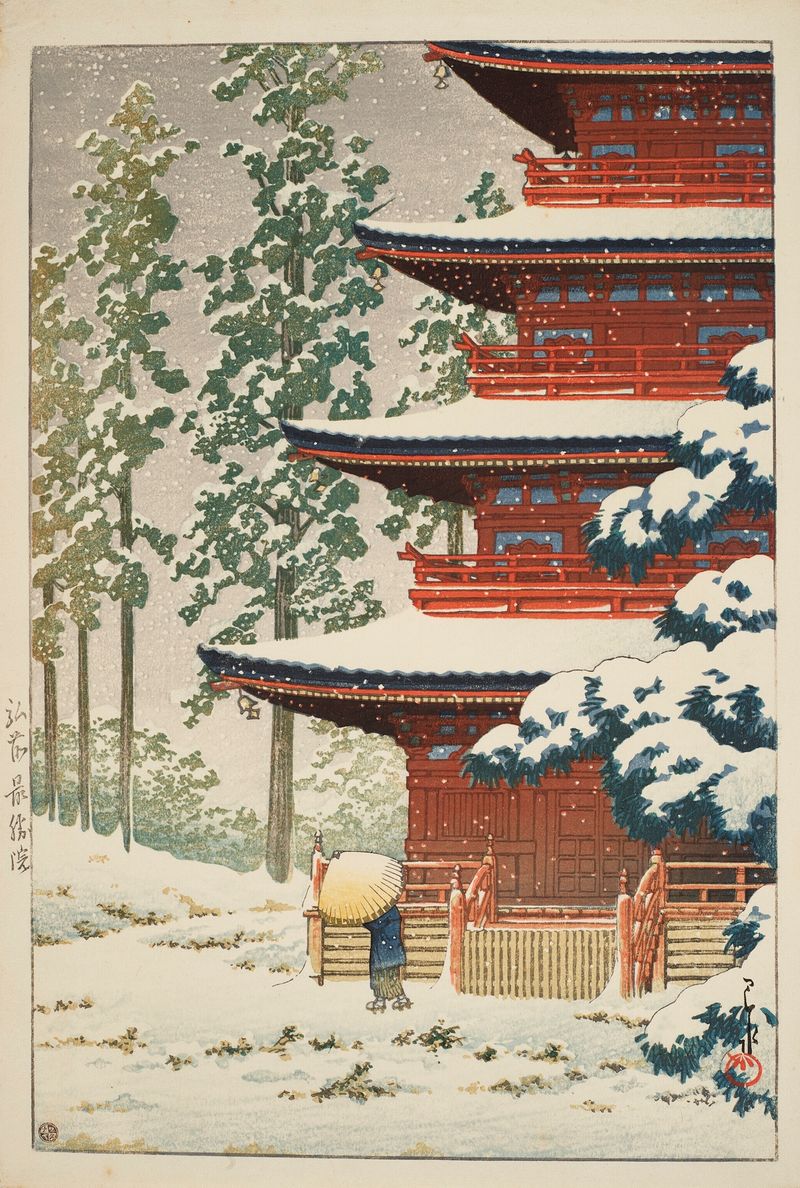
Saisho-in Temple, Hirosaki
Kawase Hasui
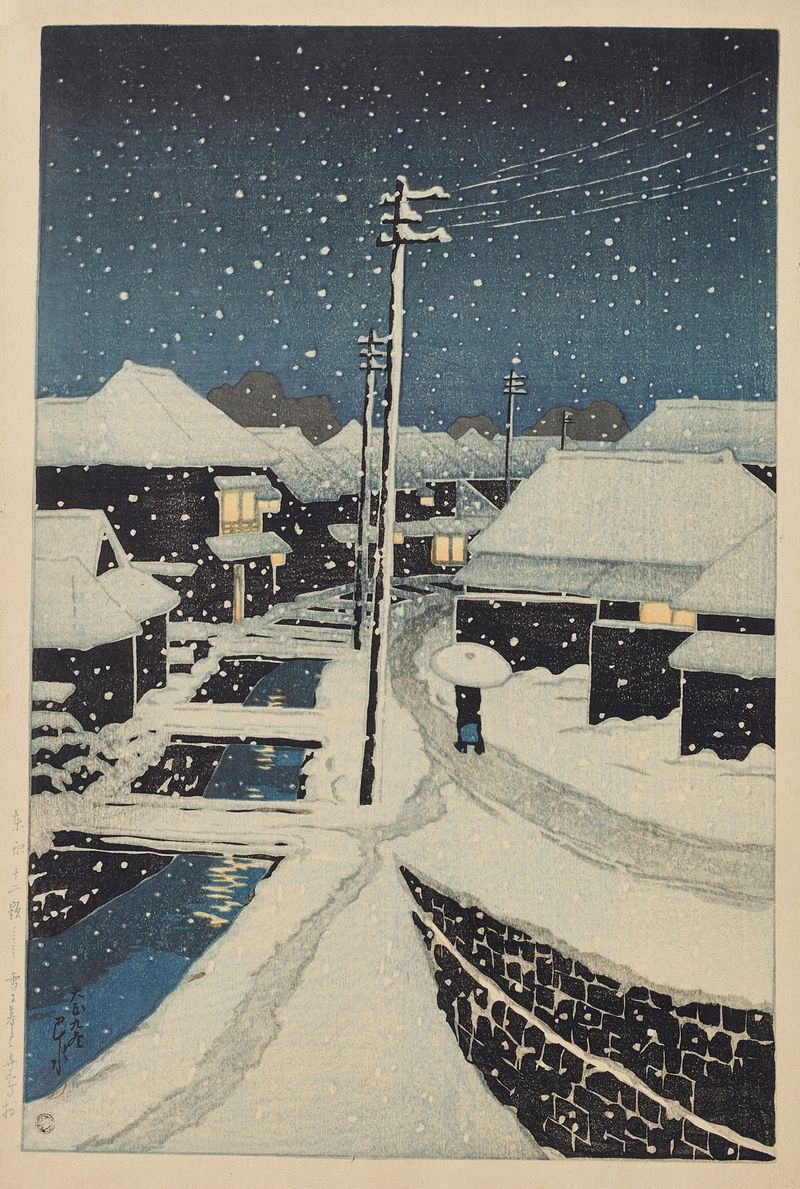
Yuki ni fururu Terajima mura (Evening snow at Terajima Village)
Kawase Hasui
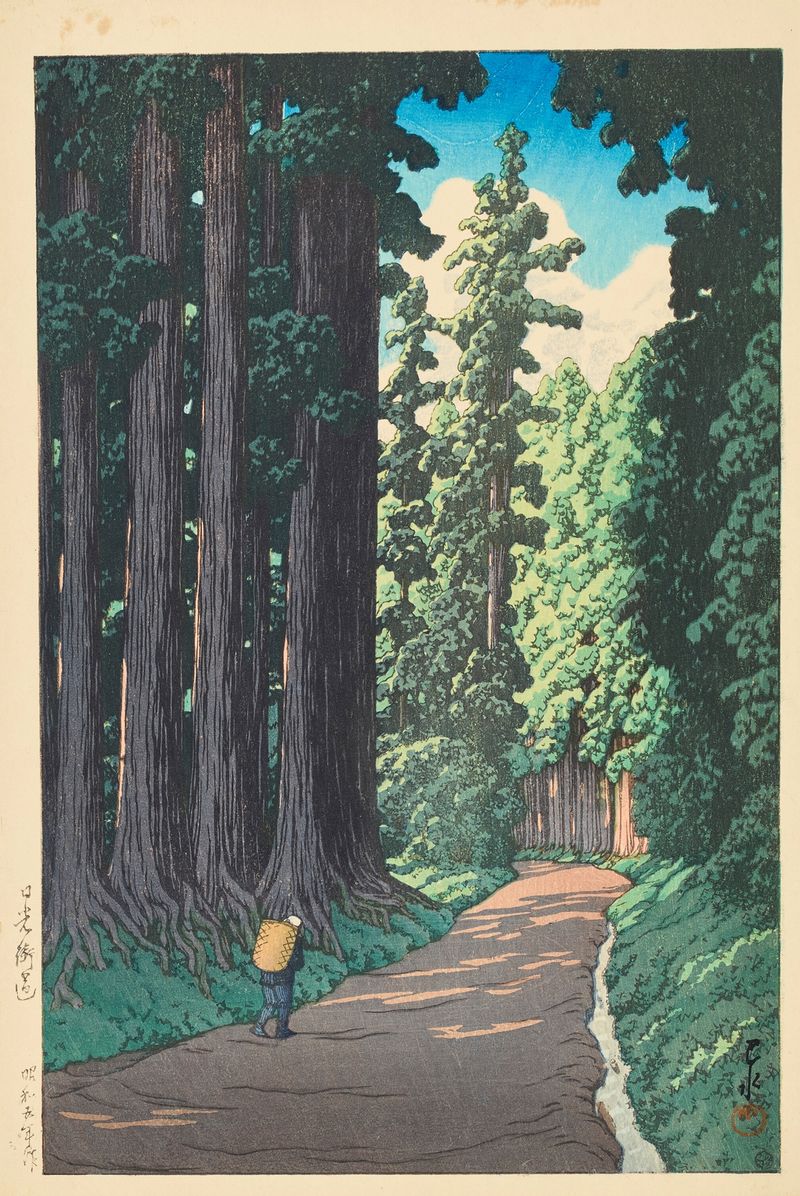
Nikko gaido (The Road to Nikko)
Kawase Hasui
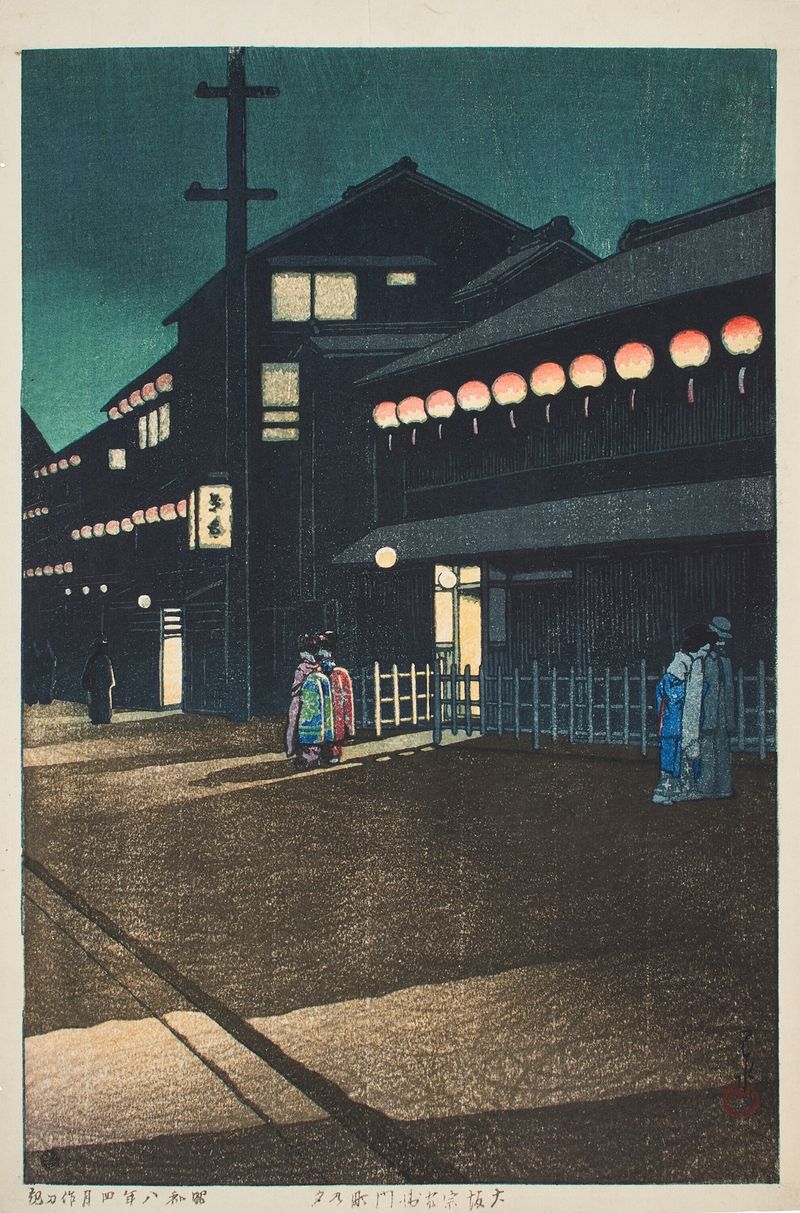
Osaka Soemon-cho no yu (Evening in Soemon-cho, Osaka)
Kawase Hasui
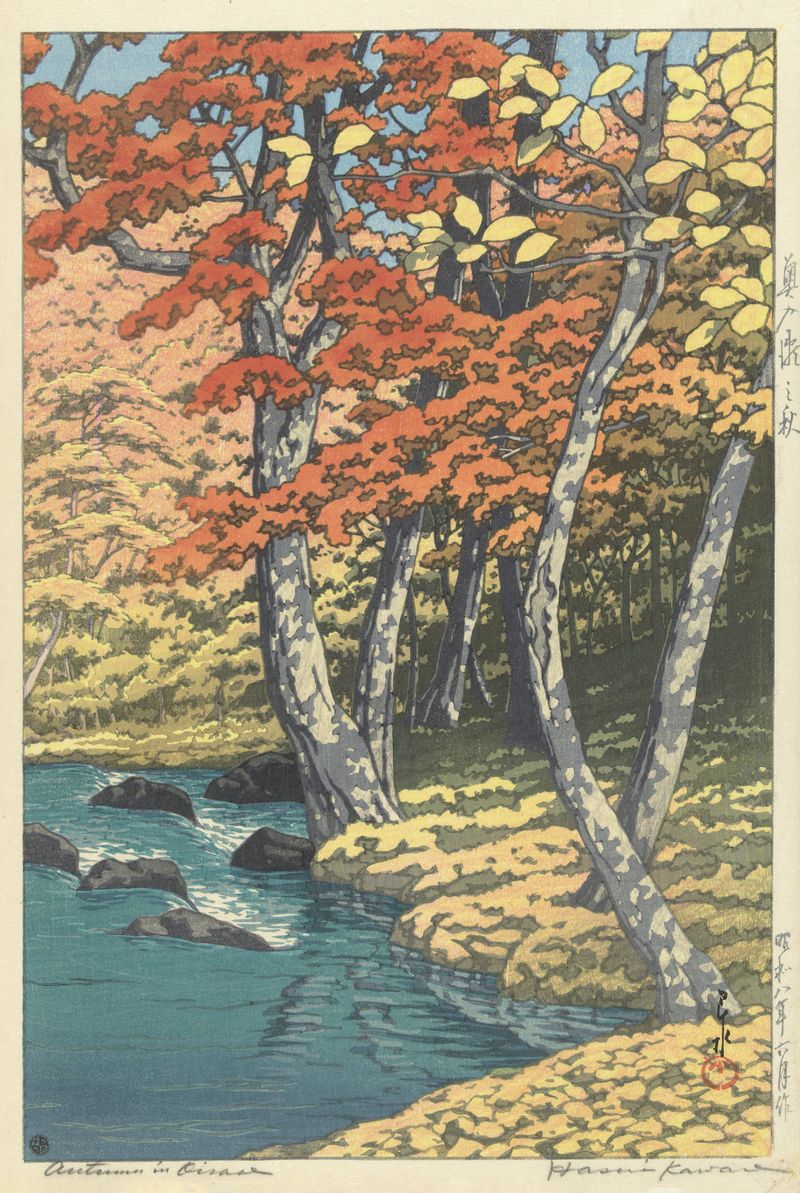
Autumn In Oirase
Kawase Hasui
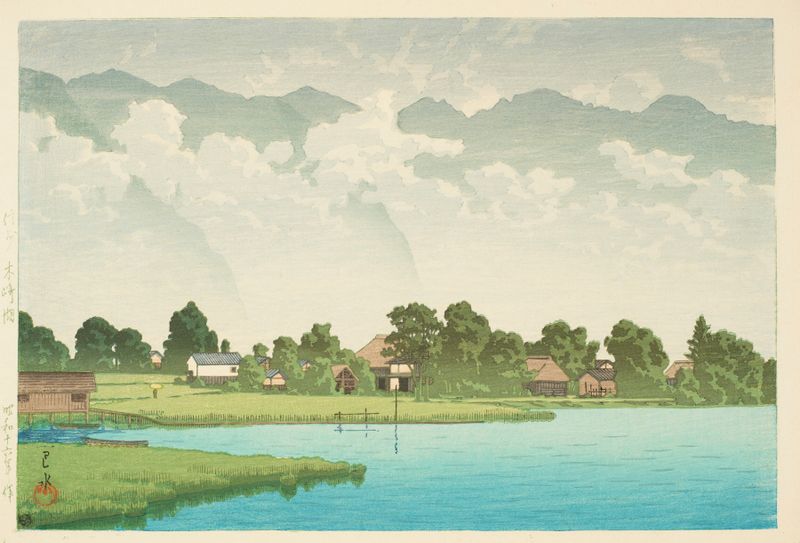
Shinshu Kizakiko (Kizaki Lake in Shinshu)
Kawase Hasui





