
Herbstlicher Baum vor Wiesental — History & Facts
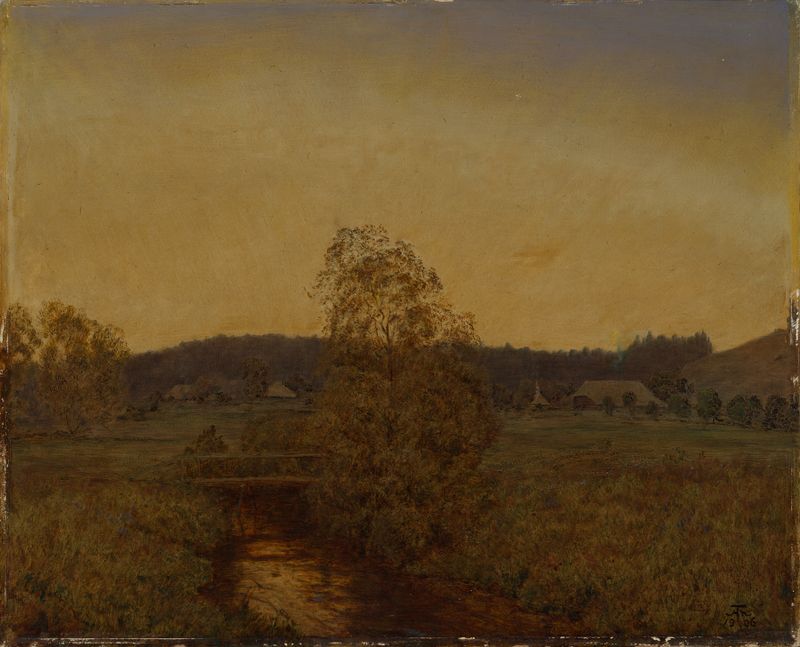
When did color learn to lie? Beneath the vibrant hues of autumn, grief whispers through the rustling leaves, revealing hidden depths of emotion. First, focus on the tree, an imposing figure dominating the canvas, its branches stretching outward like arms in surrender. The warm oranges and deep browns of the foliage contrast with the cool, muted greens of the valley below, creating a vibrant tapestry that draws the eye. Notice how the light dances across the leaves, illuminating their delicate veins, while shadows creep beneath, suggesting a story of loss amidst the abundance of life. The juxtaposition of the exuberant colors and the serene landscape evokes a bittersweet tension.
While the tree stands proud in its seasonal glory, the valley seems to retreat into the background, as if mourning the fleeting nature of life. This contrast serves as a metaphor for the human experience—beauty intertwined with sorrow, joy met with inevitable endings. Small details, like the scattered leaves on the ground, echo the passage of time, suggesting that even the most beautiful moments eventually fade. Created around 1862, this piece reflects Hans Thoma's deep connection to the German Romantic movement, a time when nature was revered as both a source of inspiration and a mirror of human emotions.
Living in a period marked by industrial change and societal upheaval, Thoma sought solace in the natural world, capturing its transient beauty while hinting at the deeper, often unspoken feelings that accompany it.
More Artworks by Hans Thoma
Browse all →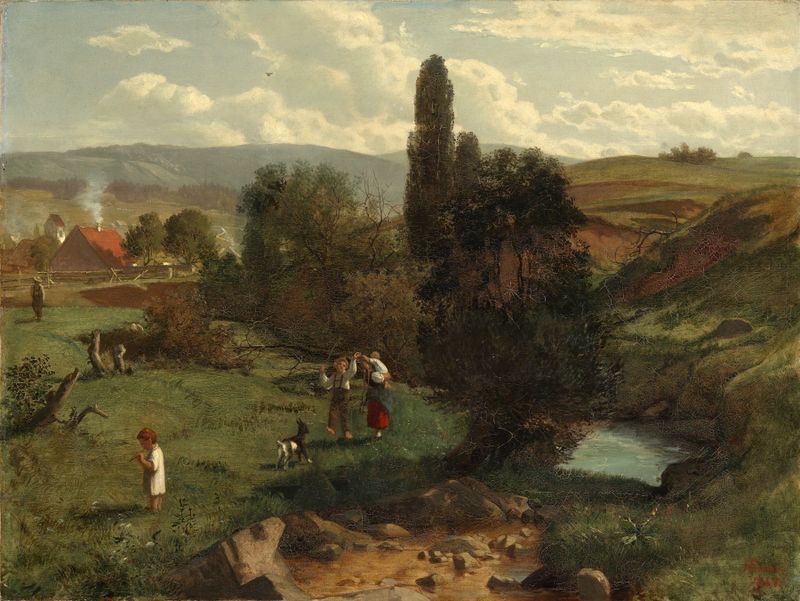
Schwarzwaldlandschaft
Hans Thoma
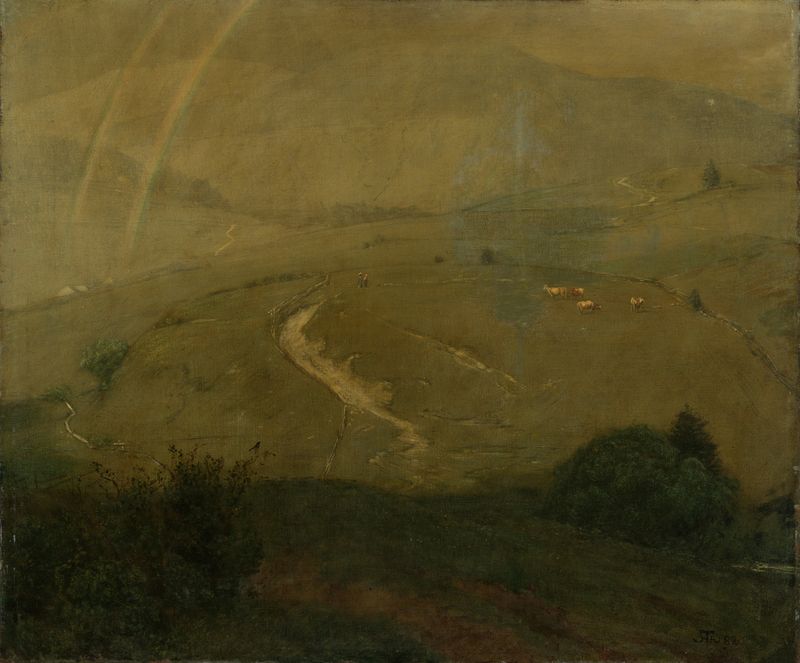
Regen im Schwarzwald
Hans Thoma
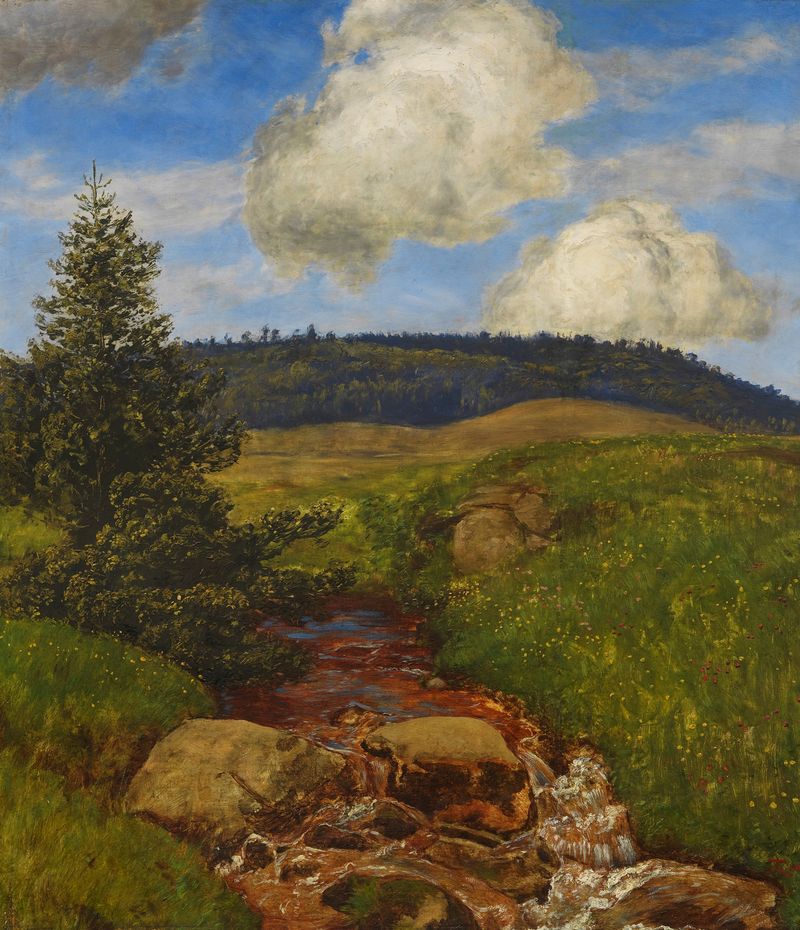
Schwarzwaldbach
Hans Thoma
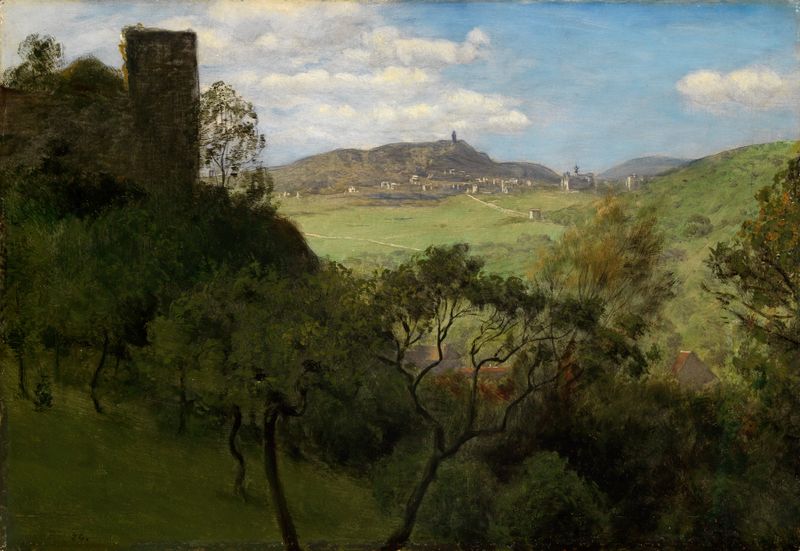
Blick auf Falkenstein im Taunus
Hans Thoma
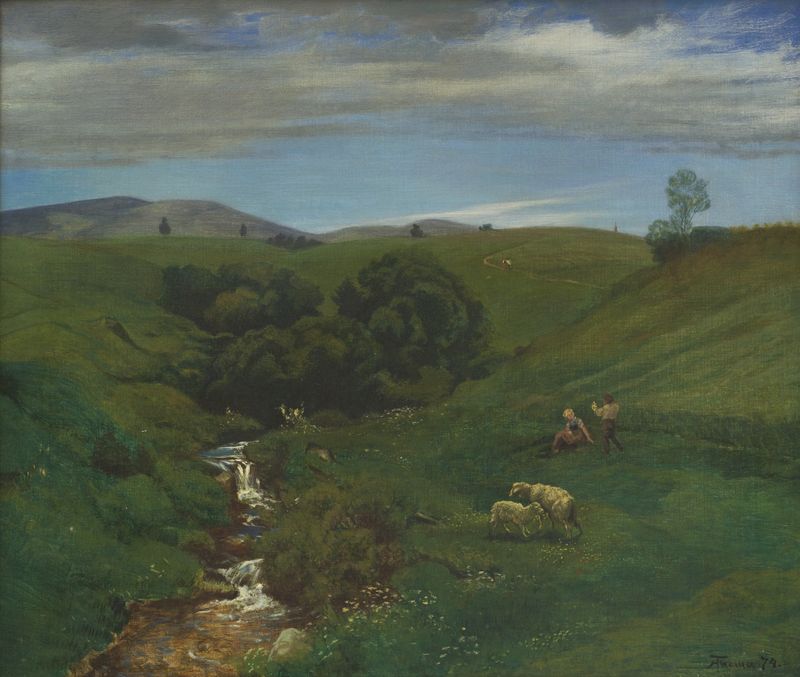
Black Forest Meadow near Bernau
Hans Thoma
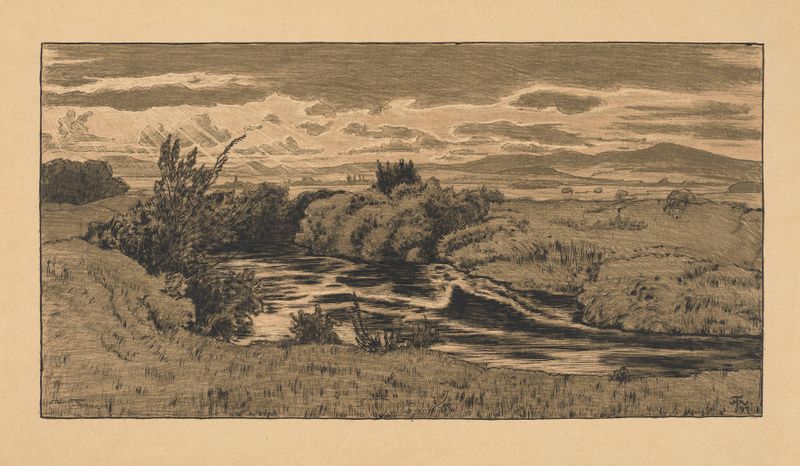
Evening by the Nidda River
Hans Thoma
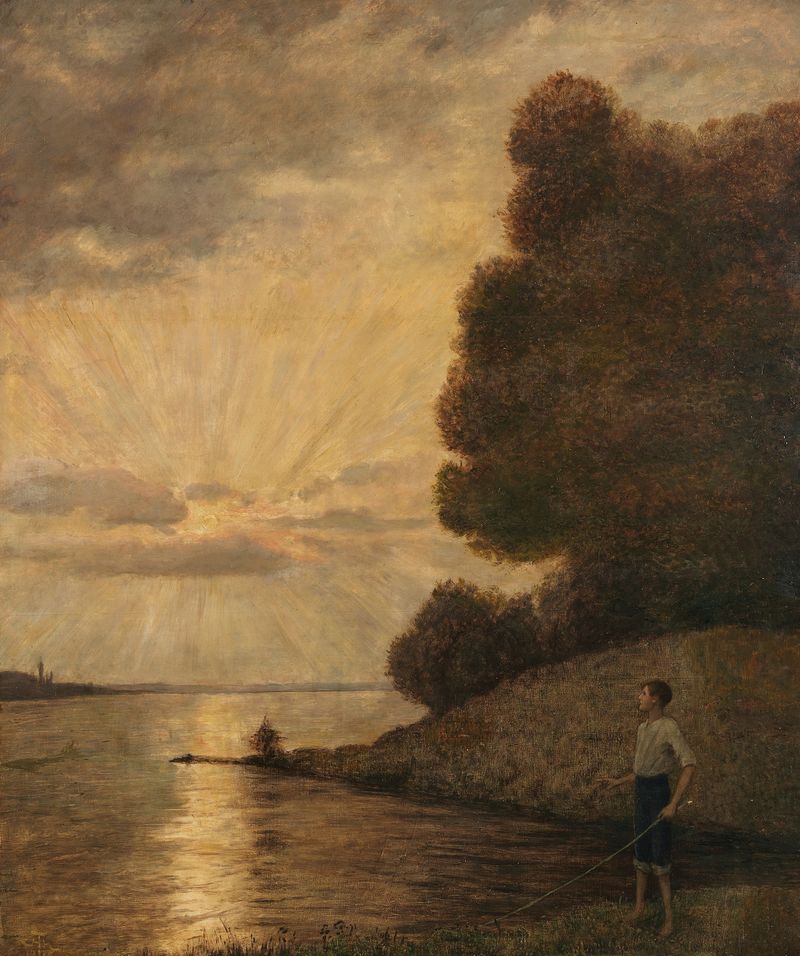
Sonnenuntergang am Oberrhein
Hans Thoma
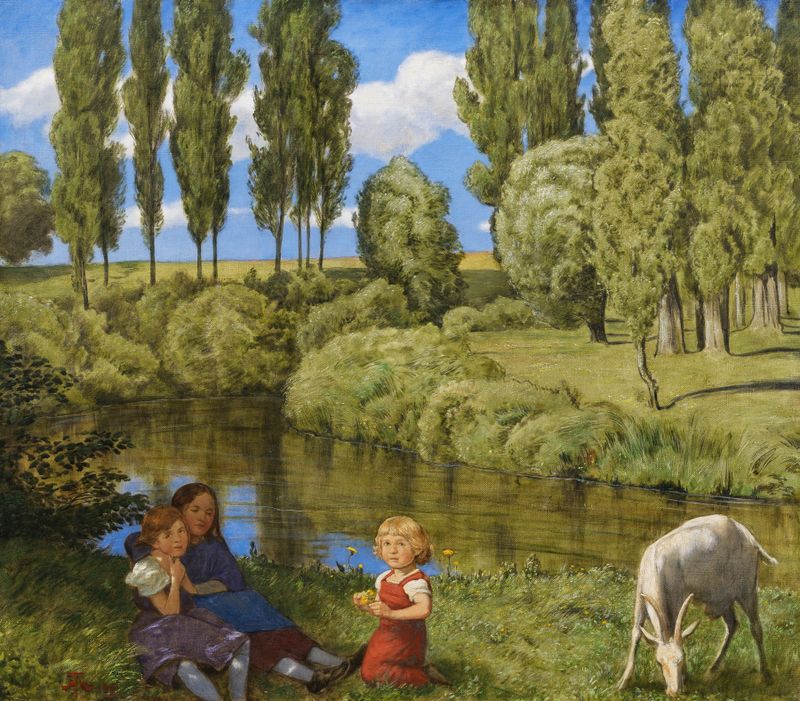
Am Stillen Bach
Hans Thoma
Der Abendstern
Hans Thoma
Das Rheintal bei Säckingen
Hans Thoma





